Painter
Dong Qichang
Chinese painter, scholar, calligrapher, and art theorist
1555 - 1636
EN.WIKIPEDIA PAGE VIEWS (PV)
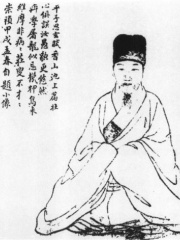
 Dong Qichang
His biography is available in 23 different languages on Wikipedia. Dong Qichang is the 709th most popular painter (down from 667th in 2024), the 493rd most popular biography from China (up from 502nd in 2019) and the 7th most popular Chinese Painter.
Memorability Metrics
30k
Page Views
Past 12 months
63.84
HPI
Historical Popularity Index
Data Insights
23
Dong Qichang's biography spans 23 Wikipedia language editions and earns a Historical Popularity Index of 63.84.
Page views of Dong Qichang by language
Among Painters
Among painters, Dong Qichang ranks 709 out of 2,055. Before him are Luis de Morales, Roberto Ferruzzi, Han Gan, Victorine Meurent, Eugene de Blaas, and Philip de Koninck. After him are Justus van Gent, Erasmus Quellinus the Younger, Masaaki Hatsumi, Pedro Berruguete, Aert de Gelder, and Paul Gustav Fischer.
Most Popular Painters in Wikipedia
Go to all Rankings
Luis de Morales
1509 - 1586
HPI: 63.88
Rank: 703
Roberto Ferruzzi
1853 - 1934
HPI: 63.88
Rank: 704

Han Gan
706 - 783
HPI: 63.87
Rank: 705
Victorine Meurent
1844 - 1927
HPI: 63.87
Rank: 706
Eugene de Blaas
1843 - 1931
HPI: 63.86
Rank: 707
Philip de Koninck
1619 - 1688
HPI: 63.85
Rank: 708
Dong Qichang
1555 - 1636
HPI: 63.84
Rank: 709
Justus van Gent
1430 - 1480
HPI: 63.83
Rank: 710
Erasmus Quellinus the Younger
1607 - 1678
HPI: 63.83
Rank: 711
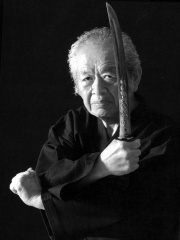
Masaaki Hatsumi
1931 - Present
HPI: 63.83
Rank: 712
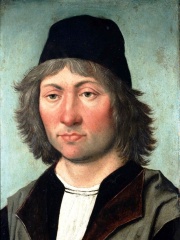
Pedro Berruguete
1450 - 1504
HPI: 63.83
Rank: 713
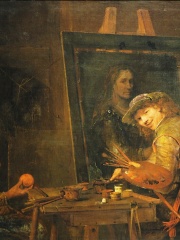
Aert de Gelder
1645 - 1727
HPI: 63.82
Rank: 714
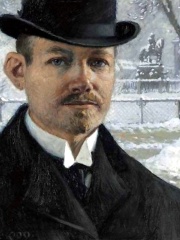
Paul Gustav Fischer
1860 - 1934
HPI: 63.81
Rank: 715

Contemporaries
Among people born in 1555, Dong Qichang ranks 11. Before him are Naresuan, Cesare Ripa, Andreas Libavius, Johann Arndt, François de Malherbe, and Louise de Coligny. After him are Giovanni Antonio Magini, Henri de La Tour d'Auvergne, Duke of Bouillon, Charles II, Lord of Monaco, Giovanni Giacomo Gastoldi, Antonio Tempesta, and Moderata Fonte. Among people deceased in 1636, Dong Qichang ranks 5. Before him are Pieter Brueghel the Younger, Date Masamune, Santorio Santorio, and Mulla Sadra. After him are Sendivogius, Stefano Maderno, John Albert II, Augustus the Elder, Duke of Brunswick-Lüneburg, Iskandar Muda, Gregorio Fernández, and Barbara Sophie of Brandenburg.
Others Born in 1555
Go to all Rankings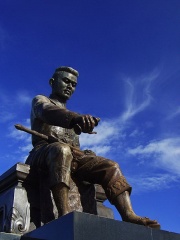
Naresuan
POLITICIAN
1555 - 1605
HPI: 66.93
Rank: 5
Cesare Ripa
PHILOSOPHER
1555 - 1622
HPI: 65.33
Rank: 6
Andreas Libavius
CHEMIST
1555 - 1616
HPI: 65.31
Rank: 7
Johann Arndt
RELIGIOUS FIGURE
1555 - 1621
HPI: 65.30
Rank: 8
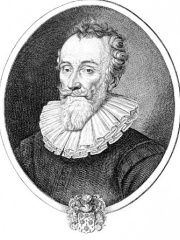
François de Malherbe
WRITER
1555 - 1628
HPI: 65.29
Rank: 9
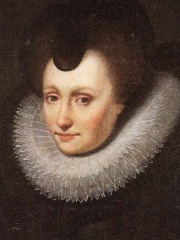
Louise de Coligny
COMPANION
1555 - 1620
HPI: 64.33
Rank: 10
Dong Qichang
PAINTER
1555 - 1636
HPI: 63.84
Rank: 11
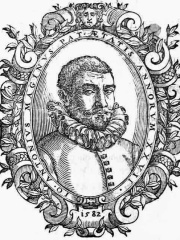
Giovanni Antonio Magini
MATHEMATICIAN
1555 - 1617
HPI: 61.57
Rank: 12
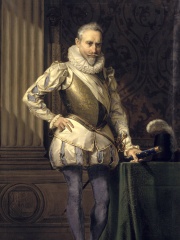
Henri de La Tour d'Auvergne, Duke of Bouillon
NOBLEMAN
1555 - 1623
HPI: 61.47
Rank: 13
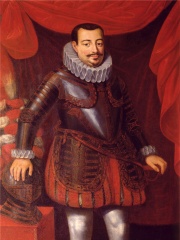
Charles II, Lord of Monaco
NOBLEMAN
1555 - 1589
HPI: 60.90
Rank: 14
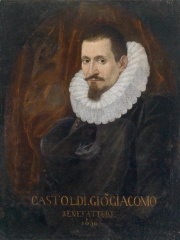
Giovanni Giacomo Gastoldi
COMPOSER
1555 - 1609
HPI: 60.73
Rank: 15
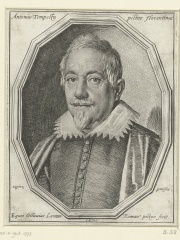
Antonio Tempesta
PAINTER
1555 - 1630
HPI: 60.59
Rank: 16
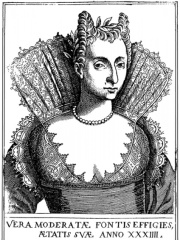
Moderata Fonte
WRITER
1555 - 1592
HPI: 60.54
Rank: 17
Others Deceased in 1636
Go to all Rankings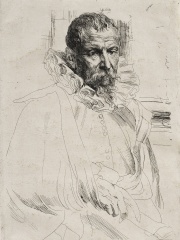
Pieter Brueghel the Younger
PAINTER
1564 - 1636
HPI: 75.41
Rank: 1
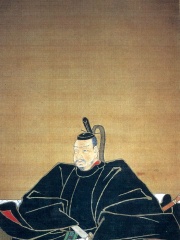
Date Masamune
MILITARY PERSONNEL
1567 - 1636
HPI: 70.90
Rank: 2
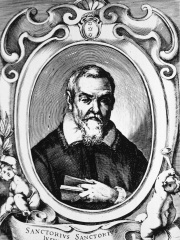
Santorio Santorio
PHYSICIAN
1561 - 1636
HPI: 70.32
Rank: 3
Mulla Sadra
PHILOSOPHER
1571 - 1636
HPI: 68.03
Rank: 4
Dong Qichang
PAINTER
1555 - 1636
HPI: 63.84
Rank: 5
Sendivogius
CHEMIST
1566 - 1636
HPI: 63.29
Rank: 6
Stefano Maderno
SCULPTOR
1576 - 1636
HPI: 62.98
Rank: 7
John Albert II
POLITICIAN
1590 - 1636
HPI: 62.18
Rank: 8
Augustus the Elder, Duke of Brunswick-Lüneburg
NOBLEMAN
1568 - 1636
HPI: 61.35
Rank: 9
Iskandar Muda
POLITICIAN
1583 - 1636
HPI: 60.40
Rank: 10
Gregorio Fernández
SCULPTOR
1576 - 1636
HPI: 57.42
Rank: 11
Barbara Sophie of Brandenburg
POLITICIAN
1584 - 1636
HPI: 57.01
Rank: 12
In China
Among people born in China, Dong Qichang ranks 493 out of 2,131. Before him are Han Gan (706), He Zizhen (1910), Wang Bi (226), Shaohao (null), Ruan Ji (210), and Tonyukuk (646). After him are Zhang Juzheng (1525), Edward Yang (1947), Shangguan Wan'er (664), Wang Qishan (1948), Ma Liang (187), and Liu Bowen (1311).
Others born in China
Go to all RankingsHan Gan
PAINTER
706 - 783
HPI: 63.87
Rank: 487
He Zizhen
POLITICIAN
1910 - 1984
HPI: 63.87
Rank: 488
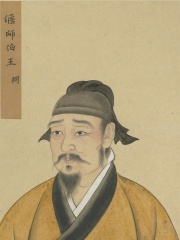
Wang Bi
PHILOSOPHER
226 - 249
HPI: 63.86
Rank: 489
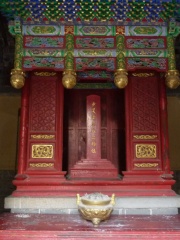
Shaohao
RELIGIOUS FIGURE
HPI: 63.86
Rank: 490
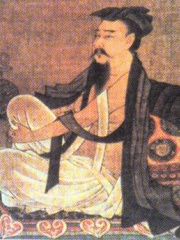
Ruan Ji
WRITER
210 - 263
HPI: 63.85
Rank: 491

Tonyukuk
POLITICIAN
646 - 724
HPI: 63.85
Rank: 492
Dong Qichang
PAINTER
1555 - 1636
HPI: 63.84
Rank: 493
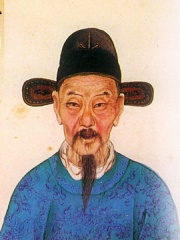
Zhang Juzheng
POLITICIAN
1525 - 1582
HPI: 63.83
Rank: 494
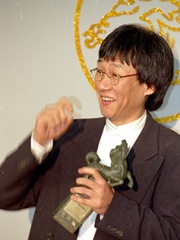
Edward Yang
FILM DIRECTOR
1947 - 2007
HPI: 63.82
Rank: 495
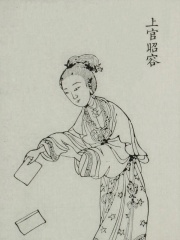
Shangguan Wan'er
POLITICIAN
664 - 710
HPI: 63.81
Rank: 496
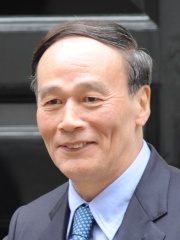
Wang Qishan
POLITICIAN
1948 - Present
HPI: 63.80
Rank: 497
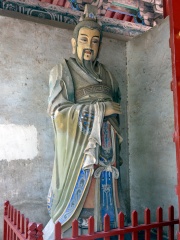
Ma Liang
POLITICIAN
187 - 222
HPI: 63.77
Rank: 498
Liu Bowen
PHILOSOPHER
1311 - 1375
HPI: 63.77
Rank: 499
Among Painters In China
Among painters born in China, Dong Qichang ranks 7. Before him are Shitao (1642), Gu Kaizhi (345), Mi Fu (1051), Guo Xi (1020), Qi Baishi (1864), and Han Gan (706). After him are Tang Yin (1470), Liang Kai (1200), Bada Shanren (1626), Wen Zhengming (1470), Shen Zhou (1427), and Ni Zan (1301).
Shitao
1642 - 1707
HPI: 69.32
Rank: 1
Gu Kaizhi
345 - 406
HPI: 66.60
Rank: 2
Mi Fu
1051 - 1107
HPI: 66.57
Rank: 3
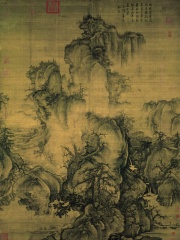
Guo Xi
1020 - 1090
HPI: 66.28
Rank: 4
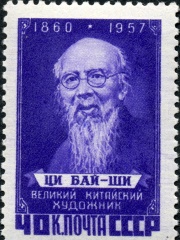
Qi Baishi
1864 - 1957
HPI: 65.83
Rank: 5
Han Gan
706 - 783
HPI: 63.87
Rank: 6
Dong Qichang
1555 - 1636
HPI: 63.84
Rank: 7
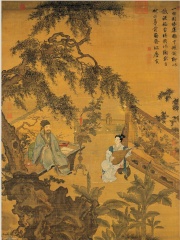
Tang Yin
1470 - 1524
HPI: 63.33
Rank: 8
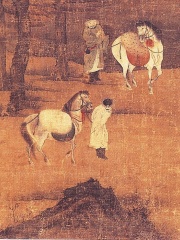
Liang Kai
1200 - 1300
HPI: 63.31
Rank: 9
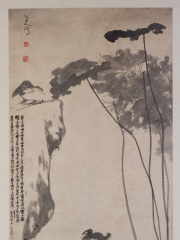
Bada Shanren
1626 - 1705
HPI: 63.17
Rank: 10
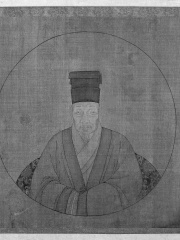
Wen Zhengming
1470 - 1559
HPI: 63.11
Rank: 11
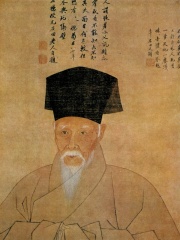
Shen Zhou
1427 - 1509
HPI: 63.08
Rank: 12
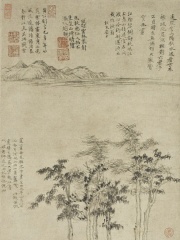
Ni Zan
1301 - 1374
HPI: 62.79
Rank: 13




