Politico
Diodotus I
285 BC - 230 BC
VISUALIZZAZIONI SU IT.WIKIPEDIA (PV)
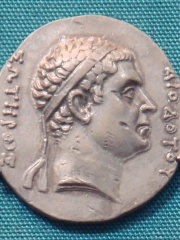
 Diodotus I
La sua biografia è disponibile in 30 lingue su Wikipedia (in aumento rispetto a 29 nel 2024). Diodotus I è il 9153° politico più popolare (in aumento dal 9164° nel 2024), la 77ª biografia più popolare dell'Afghanistan (in calo dal 75ª nel 2019) e il 53° politico più popolare dell'Afghanistan.
Metriche di memorabilità
32k
Visualizzazioni
Ultimi 12 mesi
62.13
HPI
Indice di popolarità storica
Dati in evidenza
30
La biografia di Diodotus I copre 30 edizioni linguistiche di Wikipedia e ottiene un Indice di Popolarità Storica di 62.13.
Visualizzazioni della pagina di Diodotus I per lingua
Tra Politico
Tra Politico, Diodotus I occupa la posizione 9,148 su 20,022. Prima di lui ci sono Raimonds Vējonis, Sa'dun Hammadi, Baldwin III, Count of Hainaut, Prince Francis, Count of Trapani, Tamim bin Hamad Al Thani, e Georg Donatus, Hereditary Grand Duke of Hesse. Dopo di lui ci sono Isabella of Villehardouin, John Jacob, Marquis of Montferrat, Di Yi, Florence Harding, Richard Thomalla, e Blanche of Artois.
Politico più popolari su Wikipedia
Vai a tutte le classifiche

Raimonds Vējonis
1966 - presente
HPI: 62.14
Posizione: 9,147
Sa'dun Hammadi
1930 - 2007
HPI: 62.14
Posizione: 9,148

Baldwin III, Count of Hainaut
1088 - 1120
HPI: 62.14
Posizione: 9,149
Prince Francis, Count of Trapani
1827 - 1892
HPI: 62.13
Posizione: 9,150
Tamim bin Hamad Al Thani
1980 - presente
HPI: 62.13
Posizione: 9,151

Georg Donatus, Hereditary Grand Duke of Hesse
1906 - 1937
HPI: 62.13
Posizione: 9,152
Diodotus I
285 BC - 230 BC
HPI: 62.13
Posizione: 9,153
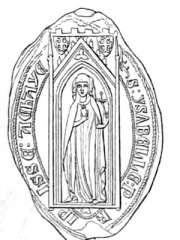
Isabella of Villehardouin
1263 - 1312
HPI: 62.13
Posizione: 9,154

John Jacob, Marquis of Montferrat
1395 - 1445
HPI: 62.12
Posizione: 9,155

Di Yi
1200 BC - 1076 BC
HPI: 62.12
Posizione: 9,156
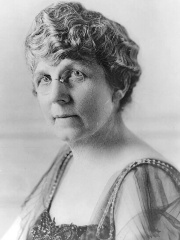
Florence Harding
1860 - 1924
HPI: 62.12
Posizione: 9,157
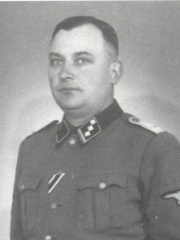
Richard Thomalla
1903 - 1945
HPI: 62.12
Posizione: 9,158
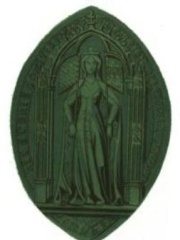
Blanche of Artois
1248 - 1302
HPI: 62.12
Posizione: 9,159

Contemporanei
Tra le persone nate nel 285 BC, Diodotus I occupa la posizione 2. Prima di lui c'è Mahinda. Dopo di lui ci sono Demetrius the Fair, e Sphaerus. Tra le persone decedute nel 230 BC, Diodotus I occupa la posizione 4. Prima di lui ci sono Aristarchus of Samos, Timon of Phlius, e Agron.
Altre persone nate nel 285 BC
Vai a tutte le classifiche
Mahinda
RELIGIOUS FIGURE
285 BC - 205 BC
HPI: 69.02
Posizione: 1
Diodotus I
POLITICIAN
285 BC - 230 BC
HPI: 62.13
Posizione: 2

Demetrius the Fair
POLITICIAN
285 BC - 250 BC
HPI: 60.80
Posizione: 3
Sphaerus
PHILOSOPHER
285 BC - 221 BC
HPI: 56.35
Posizione: 4
Altre persone decedute nel 230 BC
Vai a tutte le classifiche
Aristarchus of Samos
ASTRONOMER
311 BC - 230 BC
HPI: 79.89
Posizione: 1
Timon of Phlius
PHILOSOPHER
320 BC - 230 BC
HPI: 67.63
Posizione: 2
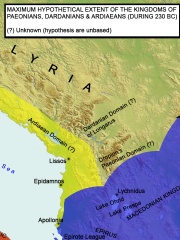
Agron
POLITICIAN
HPI: 66.48
Posizione: 3
Diodotus I
POLITICIAN
285 BC - 230 BC
HPI: 62.13
Posizione: 4
In Afghanistan
Tra le persone nate in Afghanistan, Diodotus I occupa la posizione 77 su 213. Prima di lui ci sono Al-Sijzi (945), Diodotus II (-252), Kujula Kadphises (20), Jalaluddin Haqqani (1939), Akhtar Mansour (1968), e Ahmad Zahir (1946). Dopo di lui ci sono Ismail Khan (1946), Gulbadan Begum (1523), Baysunghur (1397), Ya'qub ibn al-Layth al-Saffar (840), Abdul Rasul Sayyaf (1946), e Abdullah Abdullah (1960).
Altre persone nate in Afghanistan
Vai a tutte le classifiche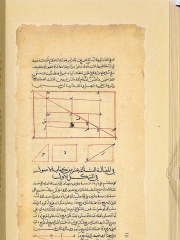
Al-Sijzi
MATHEMATICIAN
945 - 1020
HPI: 63.37
Posizione: 71
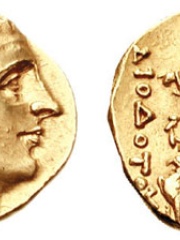
Diodotus II
POLITICIAN
252 BC - 220 BC
HPI: 62.75
Posizione: 72
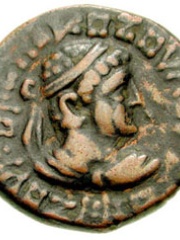
Kujula Kadphises
POLITICIAN
20 - 80
HPI: 62.71
Posizione: 73
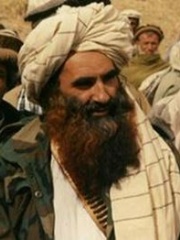
Jalaluddin Haqqani
EXTREMIST
1939 - 2018
HPI: 62.43
Posizione: 74
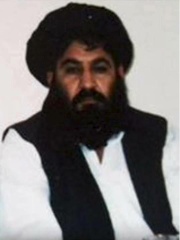
Akhtar Mansour
POLITICIAN
1968 - 2016
HPI: 62.38
Posizione: 75
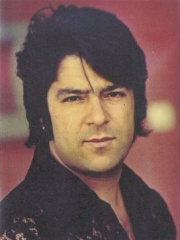
Ahmad Zahir
SINGER
1946 - 1979
HPI: 62.23
Posizione: 76
Diodotus I
POLITICIAN
285 BC - 230 BC
HPI: 62.13
Posizione: 77
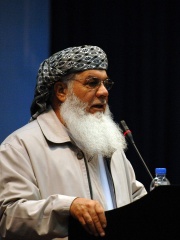
Ismail Khan
POLITICIAN
1946 - presente
HPI: 62.08
Posizione: 78
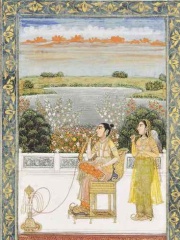
Gulbadan Begum
WRITER
1523 - 1603
HPI: 62.07
Posizione: 79
Baysunghur
ARCHITECT
1397 - 1433
HPI: 61.81
Posizione: 80
Ya'qub ibn al-Layth al-Saffar
POLITICIAN
840 - 879
HPI: 61.75
Posizione: 81
Abdul Rasul Sayyaf
POLITICIAN
1946 - presente
HPI: 61.70
Posizione: 82
Abdullah Abdullah
POLITICIAN
1960 - presente
HPI: 61.41
Posizione: 83
Tra Politico in Afghanistan
Tra Politico nati in Afghanistan, Diodotus I occupa la posizione 53. Prima di lui ci sono Inayatullah Khan (1888), Ayub Khan (1857), Abdul Ghani Baradar (1968), Diodotus II (-252), Kujula Kadphises (20), e Akhtar Mansour (1968). Dopo di lui ci sono Ismail Khan (1946), Ya'qub ibn al-Layth al-Saffar (840), Abdul Rasul Sayyaf (1946), Abdullah Abdullah (1960), Muhammad of Ghazni (998), e Abdul Qadir (1944).
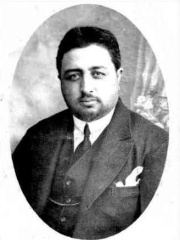
Inayatullah Khan
1888 - 1946
HPI: 63.65
Posizione: 47
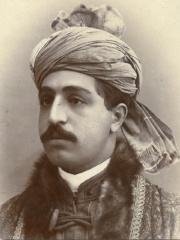
Ayub Khan
1857 - 1914
HPI: 63.58
Posizione: 48
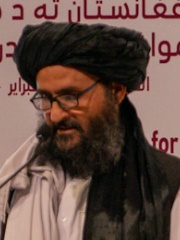
Abdul Ghani Baradar
1968 - presente
HPI: 63.48
Posizione: 49
Diodotus II
252 BC - 220 BC
HPI: 62.75
Posizione: 50
Kujula Kadphises
20 - 80
HPI: 62.71
Posizione: 51
Akhtar Mansour
1968 - 2016
HPI: 62.38
Posizione: 52
Diodotus I
285 BC - 230 BC
HPI: 62.13
Posizione: 53
Ismail Khan
1946 - presente
HPI: 62.08
Posizione: 54
Ya'qub ibn al-Layth al-Saffar
840 - 879
HPI: 61.75
Posizione: 55
Abdul Rasul Sayyaf
1946 - presente
HPI: 61.70
Posizione: 56
Abdullah Abdullah
1960 - presente
HPI: 61.41
Posizione: 57
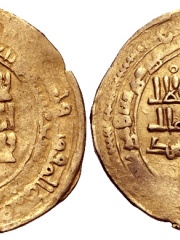
Muhammad of Ghazni
998 - 1041
HPI: 61.24
Posizione: 58
Abdul Qadir
1944 - 2014
HPI: 61.11
Posizione: 59




