Filosoof
Berengar of Tours
998 - 1088
NL.WIKIPEDIA-PAGINAWEERGAVEN (PV)
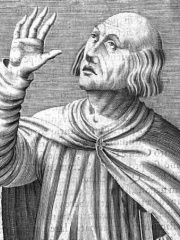
 Berengar of Tours
Zijn biografie is beschikbaar in 23 verschillende talen op Wikipedia. Berengar of Tours staat op plaats 615 onder de meest populaire filosoof, plaats 1.943 onder de meest populaire biografieën uit Frankrijk (gedaald van plaats 1.910 in 2019) en op plaats 80 onder de populairste filosoof uit Frankrijk.
Bekendheidsstatistieken
20k
Paginaweergaven
Afgelopen 12 maanden
64.44
HPI
Historische populariteitsindex
Data-inzichten
#20,844
Meer dan 9 eeuwen na de dood staat Berengar of Tours nog altijd op plaats 20,844 van alle personen in Pantheon.
Paginaweergaven van Berengar of Tours per taal
Onder Filosoof
Onder Filosoof staat Berengar of Tours op plaats 615 van 1,267. Vóór hem staan Conrad Celtes, Eduard Spranger, Silvia Federici, Cebes, Aeschines of Sphettus, en Shihab al-Din 'Umar al-Suhrawardi. Na hem komen Friedrich Albert Lange, Pietro d'Abano, Abraham Isaac Kook, Dignāga, Arthur Danto, en Metrodorus of Lampsacus.
Populairste Filosoof op Wikipedia
Naar alle ranglijsten
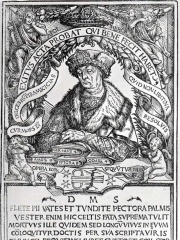
Conrad Celtes
1459 - 1508
HPI: 64.52
Plaats: 609
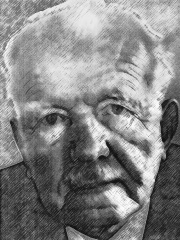
Eduard Spranger
1882 - 1963
HPI: 64.52
Plaats: 610
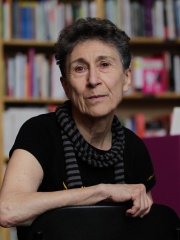
Silvia Federici
1942 - heden
HPI: 64.52
Plaats: 611
Cebes
500 BC - 400 BC
HPI: 64.47
Plaats: 612
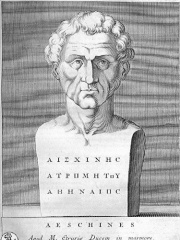
Aeschines of Sphettus
430 BC - 360 BC
HPI: 64.46
Plaats: 613
Shihab al-Din 'Umar al-Suhrawardi
1145 - 1234
HPI: 64.44
Plaats: 614
Berengar of Tours
998 - 1088
HPI: 64.44
Plaats: 615
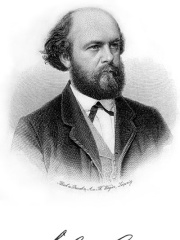
Friedrich Albert Lange
1828 - 1875
HPI: 64.42
Plaats: 616
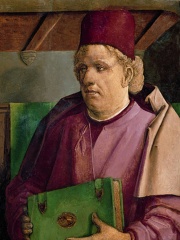
Pietro d'Abano
1250 - 1315
HPI: 64.42
Plaats: 617
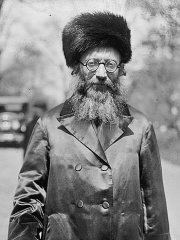
Abraham Isaac Kook
1865 - 1935
HPI: 64.40
Plaats: 618

Dignāga
480 - 540
HPI: 64.39
Plaats: 619

Arthur Danto
1924 - 2013
HPI: 64.39
Plaats: 620
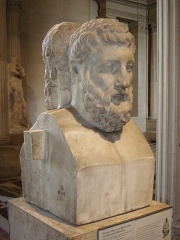
Metrodorus of Lampsacus
331 BC - 278 BC
HPI: 64.38
Plaats: 621

Tijdgenoten
Onder de mensen geboren in 998 staat Berengar of Tours op plaats 3. Vóór hem staan George Maniakes, en Mas'ud I of Ghazni. Na hem komt Muhammad of Ghazni. Onder de mensen overleden in 1088 staat Berengar of Tours op plaats 2. Vóór hem staat Nasir Khusraw. Na hem komen Abu Bakr ibn Umar, John Doukas, en Hermann of Salm.
Anderen geboren in 998
Naar alle ranglijsten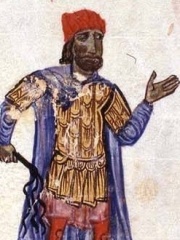
George Maniakes
MILITARY PERSONNEL
998 - 1043
HPI: 68.72
Plaats: 1
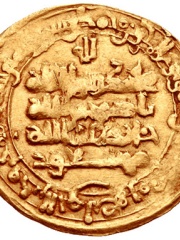
Mas'ud I of Ghazni
POLITICIAN
998 - 1041
HPI: 64.62
Plaats: 2
Berengar of Tours
PHILOSOPHER
998 - 1088
HPI: 64.44
Plaats: 3
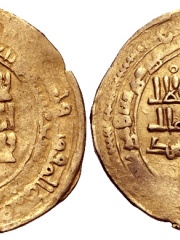
Muhammad of Ghazni
POLITICIAN
998 - 1041
HPI: 61.24
Plaats: 4
Anderen overleden in 1088
Naar alle ranglijsten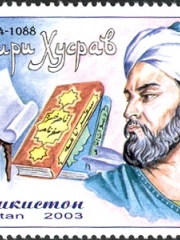
Nasir Khusraw
PHILOSOPHER
1004 - 1088
HPI: 69.26
Plaats: 1
Berengar of Tours
PHILOSOPHER
998 - 1088
HPI: 64.44
Plaats: 2
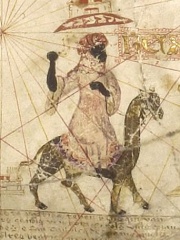
Abu Bakr ibn Umar
MILITARY PERSONNEL
1100 - 1088
HPI: 63.66
Plaats: 3

John Doukas
POLITICIAN
HPI: 62.38
Plaats: 4
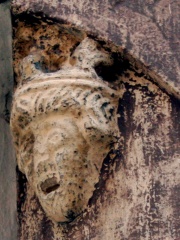
Hermann of Salm
POLITICIAN
1035 - 1088
HPI: 60.87
Plaats: 5
In Frankrijk
Onder de mensen geboren in Frankrijk staat Berengar of Tours op plaats 1,943 van 6,770. Vóór hem staan Sophie Gengembre Anderson (1823), Charlotte of Albret (1480), Heinz Harmel (1906), Germaine Dulac (1882), Elias, Duke of Parma (1880), en Antoine Barnave (1761). Na hem komen Itta of Metz (592), Jacques Roux (1752), Varro Atacinus (-82), Bernard de Tremelay (1100), Charlotte Perriand (1903), en Gabriel Pierné (1863).
Anderen geboren in Frankrijk
Naar alle ranglijsten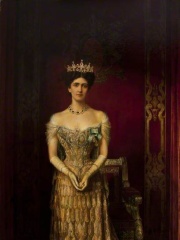
Sophie Gengembre Anderson
PAINTER
1823 - 1903
HPI: 64.46
Plaats: 1,937
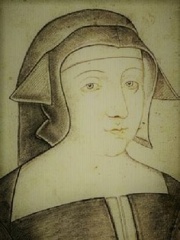
Charlotte of Albret
NOBLEMAN
1480 - 1514
HPI: 64.46
Plaats: 1,938
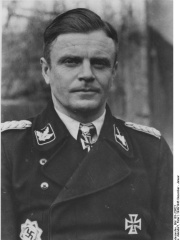
Heinz Harmel
MILITARY PERSONNEL
1906 - 2000
HPI: 64.45
Plaats: 1,939
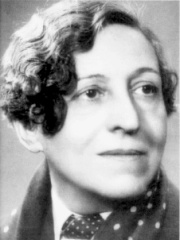
Germaine Dulac
FILM DIRECTOR
1882 - 1942
HPI: 64.45
Plaats: 1,940
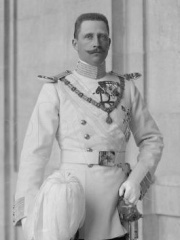
Elias, Duke of Parma
NOBLEMAN
1880 - 1959
HPI: 64.45
Plaats: 1,941
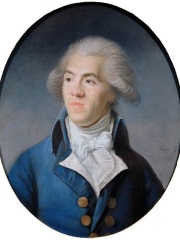
Antoine Barnave
POLITICIAN
1761 - 1793
HPI: 64.45
Plaats: 1,942
Berengar of Tours
PHILOSOPHER
998 - 1088
HPI: 64.44
Plaats: 1,943
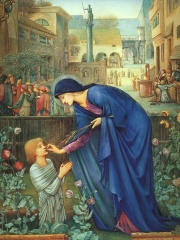
Itta of Metz
RELIGIOUS FIGURE
592 - 652
HPI: 64.43
Plaats: 1,944
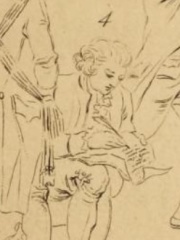
Jacques Roux
SOCIAL ACTIVIST
1752 - 1794
HPI: 64.43
Plaats: 1,945

Varro Atacinus
WRITER
82 BC - 35 BC
HPI: 64.43
Plaats: 1,946

Bernard de Tremelay
POLITICIAN
1100 - 1153
HPI: 64.42
Plaats: 1,947
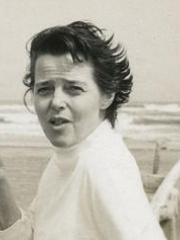
Charlotte Perriand
ARCHITECT
1903 - 1999
HPI: 64.42
Plaats: 1,948
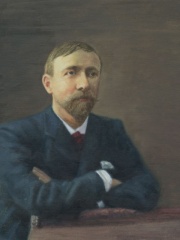
Gabriel Pierné
COMPOSER
1863 - 1937
HPI: 64.41
Plaats: 1,949
Onder Filosoof in Frankrijk
Onder Filosoof geboren in Frankrijk staat Berengar of Tours op plaats 80. Vóór hem staan Étienne-Gabriel Morelly (1717), Pierre Charron (1541), Georges Canguilhem (1904), Jean Hyppolite (1907), Jacques Ellul (1912), en Henry Corbin (1903). Na hem komen Étienne Balibar (1942), Maurice Blondel (1861), Yves Bonnefoy (1923), Pierre Hadot (1922), Émile Chartier (1868), en Amalric of Bena (1150).
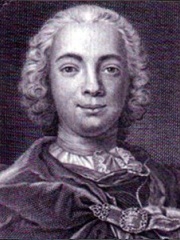
Étienne-Gabriel Morelly
1717 - 1778
HPI: 64.91
Plaats: 74
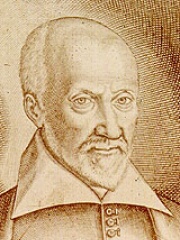
Pierre Charron
1541 - 1603
HPI: 64.89
Plaats: 75

Georges Canguilhem
1904 - 1995
HPI: 64.85
Plaats: 76
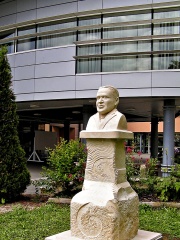
Jean Hyppolite
1907 - 1968
HPI: 64.79
Plaats: 77
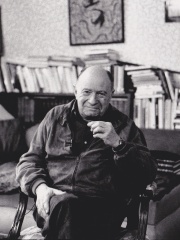
Jacques Ellul
1912 - 1994
HPI: 64.69
Plaats: 78
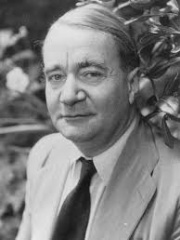
Henry Corbin
1903 - 1978
HPI: 64.66
Plaats: 79
Berengar of Tours
998 - 1088
HPI: 64.44
Plaats: 80
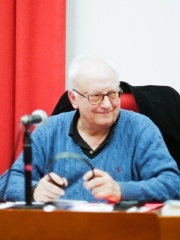
Étienne Balibar
1942 - heden
HPI: 64.24
Plaats: 81
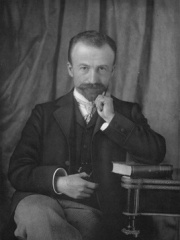
Maurice Blondel
1861 - 1949
HPI: 64.22
Plaats: 82
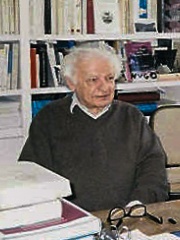
Yves Bonnefoy
1923 - 2016
HPI: 64.20
Plaats: 83
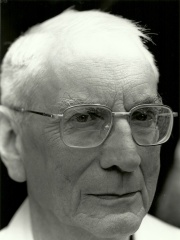
Pierre Hadot
1922 - 2010
HPI: 64.01
Plaats: 84

Émile Chartier
1868 - 1951
HPI: 63.98
Plaats: 85
Amalric of Bena
1150 - 1206
HPI: 63.87
Plaats: 86




