Personnalité religieuse
Itta of Metz
592 - 652
PAGES VUES SUR FR.WIKIPEDIA (PV)

 Itta of Metz
Sa biographie est disponible en 16 langues sur Wikipédia (en hausse par rapport à 15 en 2024). Itta of Metz est la 1,312th personnalité religieuse la plus populaire (en hausse du 1,885th en 2024), la 1,944th biographie la plus populaire de France (en hausse du 3,133rd en 2019), ainsi que la 101st personnalité religieuse de France la plus populaire.
Indicateurs de mémorabilité
19k
Pages vues
12 derniers mois
64.43
HPI
Indice de popularité historique
Faits marquants
+13k
Itta of Metz a gagné 13,091 places au classement HPI mondial de Pantheon, passant du n° 33,936 au n° 20,862.
Pages vues de Itta of Metz par langue
Parmi les Personnalité religieuse
Parmi les Personnalité religieuse, Itta of Metz occupe le rang 1,312 sur 3,189. Avant elle viennent Hafiz Saeed, Raymond Nonnatus, Phinehas, Anuruddha, John of Montecorvino, et Theophilus Presbyter. Après elle viennent Gildas, Joseph Freinademetz, Joshua the High Priest, Simeon Stylites the Younger, Mauro Piacenza, et Saint Publius.
Personnalité religieuse les plus populaires sur Wikipédia
Voir tous les classements

Hafiz Saeed
1950 - présent
HPI : 64.47
Rang : 1,306
Raymond Nonnatus
1204 - 1240
HPI : 64.46
Rang : 1,307
Phinehas
1300 BC - présent
HPI : 64.45
Rang : 1,308

Anuruddha
450 BC - présent
HPI : 64.45
Rang : 1,309

John of Montecorvino
1246 - 1328
HPI : 64.44
Rang : 1,310

Theophilus Presbyter
1070 - 1125
HPI : 64.43
Rang : 1,311
Itta of Metz
592 - 652
HPI : 64.43
Rang : 1,312

Gildas
500 - 570
HPI : 64.43
Rang : 1,313
Joseph Freinademetz
1852 - 1908
HPI : 64.41
Rang : 1,314
Joshua the High Priest
HPI : 64.41
Rang : 1,315
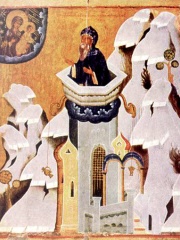
Simeon Stylites the Younger
521 - 597
HPI : 64.41
Rang : 1,316
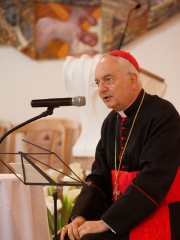
Mauro Piacenza
1944 - présent
HPI : 64.41
Rang : 1,317
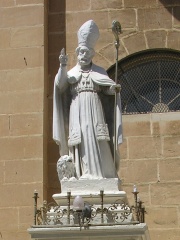
Saint Publius
100 - 112
HPI : 64.40
Rang : 1,318

Contemporains
Parmi les personnes nées en 592, Itta of Metz occupe le rang 3. Avant elle viennent Khalid ibn al-Walid, et Zaynab bint Jahsh. Parmi les personnes décédées en 652, Itta of Metz occupe le rang 4. Avant elle viennent Yazdegerd III, Abu Dhar al-Ghifari, et Rothari. Après elle viennent Unknown Archon, Emmeram of Regensburg, Al-Hakam ibn Abi al-As, et Olympius.
Autres personnes nées en 592
Voir tous les classements
Khalid ibn al-Walid
MILITARY PERSONNEL
592 - 642
HPI : 82.46
Rang : 1

Zaynab bint Jahsh
RELIGIOUS FIGURE
592 - 641
HPI : 76.60
Rang : 2
Itta of Metz
RELIGIOUS FIGURE
592 - 652
HPI : 64.43
Rang : 3
Autres personnes décédées en 652
Voir tous les classements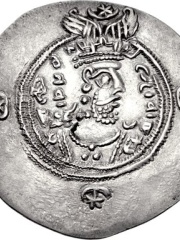
Yazdegerd III
POLITICIAN
624 - 652
HPI : 74.33
Rang : 1

Abu Dhar al-Ghifari
RELIGIOUS FIGURE
600 - 652
HPI : 71.01
Rang : 2
Rothari
POLITICIAN
606 - 652
HPI : 65.33
Rang : 3
Itta of Metz
RELIGIOUS FIGURE
592 - 652
HPI : 64.43
Rang : 4
Unknown Archon
POLITICIAN
580 - 652
HPI : 62.07
Rang : 5
Emmeram of Regensburg
RELIGIOUS FIGURE
600 - 652
HPI : 60.92
Rang : 6

Al-Hakam ibn Abi al-As
NOBLEMAN
HPI : 56.06
Rang : 7

Olympius
POLITICIAN
HPI : 55.57
Rang : 8
En France
Parmi les personnes nées en France, Itta of Metz occupe le rang 1,944 sur 7,658. Avant elle viennent Charlotte of Albret (1480), Heinz Harmel (1906), Germaine Dulac (1882), Elias, Duke of Parma (1880), Antoine Barnave (1761), et Berengar of Tours (998). Après elle viennent Jacques Roux (1752), Varro Atacinus (-82), Bernard de Tremelay (1100), Charlotte Perriand (1903), Gabriel Pierné (1863), et Marie Anne de Mailly (1717).
Autres personnes nées en France
Voir tous les classements
Charlotte of Albret
NOBLEMAN
1480 - 1514
HPI : 64.46
Rang : 1,938
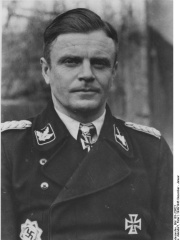
Heinz Harmel
MILITARY PERSONNEL
1906 - 2000
HPI : 64.45
Rang : 1,939
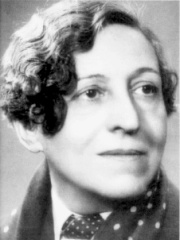
Germaine Dulac
FILM DIRECTOR
1882 - 1942
HPI : 64.45
Rang : 1,940
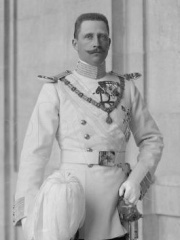
Elias, Duke of Parma
NOBLEMAN
1880 - 1959
HPI : 64.45
Rang : 1,941
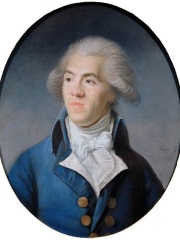
Antoine Barnave
POLITICIAN
1761 - 1793
HPI : 64.45
Rang : 1,942
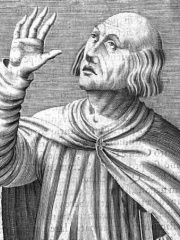
Berengar of Tours
PHILOSOPHER
998 - 1088
HPI : 64.44
Rang : 1,943
Itta of Metz
RELIGIOUS FIGURE
592 - 652
HPI : 64.43
Rang : 1,944
Jacques Roux
SOCIAL ACTIVIST
1752 - 1794
HPI : 64.43
Rang : 1,945

Varro Atacinus
WRITER
82 BC - 35 BC
HPI : 64.43
Rang : 1,946

Bernard de Tremelay
POLITICIAN
1100 - 1153
HPI : 64.42
Rang : 1,947

Charlotte Perriand
ARCHITECT
1903 - 1999
HPI : 64.42
Rang : 1,948
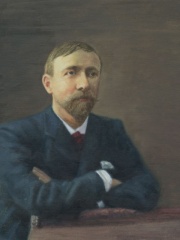
Gabriel Pierné
COMPOSER
1863 - 1937
HPI : 64.41
Rang : 1,949
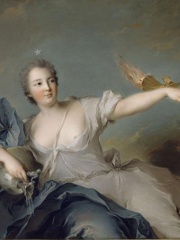
Marie Anne de Mailly
POLITICIAN
1717 - 1744
HPI : 64.41
Rang : 1,950
Parmi les Personnalité religieuse en France
Parmi les Personnalité religieuse nés en France, Itta of Metz occupe le rang 101. Avant elle viennent Valentin Haüy (1745), Benedict Joseph Labre (1748), Maurice de Sully (1110), Marcabru (1200), André Vingt-Trois (1942), et Madeleine Sophie Barat (1779). Après elle viennent Odilo of Cluny (961), Colette of Corbie (1381), Blandina (101), Jean Calas (1698), François de la Chaise (1624), et Henri Estienne (1528).
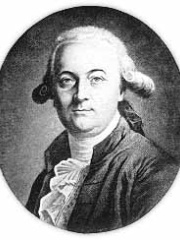
Valentin Haüy
1745 - 1822
HPI : 64.79
Rang : 95
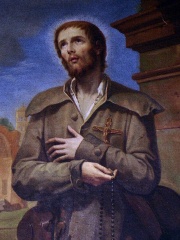
Benedict Joseph Labre
1748 - 1783
HPI : 64.65
Rang : 96
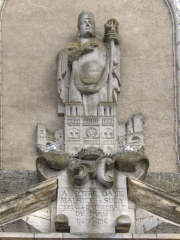
Maurice de Sully
1110 - 1196
HPI : 64.55
Rang : 97
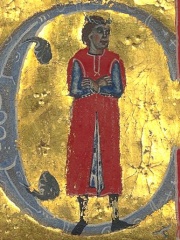
Marcabru
1200 - 1150
HPI : 64.48
Rang : 98
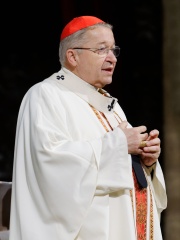
André Vingt-Trois
1942 - 2025
HPI : 64.48
Rang : 99
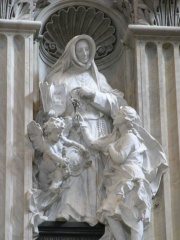
Madeleine Sophie Barat
1779 - 1865
HPI : 64.48
Rang : 100
Itta of Metz
592 - 652
HPI : 64.43
Rang : 101
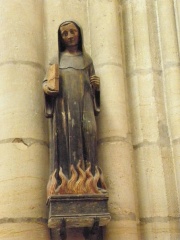
Odilo of Cluny
961 - 1049
HPI : 64.37
Rang : 102

Colette of Corbie
1381 - 1447
HPI : 64.36
Rang : 103
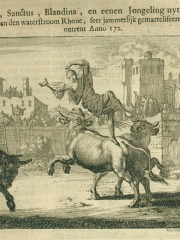
Blandina
101 - 177
HPI : 64.29
Rang : 104

Jean Calas
1698 - 1762
HPI : 64.17
Rang : 105
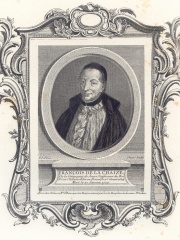
François de la Chaise
1624 - 1709
HPI : 64.14
Rang : 106
Henri Estienne
1528 - 1598
HPI : 64.01
Rang : 107




