Philosoph
Al-Ghazālī
1058 - 1111
DE.WIKIPEDIA-SEITENAUFRUFE (PV)

 Al-Ghazālī
Seine Biografie ist in 121 verschiedenen Sprachen auf Wikipedia verfügbar (gestiegen von 115 im Jahr 2024). Al-Ghazālī ist der 30th beliebteste Philosoph (gesunken vom 29th im Jahr 2024), die 4th beliebteste Biografie aus Iran (gesunken vom 2nd im Jahr 2019) und der beliebteste aus dem Iran Philosoph.
Al-Ghazālī ist heute im Trend!
Warum Al-Ghazālī im Trend ist:
Der angesehene islamische Philosoph Al-Ghazali aus dem 11. Jahrhundert ist derzeit im Trend da zeitgenössische Gelehrte und Institutionen sein tiefgründiges intellektuelles Erbe und seine anhaltende Relevanz aktiv neu untersuchen jüngste Diskussionen insbesondere Ende 2025 und 2026 heben seine bedeutenden Beiträge zum islamischen Denken zur Ethik und zur Spiritualität hervor wobei sein Hauptwerk Ihya Ulum al-Din weiterhin als Eckpfeiler für die islamische Bildung und interdisziplinäre Studien dient es gibt auch eine erneute Debatte über seinen historischen Einfluss auf den Verlauf der wissenschaftlichen Forschung in der islamischen Welt was zu einer Neubewertung seiner philosophischen Standpunkte und ihrer langfristigen Folgen führt dieses anhaltende wissenschaftliche Engagement unterstreicht Al-Ghazalis zeitlose Wirkung und seine fortwährende Fähigkeit kritisches Diskurs über Glauben Vernunft und gesellschaftliche Entwicklung anzuregen.
Quellen:
- https://singaporesedekah.com/pages/the-lasting-influence-of-imam-al-ghazali-s-work
- https://www.ejournal.stitbima.ac.id/index.php/fitua/article/download/1134/598
- https://www.newageislam.com/islamic-ideology/m-basheer-ahmed-md-new-age-islam/al-ghazali-reason-decline-islamic-science-call-renewal/d/139694
- https://www.eurasiareview.com/11072026-how-khameneis-highly-militarized-funeral-exposed-a-trembling-regime-oped/
- https://www.thefridaytimes.com/29-Dec-2024/al-ghazali-s-opposition-to-philosophy-putting-it-all-in-context
Bekanntheitsmetriken
790k
Seitenaufrufe
Letzte 12 Monate
85.99
HPI
Historischer Popularitätsindex
Daten-Einblicke
#1
Al-Ghazālī ist die bekannteste der 9 bedeutenden Persönlichkeiten, die in Tus, Iran, im heutigen Iran, geboren wurden — noch vor Dschābir ibn Hayyān, Firdausi und Nizām al-Mulk.
#331
Mehr als 9 Jahrhunderte nach dem Tod belegt Al-Ghazālī noch immer Platz 331 unter allen Persönlichkeiten in Pantheon.
121
Die Biografie von Al-Ghazālī erscheint in 121 Sprachversionen der Wikipedia – mehr als bei 98 % aller Philosoph.
Seitenaufrufe von Al-Ghazālī nach Sprache
Unter Philosoph
Unter Philosoph belegt Al-Ghazālī Rang 30 von 1,267. Vor ihm stehen Arthur Schopenhauer, Montesquieu, Democritus, Seneca the Younger, Epicurus, und Averroes. Nach ihm folgen Thomas Hobbes, Friedrich Engels, Auguste Comte, Martin Heidegger, Maria Montessori, und Parmenides.
Die beliebtesten Philosoph auf Wikipedia
Zu allen Ranglisten
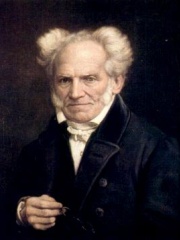
Arthur Schopenhauer
1788 - 1860
HPI: 87.55
Rang: 24
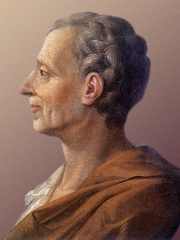
Montesquieu
1689 - 1755
HPI: 87.46
Rang: 25
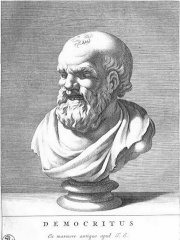
Democritus
460 BC - 360 BC
HPI: 86.85
Rang: 26
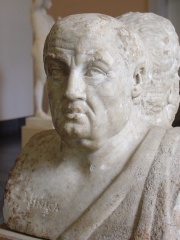
Seneca the Younger
4 BC - 65
HPI: 86.81
Rang: 27
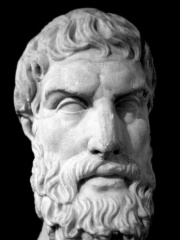
Epicurus
341 BC - 269 BC
HPI: 86.65
Rang: 28
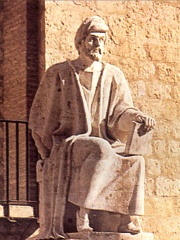
Averroes
1126 - 1198
HPI: 86.05
Rang: 29
Al-Ghazali
1058 - 1111
HPI: 85.99
Rang: 30
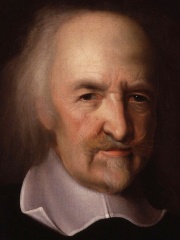
Thomas Hobbes
1588 - 1679
HPI: 85.75
Rang: 31
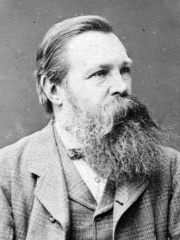
Friedrich Engels
1820 - 1895
HPI: 85.72
Rang: 32
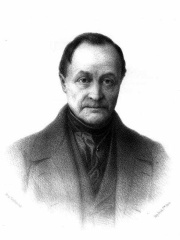
Auguste Comte
1798 - 1857
HPI: 85.43
Rang: 33
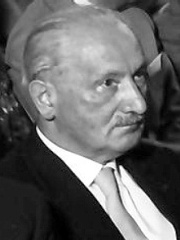
Martin Heidegger
1889 - 1976
HPI: 84.92
Rang: 34
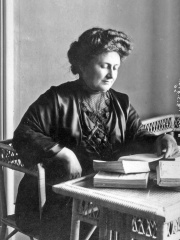
Maria Montessori
1870 - 1952
HPI: 84.59
Rang: 35
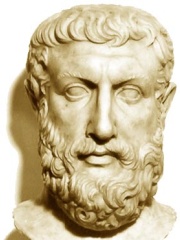
Parmenides
501 BC - 470 BC
HPI: 84.47
Rang: 36

Zeitgenossen
Unter den im Jahr 1058 Geborenen belegt Al-Ghazālī Rang 1. Nach ihm folgen Baldwin I of Jerusalem, Odo I, Duke of Burgundy, und Andronikos Doukas. Unter den im Jahr 1111 Verstorbenen belegt Al-Ghazālī Rang 1. Nach ihm folgen Bohemond I of Antioch, Robert of Molesme, Robert II, Count of Flanders, Roger Borsa, Antipope Sylvester IV, Berthold II, Duke of Swabia, und Otto II, Count of Habsburg.
Weitere im Jahr 1058 Geborene
Zu allen RanglistenAl-Ghazali
PHILOSOPHER
1058 - 1111
HPI: 85.99
Rang: 1

Baldwin I of Jerusalem
POLITICIAN
1058 - 1118
HPI: 75.50
Rang: 2

Odo I, Duke of Burgundy
POLITICIAN
1058 - 1103
HPI: 64.26
Rang: 3
Andronikos Doukas
POLITICIAN
1058 - 1077
HPI: 60.37
Rang: 4
Weitere im Jahr 1111 Verstorbene
Zu allen RanglistenAl-Ghazali
PHILOSOPHER
1058 - 1111
HPI: 85.99
Rang: 1

Bohemond I of Antioch
MILITARY PERSONNEL
1054 - 1111
HPI: 73.89
Rang: 2

Robert of Molesme
RELIGIOUS FIGURE
1024 - 1111
HPI: 70.19
Rang: 3

Robert II, Count of Flanders
POLITICIAN
1065 - 1111
HPI: 67.53
Rang: 4
Roger Borsa
POLITICIAN
1060 - 1111
HPI: 64.21
Rang: 5

Antipope Sylvester IV
RELIGIOUS FIGURE
1100 - 1111
HPI: 63.29
Rang: 6
Berthold II, Duke of Swabia
POLITICIAN
1050 - 1111
HPI: 61.34
Rang: 7
Otto II, Count of Habsburg
NOBLEMAN
1100 - 1111
HPI: 59.23
Rang: 8
In Iran
Unter den in Iran Geborenen belegt Al-Ghazālī Rang 4 von 631. Vor ihm stehen Xerxes I (-519), Cyrus the Great (-600), und Omar Khayyam (1048). Nach ihm folgen Zoroaster (-2000), Ruhollah Khomeini (1902), Abu Nuwas (762), Jabir ibn Hayyan (721), Harun al-Rashid (766), Mohammad Reza Pahlavi (1919), Darius III (-380), und Ali Khamenei (1939).
Weitere in Iran geborene Personen
Zu allen Ranglisten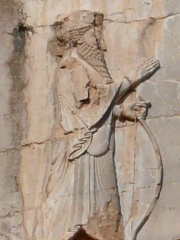
Xerxes I
POLITICIAN
519 BC - 475 BC
HPI: 87.97
Rang: 1
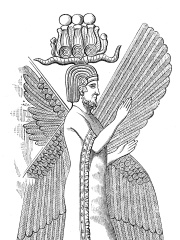
Cyrus the Great
POLITICIAN
600 BC - 530 BC
HPI: 86.91
Rang: 2
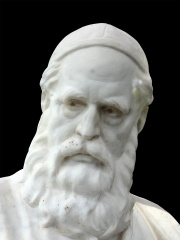
Omar Khayyam
MATHEMATICIAN
1048 - 1131
HPI: 86.69
Rang: 3
Al-Ghazali
PHILOSOPHER
1058 - 1111
HPI: 85.99
Rang: 4
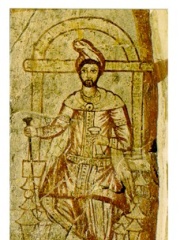
Zoroaster
RELIGIOUS FIGURE
2000 BC - 2000 BC
HPI: 85.42
Rang: 5
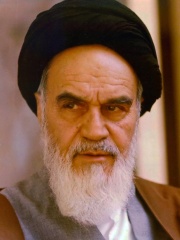
Ruhollah Khomeini
RELIGIOUS FIGURE
1902 - 1989
HPI: 83.10
Rang: 6
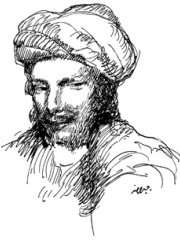
Abu Nuwas
WRITER
762 - 814
HPI: 82.59
Rang: 7
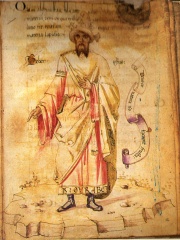
Jabir ibn Hayyan
CHEMIST
721 - 815
HPI: 82.30
Rang: 8

Harun al-Rashid
POLITICIAN
766 - 809
HPI: 82.20
Rang: 9
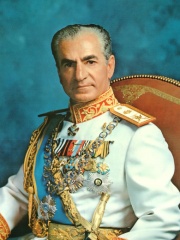
Mohammad Reza Pahlavi
POLITICIAN
1919 - 1980
HPI: 82.03
Rang: 10
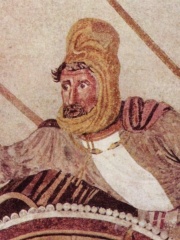
Darius III
POLITICIAN
380 BC - 330 BC
HPI: 81.71
Rang: 11
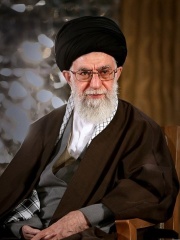
Ali Khamenei
POLITICIAN
1939 - 2026
HPI: 81.36
Rang: 12
Unter Philosoph in Iran
Unter den in Iran geborenen Philosoph belegt Al-Ghazālī Rang 1. Nach ihm folgen Al-Tabari (839), Bodhidharma (483), Fakhr al-Din al-Razi (1149), Bayazid Bastami (804), Miskawayh (932), Mazdak (450), Shahab al-Din Yahya ibn Habash Suhrawardi (1155), Haji Bektash Veli (1209), Mulla Sadra (1571), Al-Baydawi (1201), und Shihab al-Din 'Umar al-Suhrawardi (1145).
Al-Ghazali
1058 - 1111
HPI: 85.99
Rang: 1

Al-Tabari
839 - 923
HPI: 78.71
Rang: 2

Bodhidharma
483 - 540
HPI: 78.17
Rang: 3
Fakhr al-Din al-Razi
1149 - 1209
HPI: 71.93
Rang: 4
Bayazid Bastami
804 - 874
HPI: 71.16
Rang: 5

Miskawayh
932 - 1030
HPI: 70.88
Rang: 6
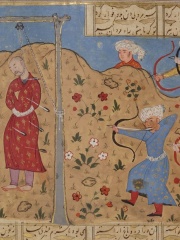
Mazdak
450 - 529
HPI: 70.30
Rang: 7
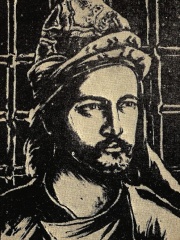
Shahab al-Din Yahya ibn Habash Suhrawardi
1155 - 1191
HPI: 68.46
Rang: 8
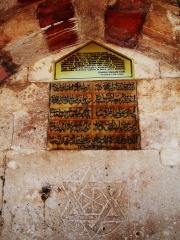
Haji Bektash Veli
1209 - 1271
HPI: 68.44
Rang: 9

Mulla Sadra
1571 - 1636
HPI: 68.03
Rang: 10
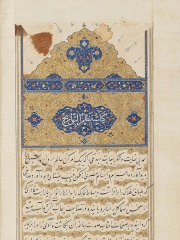
Al-Baydawi
1201 - heute
HPI: 64.85
Rang: 11
Shihab al-Din 'Umar al-Suhrawardi
1145 - 1234
HPI: 64.44
Rang: 12




