Figura religiosa
Ludger
742 - 809
VISUALIZAÇÕES EM PT.WIKIPEDIA (PV)
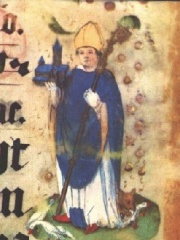
 Ludger
Sua biografia está disponível em 20 idiomas na Wikipédia (aumento em relação a 18 em 2024). Ludger é o 1394º figura religiosa mais popular (caiu do 1349º em 2024), a 294ª biografia mais popular dos Países Baixos (subiu do 312ª em 2019) e o 9º figura religiosa mais popular dos Países Baixos.
Métricas de memorabilidade
27k
Visualizações
Últimos 12 meses
63.98
HPI
Índice de Popularidade Histórica
Destaques dos dados
#22,228
Mais de 12 séculos após a morte, Ludger ainda ocupa a posição nº 22,228 entre todas as personalidades do Pantheon.
1 de jan.
Ludger faz aniversário no mesmo dia (1 de janeiro) que Mary, mother of Jesus, Saint Peter e Laozi.
Visualizações da página de Ludger por idioma
Entre Figura religiosa
Entre Figura religiosa, Ludger ocupa a posição 1,394 de 3,187. Antes dele vêm Henri Estienne, Claudio Acquaviva, Joseph Franklin Rutherford, Suhayb ar-Rumi, Ahmad al-Rifaʽi, e Tode Mongke. Depois dele vêm Maruthas of Martyropolis, George Sphrantzes, Philotheus I of Constantinople, Umayya ibn Khalaf, Joachim Meisner, e Jozef Tomko.
Figura religiosa mais populares na Wikipédia
Ver todas as classificações
Henri Estienne
1528 - 1598
HPI: 64.01
Posição: 1,388
Claudio Acquaviva
1543 - 1615
HPI: 64.00
Posição: 1,389

Joseph Franklin Rutherford
1869 - 1942
HPI: 64.00
Posição: 1,390
Suhayb ar-Rumi
587 - 659
HPI: 64.00
Posição: 1,391
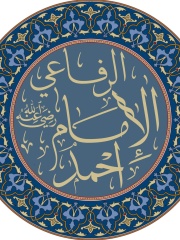
Ahmad al-Rifaʽi
1118 - 1182
HPI: 63.99
Posição: 1,392
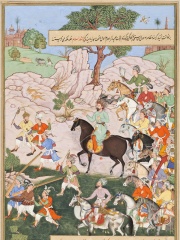
Tode Mongke
1282 - 1287
HPI: 63.99
Posição: 1,393
Ludger
742 - 809
HPI: 63.98
Posição: 1,394
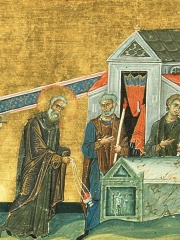
Maruthas of Martyropolis
400 - 422
HPI: 63.98
Posição: 1,395

George Sphrantzes
1401 - 1477
HPI: 63.98
Posição: 1,396

Philotheus I of Constantinople
1300 - 1379
HPI: 63.97
Posição: 1,397

Umayya ibn Khalaf
HPI: 63.96
Posição: 1,398
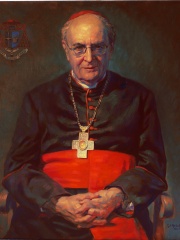
Joachim Meisner
1933 - 2017
HPI: 63.96
Posição: 1,399
Jozef Tomko
1924 - 2022
HPI: 63.96
Posição: 1,400

Contemporâneos
Entre as pessoas nascidas em 742, Ludger ocupa a posição 4. Antes dele vêm Emperor Dezong of Tang, Tassilo III, Duke of Bavaria, e Trisong Detsen. Entre as pessoas falecidas em 809, Ludger ocupa a posição 2. Antes dele vem Harun al-Rashid. Depois dele vêm Aureolus of Aragon, e Ōtomo no Otomaro.
Outras pessoas nascidas em 742
Ver todas as classificações
Emperor Dezong of Tang
POLITICIAN
742 - 805
HPI: 67.71
Posição: 1
Tassilo III, Duke of Bavaria
POLITICIAN
742 - 794
HPI: 67.24
Posição: 2
Trisong Detsen
POLITICIAN
742 - 798
HPI: 67.04
Posição: 3
Ludger
RELIGIOUS FIGURE
742 - 809
HPI: 63.98
Posição: 4
Outras pessoas falecidas em 809
Ver todas as classificações
Harun al-Rashid
POLITICIAN
766 - 809
HPI: 82.20
Posição: 1
Ludger
RELIGIOUS FIGURE
742 - 809
HPI: 63.98
Posição: 2

Aureolus of Aragon
POLITICIAN
710 - 809
HPI: 61.76
Posição: 3

Ōtomo no Otomaro
MILITARY PERSONNEL
731 - 809
HPI: 60.82
Posição: 4
Em Países Baixos
Entre as pessoas nascidas em Países Baixos, Ludger ocupa a posição 294 de 1,646. Antes dele vêm Erwin Koeman (1961), Jacob van Campen (1596), Alexander, Prince of Orange (1851), Floris I, Count of Holland (1025), Willem de Sitter (1872), e Countess Louise Henriette of Nassau (1627). Depois dele vêm Prince Friso of Orange-Nassau (1968), Pieter van der Aa (1659), Zacharias Janssen (1585), Regnier de Graaf (1641), Philip de Koninck (1619), e Jan Timman (1951).
Outras pessoas nascidas em Países Baixos
Ver todas as classificações
Erwin Koeman
SOCCER PLAYER
1961 - presente
HPI: 64.16
Posição: 288
Jacob van Campen
ARCHITECT
1596 - 1657
HPI: 64.14
Posição: 289
Alexander, Prince of Orange
POLITICIAN
1851 - 1884
HPI: 64.13
Posição: 290
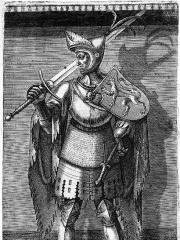
Floris I, Count of Holland
POLITICIAN
1025 - 1061
HPI: 64.04
Posição: 291
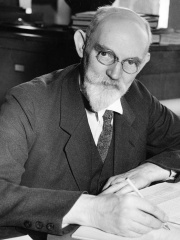
Willem de Sitter
MATHEMATICIAN
1872 - 1934
HPI: 64.04
Posição: 292
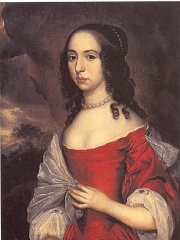
Countess Louise Henriette of Nassau
POLITICIAN
1627 - 1667
HPI: 63.99
Posição: 293
Ludger
RELIGIOUS FIGURE
742 - 809
HPI: 63.98
Posição: 294
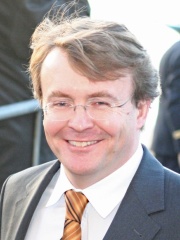
Prince Friso of Orange-Nassau
NOBLEMAN
1968 - 2013
HPI: 63.97
Posição: 295
Pieter van der Aa
POLITICIAN
1659 - 1733
HPI: 63.90
Posição: 296
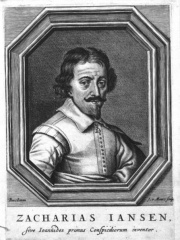
Zacharias Janssen
INVENTOR
1585 - 1635
HPI: 63.89
Posição: 297
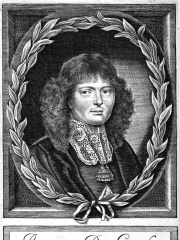
Regnier de Graaf
PHYSICIAN
1641 - 1673
HPI: 63.89
Posição: 298

Philip de Koninck
PAINTER
1619 - 1688
HPI: 63.85
Posição: 299
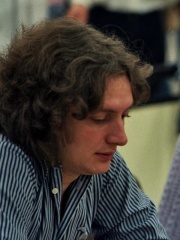
Jan Timman
CHESS PLAYER
1951 - 2026
HPI: 63.83
Posição: 300
Entre Figura religiosa em Países Baixos
Entre Figura religiosa nascidos em Países Baixos, Ludger ocupa a posição 9. Antes dele vêm Norbert of Xanten (1080), John of Leiden (1509), Lambert of Maastricht (635), Lidwina (1380), Geert Groote (1340), e Wim Hof (1959). Depois dele vêm Johannes Willebrands (1909), Christiaan Snouck Hurgronje (1857), Adrianus Johannes Simonis (1931), Peter Hans Kolvenbach (1928), Bernardus Johannes Alfrink (1900), e Balthasar Bekker (1634).
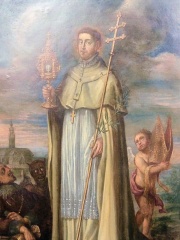
Norbert of Xanten
1080 - 1134
HPI: 69.81
Posição: 3
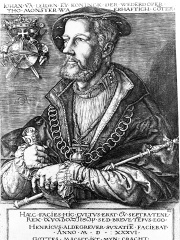
John of Leiden
1509 - 1536
HPI: 66.72
Posição: 4
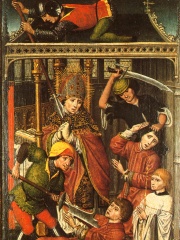
Lambert of Maastricht
635 - 705
HPI: 66.66
Posição: 5
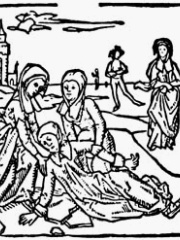
Lidwina
1380 - 1433
HPI: 66.60
Posição: 6
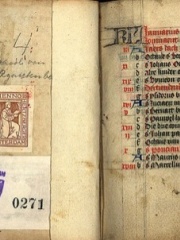
Geert Groote
1340 - 1384
HPI: 64.79
Posição: 7

Wim Hof
1959 - presente
HPI: 64.23
Posição: 8
Ludger
742 - 809
HPI: 63.98
Posição: 9
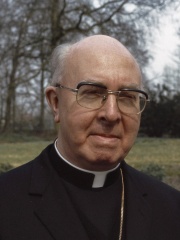
Johannes Willebrands
1909 - 2006
HPI: 63.17
Posição: 10
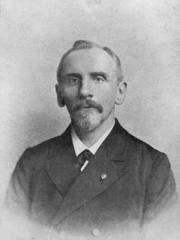
Christiaan Snouck Hurgronje
1857 - 1936
HPI: 62.35
Posição: 11
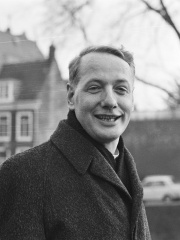
Adrianus Johannes Simonis
1931 - 2020
HPI: 62.09
Posição: 12
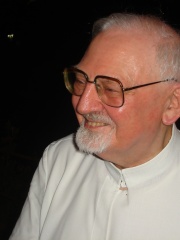
Peter Hans Kolvenbach
1928 - 2016
HPI: 61.68
Posição: 13
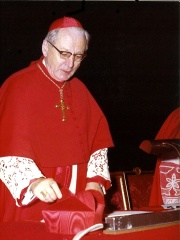
Bernardus Johannes Alfrink
1900 - 1987
HPI: 60.10
Posição: 14
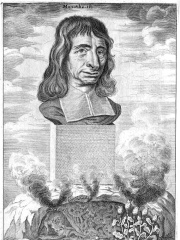
Balthasar Bekker
1634 - 1698
HPI: 59.62
Posição: 15




