Politicien
Empress Lü
241 BC - 180 BC
FR.WIKIPEDIA PAGE VIEWS (PV)
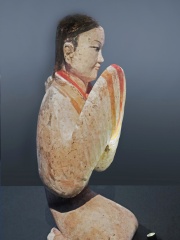
 Empress Lü
Sa biographie est disponible en 27 langues sur Wikipédia. Empress Lü est la 2,421st politicien la plus populaire (en baisse du 1,637th en 2024), la 149th biographie la plus populaire de Chine (en baisse du 117th en 2019), ainsi que la 92nd politicien de Chine la plus populaire.
Memorability Metrics
430k
Page Views
Past 12 months
71.03
HPI
Historical Popularity Index
Page views of Empress Lü by language
Among Politiciens
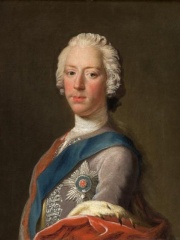
Among politiciens, Empress Lü ranks 2,420 out of 19,576. Before her are Theudebert I, Dangun, Emperor Itoku, Prajadhipok, Theodoric II, and Guntram. After her are Susilo Bambang Yudhoyono, Walther Rathenau, Sekhemkhet, Hugh, Count of Vermandois, Seleucus II Callinicus, and Charles Edward Stuart.
Most Popular Politiciens in Wikipedia
Go to all Rankings
Theudebert I
504 - 548
HPI: 71.04
Rank: 2,415
Dangun
333 BC - Present
HPI: 71.04
Rank: 2,416
Emperor Itoku
553 BC - 477 BC
HPI: 71.04
Rank: 2,417
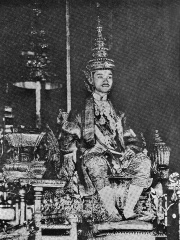
Prajadhipok
1893 - 1941
HPI: 71.04
Rank: 2,418
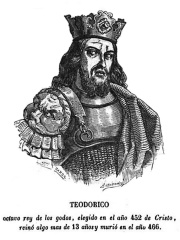
Theodoric II
426 - 466
HPI: 71.04
Rank: 2,419
Guntram
532 - 592
HPI: 71.04
Rank: 2,420
Empress Lü
241 BC - 180 BC
HPI: 71.03
Rank: 2,421
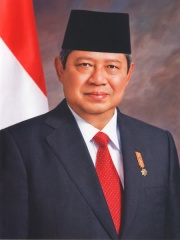
Susilo Bambang Yudhoyono
1949 - Present
HPI: 71.03
Rank: 2,422
Walther Rathenau
1867 - 1922
HPI: 71.03
Rank: 2,423
Sekhemkhet
2800 BC - 2700 BC
HPI: 71.03
Rank: 2,424
Hugh, Count of Vermandois
1057 - 1101
HPI: 71.03
Rank: 2,425
Seleucus II Callinicus
265 BC - 225 BC
HPI: 71.03
Rank: 2,426
Charles Edward Stuart
1720 - 1788
HPI: 71.03
Rank: 2,427

Contemporaries
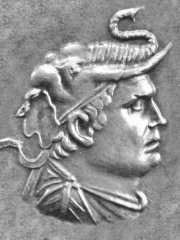
Among people born in 241 BC, Empress Lü ranks 2. Before her is Antiochus III the Great. Among people deceased in 180 BC, Empress Lü ranks 2. Before her is Ptolemy V Epiphanes. After her are Aristophanes of Byzantium, Emperor Houshao of Han, Diocles, Demetrius I of Bactria, Brihadratha Maurya, and Lucius Valerius Flaccus.
Others Born in 241 BC
Go to all Rankings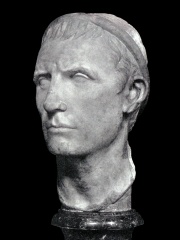
Antiochus III the Great
POLITICIAN
241 BC - 187 BC
HPI: 76.17
Rank: 1
Empress Lü
POLITICIAN
241 BC - 180 BC
HPI: 71.03
Rank: 2
Others Deceased in 180 BC
Go to all Rankings
Ptolemy V Epiphanes
POLITICIAN
210 BC - 180 BC
HPI: 75.88
Rank: 1
Empress Lü
POLITICIAN
241 BC - 180 BC
HPI: 71.03
Rank: 2

Aristophanes of Byzantium
WRITER
257 BC - 180 BC
HPI: 68.58
Rank: 3

Emperor Houshao of Han
POLITICIAN
196 BC - 180 BC
HPI: 67.35
Rank: 4

Diocles
MATHEMATICIAN
240 BC - 180 BC
HPI: 61.66
Rank: 5
Demetrius I of Bactria
POLITICIAN
300 BC - 180 BC
HPI: 60.67
Rank: 6

Brihadratha Maurya
POLITICIAN
252 BC - 180 BC
HPI: 58.09
Rank: 7

Lucius Valerius Flaccus
POLITICIAN
240 BC - 180 BC
HPI: 54.93
Rank: 8
In Chine
Among people born in Chine, Empress Lü ranks 149 out of NaN. Before her are Emperor Guangwu of Han (-5), Wu Sangui (1612), Emperor Ruizong of Tang (662), Edmond H. Fischer (1920), Bai Qi (-250), and Zhengde Emperor (1491). After her are Emperor Huizong of Song (1082), Huineng (638), Jiang Ziya (-1090), Emperor Zhongzong of Tang (656), Chenghua Emperor (1447), and Liu Xiaobo (1955).
Others born in Chine
Go to all Rankings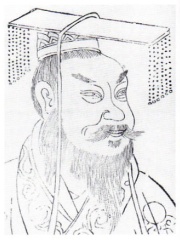
Emperor Guangwu of Han
POLITICIAN
5 BC - 57
HPI: 71.25
Rank: 143
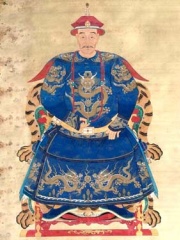
Wu Sangui
MILITARY PERSONNEL
1612 - 1678
HPI: 71.24
Rank: 144
Emperor Ruizong of Tang
POLITICIAN
662 - 716
HPI: 71.23
Rank: 145

Edmond H. Fischer
CHEMIST
1920 - 2021
HPI: 71.19
Rank: 146
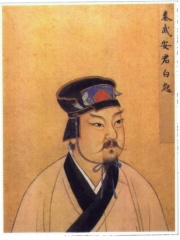
Bai Qi
MILITARY PERSONNEL
250 BC - 257 BC
HPI: 71.18
Rank: 147
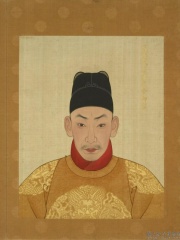
Zhengde Emperor
POLITICIAN
1491 - 1521
HPI: 71.08
Rank: 148
Empress Lü
POLITICIAN
241 BC - 180 BC
HPI: 71.03
Rank: 149
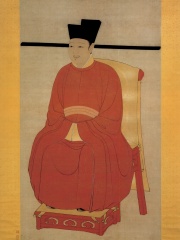
Emperor Huizong of Song
POLITICIAN
1082 - 1135
HPI: 71.02
Rank: 150
Huineng
RELIGIOUS FIGURE
638 - 713
HPI: 71.02
Rank: 151
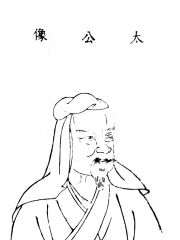
Jiang Ziya
POLITICIAN
1090 BC - 1015 BC
HPI: 70.98
Rank: 152
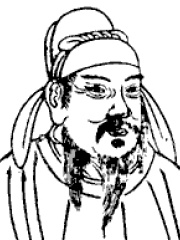
Emperor Zhongzong of Tang
POLITICIAN
656 - 710
HPI: 70.97
Rank: 153
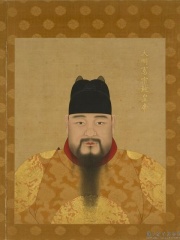
Chenghua Emperor
POLITICIAN
1447 - 1487
HPI: 70.94
Rank: 154
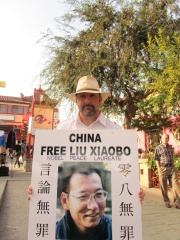
Liu Xiaobo
SOCIAL ACTIVIST
1955 - 2017
HPI: 70.93
Rank: 155
Among Politiciens In Chine
Among politiciens born in Chine, Empress Lü ranks 92. Before her are Hong Xiuquan (1814), 1st Dalai Lama (1391), Ziying (-300), Emperor Guangwu of Han (-5), Emperor Ruizong of Tang (662), and Zhengde Emperor (1491). After her are Emperor Huizong of Song (1082), Jiang Ziya (-1090), Emperor Zhongzong of Tang (656), Chenghua Emperor (1447), Zhu De (1886), and Hongzhi Emperor (1470).
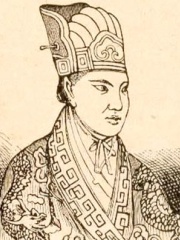
Hong Xiuquan
1814 - 1864
HPI: 71.46
Rank: 86
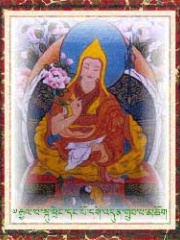
1st Dalai Lama
1391 - 1474
HPI: 71.36
Rank: 87
Ziying
300 BC - 206 BC
HPI: 71.31
Rank: 88
Emperor Guangwu of Han
5 BC - 57
HPI: 71.25
Rank: 89
Emperor Ruizong of Tang
662 - 716
HPI: 71.23
Rank: 90
Zhengde Emperor
1491 - 1521
HPI: 71.08
Rank: 91
Empress Lü
241 BC - 180 BC
HPI: 71.03
Rank: 92
Emperor Huizong of Song
1082 - 1135
HPI: 71.02
Rank: 93
Jiang Ziya
1090 BC - 1015 BC
HPI: 70.98
Rank: 94
Emperor Zhongzong of Tang
656 - 710
HPI: 70.97
Rank: 95
Chenghua Emperor
1447 - 1487
HPI: 70.94
Rank: 96
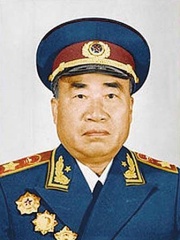
Zhu De
1886 - 1976
HPI: 70.91
Rank: 97
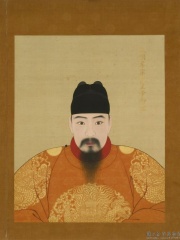
Hongzhi Emperor
1470 - 1505
HPI: 70.82
Rank: 98




