Filozófus
Empedoklész
490 BC - 430 BC
HU.WIKIPEDIA OLDALMEGTEKINTÉSEK (PV)
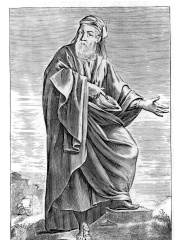
 Empedoklész
Életrajza 83 különböző nyelven érhető el a Wikipédián (növekedés 82-ről 2024-ben). Empedoklész a 44th legnépszerűbb filozófus, a 83rd legnépszerűbb életrajz Olaszország országából (csökkenés a 45th-ről 2019-ben) és a 6th legnépszerűbb Olaszországból filozófus.
Ismertségi mutatók
400k
Oldalmegtekintések
Elmúlt 12 hónap
83.60
HPI
Történelmi népszerűségi index
Empedoklész oldalmegtekintései nyelvenként
A(z) Filozófus között
A(z) Filozófus között Empedoklész a(z) 44. helyen áll 1,267 közül. Előtte állnak: Origen, Al-Farabi, Lucretius, Rajneesh, Michel de Montaigne, és Sun Tzu. Utána következnek: Plutarch, Anaximander, Protagoras, David Hume, Ludwig Wittgenstein, és Anaxagoras.
A legnépszerűbb Filozófus a Wikipédián
Összes rangsor megtekintése
Origen
185 - 254
HPI: 84.46
Helyezés: 38
Al-Farabi
872 - 951
HPI: 84.23
Helyezés: 39
Lucretius
94 BC - 55 BC
HPI: 83.96
Helyezés: 40
Rajneesh
1931 - 1990
HPI: 83.75
Helyezés: 41
Michel de Montaigne
1533 - 1592
HPI: 83.66
Helyezés: 42

Sun Tzu
544 BC - 496 BC
HPI: 83.60
Helyezés: 43
Empedocles
490 BC - 430 BC
HPI: 83.60
Helyezés: 44
Plutarch
46 - 127
HPI: 83.51
Helyezés: 45
Anaximander
610 BC - 546 BC
HPI: 83.48
Helyezés: 46
Protagoras
486 BC - 420 BC
HPI: 83.37
Helyezés: 47
David Hume
1711 - 1776
HPI: 83.28
Helyezés: 48
Ludwig Wittgenstein
1889 - 1951
HPI: 83.27
Helyezés: 49
Anaxagoras
500 BC - 428 BC
HPI: 82.89
Helyezés: 50

Kortársak
A(z) 490 BC. évben születettek között Empedoklész a(z) 1. helyen áll. Utána következnek: Phidias, Zeno of Elea, Nehemiah, Archelaus I of Macedon, Hellanicus of Lesbos, Bacchylides, Agis II, Crateuas of Macedon, Ion of Chios, Nepherites I, és Oenopides. A(z) 430 BC. évben elhunytak között Empedoklész a(z) 1. helyen áll. Utána következnek: Phidias, Lucius Quinctius Cincinnatus, Melissus of Samos, és Archelaus.
További személyek, akik a(z) 490 BC. évben születtek
Összes rangsor megtekintéseEmpedocles
PHILOSOPHER
490 BC - 430 BC
HPI: 83.60
Helyezés: 1
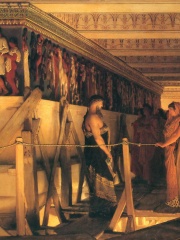
Phidias
SCULPTOR
490 BC - 430 BC
HPI: 82.85
Helyezés: 2
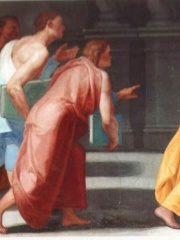
Zeno of Elea
PHILOSOPHER
490 BC - 425 BC
HPI: 81.64
Helyezés: 3
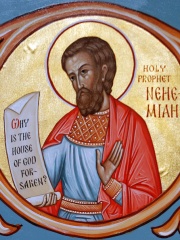
Nehemiah
RELIGIOUS FIGURE
490 BC - 403 BC
HPI: 75.88
Helyezés: 4
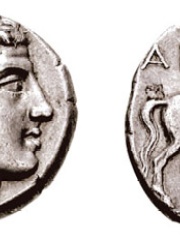
Archelaus I of Macedon
POLITICIAN
490 BC - 399 BC
HPI: 74.01
Helyezés: 5

Hellanicus of Lesbos
WRITER
490 BC - 405 BC
HPI: 71.15
Helyezés: 6
Bacchylides
WRITER
490 BC - 451 BC
HPI: 69.29
Helyezés: 7

Agis II
POLITICIAN
490 BC - 401 BC
HPI: 66.33
Helyezés: 8

Crateuas of Macedon
POLITICIAN
490 BC - 400 BC
HPI: 65.29
Helyezés: 9

Ion of Chios
WRITER
490 BC - 422 BC
HPI: 63.12
Helyezés: 10
Nepherites I
POLITICIAN
490 BC - 393 BC
HPI: 61.80
Helyezés: 11

Oenopides
ASTRONOMER
490 BC - 420 BC
HPI: 59.84
Helyezés: 12
További személyek, akik a(z) 430 BC. évben hunytak el
Összes rangsor megtekintéseEmpedocles
PHILOSOPHER
490 BC - 430 BC
HPI: 83.60
Helyezés: 1
Phidias
SCULPTOR
490 BC - 430 BC
HPI: 82.85
Helyezés: 2
Lucius Quinctius Cincinnatus
POLITICIAN
519 BC - 430 BC
HPI: 77.45
Helyezés: 3
Melissus of Samos
PHILOSOPHER
470 BC - 430 BC
HPI: 75.38
Helyezés: 4
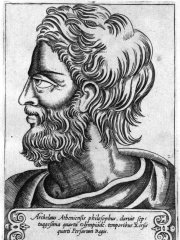
Archelaus
PHILOSOPHER
500 BC - 430 BC
HPI: 68.42
Helyezés: 5
A(z) Olaszország rangsorában
A(z) Olaszország területén születettek között Empedoklész a(z) 83. helyen áll NaN közül. Előtte állnak: Pope Pius VIII (1761), Vespasian (9), Gioachino Rossini (1792), Domitian (51), Pope Urban VIII (1568), és Pope Pius VI (1717). Utána következnek: Gian Lorenzo Bernini (1598), Guglielmo Marconi (1874), Claudio Monteverdi (1567), Pope Innocent III (1160), Pope Pius III (1439), és Sophia Loren (1934).
További személyek, akik Olaszország területén születtek
Összes rangsor megtekintése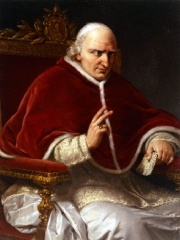
Pope Pius VIII
RELIGIOUS FIGURE
1761 - 1830
HPI: 83.92
Helyezés: 77
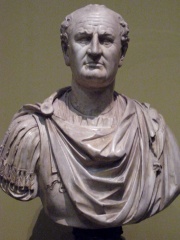
Vespasian
POLITICIAN
9 - 79
HPI: 83.91
Helyezés: 78
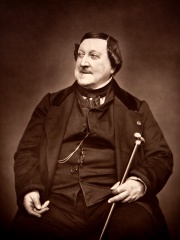
Gioachino Rossini
COMPOSER
1792 - 1868
HPI: 83.90
Helyezés: 79
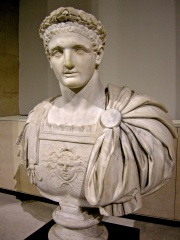
Domitian
POLITICIAN
51 - 96
HPI: 83.71
Helyezés: 80
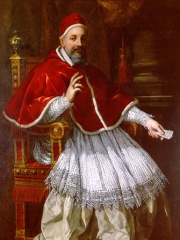
Pope Urban VIII
RELIGIOUS FIGURE
1568 - 1644
HPI: 83.69
Helyezés: 81
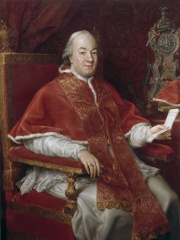
Pope Pius VI
RELIGIOUS FIGURE
1717 - 1799
HPI: 83.62
Helyezés: 82
Empedocles
PHILOSOPHER
490 BC - 430 BC
HPI: 83.60
Helyezés: 83
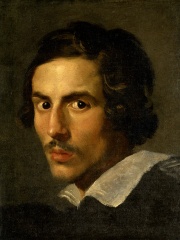
Gian Lorenzo Bernini
ARCHITECT
1598 - 1680
HPI: 83.54
Helyezés: 84
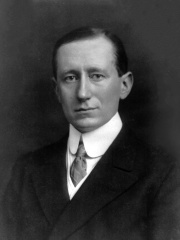
Guglielmo Marconi
INVENTOR
1874 - 1937
HPI: 83.41
Helyezés: 85
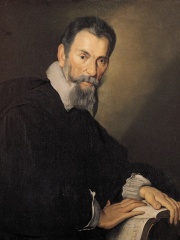
Claudio Monteverdi
COMPOSER
1567 - 1643
HPI: 83.41
Helyezés: 86
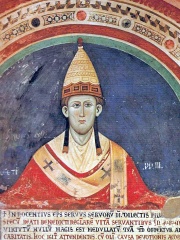
Pope Innocent III
RELIGIOUS FIGURE
1160 - 1216
HPI: 83.33
Helyezés: 87
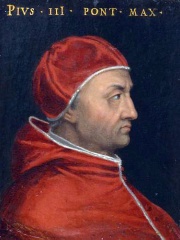
Pope Pius III
RELIGIOUS FIGURE
1439 - 1503
HPI: 83.27
Helyezés: 88

Sophia Loren
ACTOR
1934 - napjainkig
HPI: 83.26
Helyezés: 89
A(z) Filozófus között – Olaszország
A(z) Olaszország területén született Filozófus között Empedoklész a(z) 6. helyen áll. Előtte állnak: Niccolò Machiavelli (1469), Thomas Aquinas (1225), Maria Montessori (1870), Parmenides (-501), és Lucretius (-94). Utána következnek: Zeno of Elea (-490), Antonio Gramsci (1891), Pliny the Elder (23), Giovanni Pico della Mirandola (1463), Boethius (480), és Bonaventure (1221).
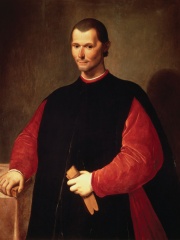
Niccolò Machiavelli
1469 - 1527
HPI: 90.45
Helyezés: 1
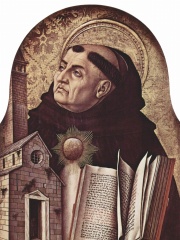
Thomas Aquinas
1225 - 1274
HPI: 88.70
Helyezés: 2
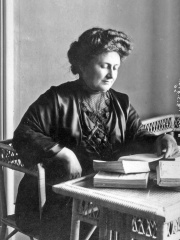
Maria Montessori
1870 - 1952
HPI: 84.59
Helyezés: 3
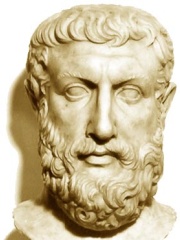
Parmenides
501 BC - 470 BC
HPI: 84.47
Helyezés: 4
Lucretius
94 BC - 55 BC
HPI: 83.96
Helyezés: 5
Empedocles
490 BC - 430 BC
HPI: 83.60
Helyezés: 6
Zeno of Elea
490 BC - 425 BC
HPI: 81.64
Helyezés: 7
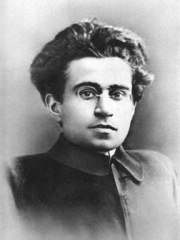
Antonio Gramsci
1891 - 1937
HPI: 80.94
Helyezés: 8
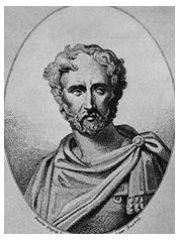
Pliny the Elder
23 - 79
HPI: 80.68
Helyezés: 9
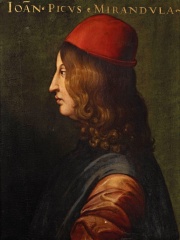
Giovanni Pico della Mirandola
1463 - 1494
HPI: 79.56
Helyezés: 10
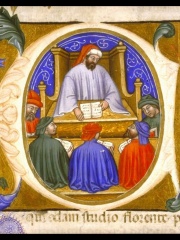
Boethius
480 - 525
HPI: 78.53
Helyezés: 11
Bonaventure
1221 - 1274
HPI: 77.62
Helyezés: 12




