Religiöse Persönlichkeit
Tarcisius
263 - 275
DE.WIKIPEDIA-SEITENAUFRUFE (PV)
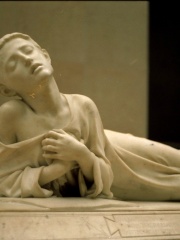
 Tarcisius
Seine Biografie ist in 24 verschiedenen Sprachen auf Wikipedia verfügbar (gestiegen von 23 im Jahr 2024). Tarcisius ist der 662nd beliebteste Religiöse Persönlichkeit (gesunken vom 643rd im Jahr 2024), die 800th beliebteste Biografie aus Italien (gesunken vom 768th im Jahr 2019) und der 257th beliebteste aus Italien Religiöse Persönlichkeit.
Bekanntheitsmetriken
120k
Seitenaufrufe
Letzte 12 Monate
71.27
HPI
Historischer Popularitätsindex
Seitenaufrufe von Tarcisius nach Sprache
Unter Religiöse Persönlichkeit
Unter Religiöse Persönlichkeit belegt Tarcisius Rang 662 von 3,187. Vor ihm stehen Peter Lombard, Vinko Puljić, Macarius of Egypt, Hans Küng, Óscar Romero, und Francis Borgia, 4th Duke of Gandía. Nach ihm folgen John Knox, Zebedee, Saint Eustace, Pope Theophilus of Alexandria, Korah, und Scholastica.
Die beliebtesten Religiöse Persönlichkeit auf Wikipedia
Zu allen Ranglisten
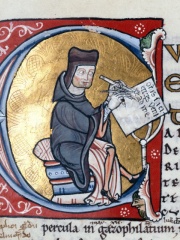
Peter Lombard
1096 - 1160
HPI: 71.43
Rang: 656
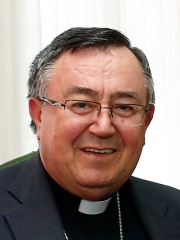
Vinko Puljić
1945 - heute
HPI: 71.38
Rang: 657

Macarius of Egypt
300 - 391
HPI: 71.38
Rang: 658

Hans Küng
1928 - 2021
HPI: 71.34
Rang: 659
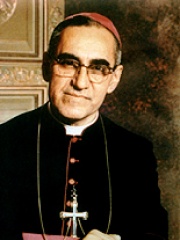
Óscar Romero
1917 - 1980
HPI: 71.28
Rang: 660
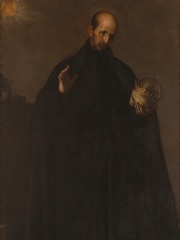
Francis Borgia, 4th Duke of Gandía
1510 - 1572
HPI: 71.27
Rang: 661
Tarcisius
263 - 275
HPI: 71.27
Rang: 662
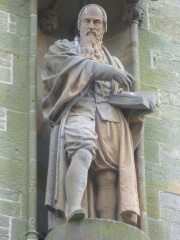
John Knox
1514 - 1572
HPI: 71.26
Rang: 663

Zebedee
100 BC - 100
HPI: 71.25
Rang: 664
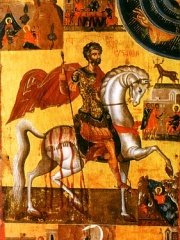
Saint Eustace
10 - 118
HPI: 71.24
Rang: 665
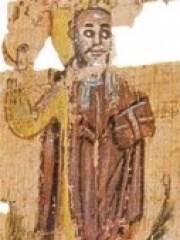
Pope Theophilus of Alexandria
310 - 412
HPI: 71.21
Rang: 666

Korah
HPI: 71.18
Rang: 667
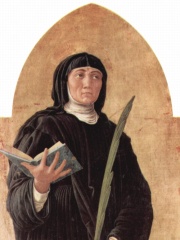
Scholastica
480 - 547
HPI: 71.18
Rang: 668

Zeitgenossen
Unter den im Jahr 263 Geborenen belegt Tarcisius Rang 2. Vor ihm steht Licinius. Unter den im Jahr 275 Verstorbenen belegt Tarcisius Rang 3. Vor ihm stehen Zenobia, und Aurelian. Nach ihm folgen Mammes of Caesarea, und Paul of Samosata.
Weitere im Jahr 263 Geborene
Zu allen Ranglisten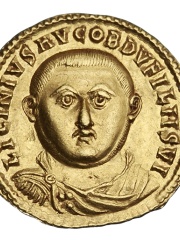
Weitere im Jahr 275 Verstorbene
Zu allen Ranglisten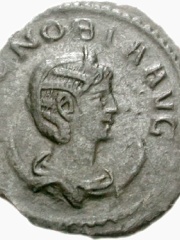
Zenobia
POLITICIAN
240 - 275
HPI: 78.70
Rang: 1
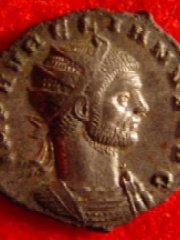
Aurelian
POLITICIAN
214 - 275
HPI: 78.59
Rang: 2
Tarcisius
RELIGIOUS FIGURE
263 - 275
HPI: 71.27
Rang: 3
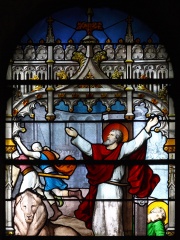
Mammes of Caesarea
RELIGIOUS FIGURE
259 - 275
HPI: 68.67
Rang: 4

Paul of Samosata
RELIGIOUS FIGURE
200 - 275
HPI: 68.37
Rang: 5
In Italien
Unter den in Italien Geborenen belegt Tarcisius Rang 800 von NaN. Vor ihm stehen Poliziano (1454), Lentulus Batiatus (-200), Charles Emmanuel IV of Sardinia (1751), Charles Ponzi (1882), Jacopo Bellini (1396), und Gian Galeazzo Sforza (1469). Nach ihm folgen Gigliola Cinquetti (1947), Claudia Octavia (40), Athalaric (516), Gabriele Amorth (1925), Saint Eustace (10), und Pompeia (-90).
Weitere in Italien geborene Personen
Zu allen Ranglisten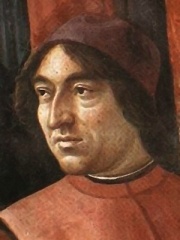
Poliziano
WRITER
1454 - 1494
HPI: 71.34
Rang: 794

Lentulus Batiatus
POLITICIAN
200 BC - 100 BC
HPI: 71.33
Rang: 795
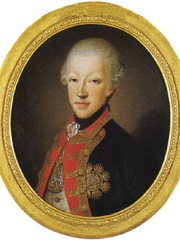
Charles Emmanuel IV of Sardinia
POLITICIAN
1751 - 1819
HPI: 71.33
Rang: 796
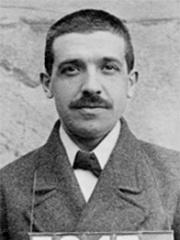
Charles Ponzi
EXTREMIST
1882 - 1949
HPI: 71.32
Rang: 797
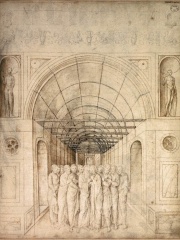
Jacopo Bellini
PAINTER
1396 - 1470
HPI: 71.32
Rang: 798
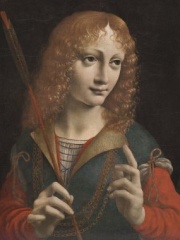
Gian Galeazzo Sforza
NOBLEMAN
1469 - 1494
HPI: 71.28
Rang: 799
Tarcisius
RELIGIOUS FIGURE
263 - 275
HPI: 71.27
Rang: 800
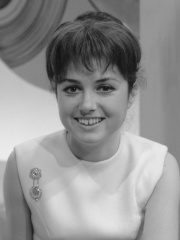
Gigliola Cinquetti
SINGER
1947 - heute
HPI: 71.26
Rang: 801
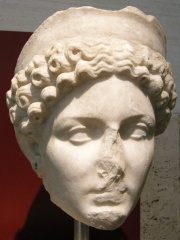
Claudia Octavia
POLITICIAN
40 - 62
HPI: 71.26
Rang: 802
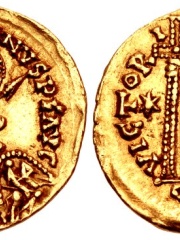
Athalaric
POLITICIAN
516 - 534
HPI: 71.25
Rang: 803

Gabriele Amorth
WRITER
1925 - 2016
HPI: 71.25
Rang: 804
Saint Eustace
RELIGIOUS FIGURE
10 - 118
HPI: 71.24
Rang: 805
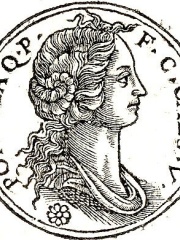
Pompeia
POLITICIAN
90 BC - heute
HPI: 71.23
Rang: 806
Unter Religiöse Persönlichkeit in Italien
Unter den in Italien geborenen Religiöse Persönlichkeit belegt Tarcisius Rang 257. Vor ihm stehen Pope Donus (610), Beatrice Portinari (1265), Camillus de Lellis (1550), Jacobus da Varagine (1228), Angela Merici (1474), und Peter Lombard (1096). Nach ihm folgen Saint Eustace (10), Scholastica (480), Alexius of Rome (400), Antipope Felix II (300), Giulia Farnese (1474), und Joseph of Cupertino (1603).
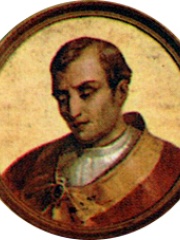
Pope Donus
610 - 678
HPI: 72.53
Rang: 251

Beatrice Portinari
1265 - 1290
HPI: 72.27
Rang: 252

Camillus de Lellis
1550 - 1614
HPI: 72.26
Rang: 253
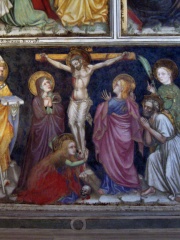
Jacobus da Varagine
1228 - 1298
HPI: 71.86
Rang: 254
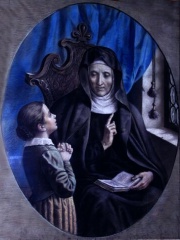
Angela Merici
1474 - 1540
HPI: 71.57
Rang: 255
Peter Lombard
1096 - 1160
HPI: 71.43
Rang: 256
Tarcisius
263 - 275
HPI: 71.27
Rang: 257
Saint Eustace
10 - 118
HPI: 71.24
Rang: 258
Scholastica
480 - 547
HPI: 71.18
Rang: 259
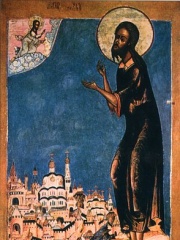
Alexius of Rome
400 - 412
HPI: 70.91
Rang: 260
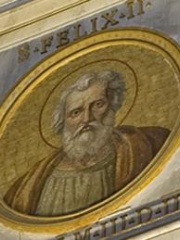
Antipope Felix II
300 - 365
HPI: 70.65
Rang: 261
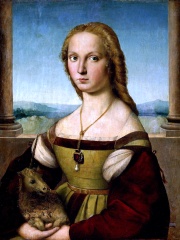
Giulia Farnese
1474 - 1524
HPI: 70.60
Rang: 262

Joseph of Cupertino
1603 - 1663
HPI: 70.52
Rang: 263




