Религиозный деятель
Paolo Pezzi
1960 - настоящее время
RU.WIKIPEDIA PAGE VIEWS (PV)
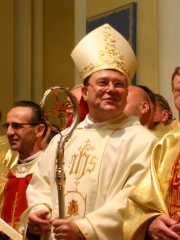
 Paolo Pezzi
Его биография доступна на 18 различных языках в Википедии. Paolo Pezzi занимает 3019-е место среди самых популярных религиозный деятель (снижение с 2918-е места в 2024 году), занимает 4128-е место среди самых популярных биографий из Италии (снижение с 4067-е места в 2019 году) и занимает 560-е место среди религиозный деятель Италия.
Memorability Metrics
20k
Page Views
Past 12 months
52.72
HPI
Historical Popularity Index
Page views of Paolo Pezzi by language
Among Религиозный деятель
Among религиозный деятель, Paolo Pezzi ranks 3,019 out of 3,187. Before him are Aimee Semple McPherson, Thirteen Assyrian Fathers, Sajida al-Rishawi, Mirza Tahir Ahmad, Wenceslao Padilla, and Demophilus of Constantinople. After him are Maher Al-Mu'aiqly, James J. Martin, Sumuel, Comgall mac Domangairt, Samprati, and Chris Gueffroy.
Most Popular Религиозный деятель in Wikipedia
Go to all Rankings
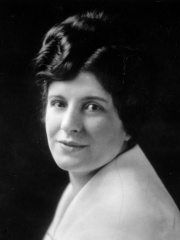
Aimee Semple McPherson
1890 - 1944
HPI: 52.85
Rank: 3,013

Thirteen Assyrian Fathers
HPI: 52.79
Rank: 3,014

Sajida al-Rishawi
1970 - 2015
HPI: 52.76
Rank: 3,015
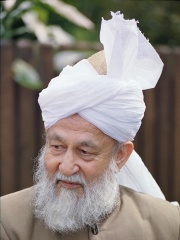
Mirza Tahir Ahmad
1928 - 2003
HPI: 52.76
Rank: 3,016

Wenceslao Padilla
1949 - 2018
HPI: 52.74
Rank: 3,017

Demophilus of Constantinople
HPI: 52.73
Rank: 3,018
Paolo Pezzi
1960 - Present
HPI: 52.72
Rank: 3,019
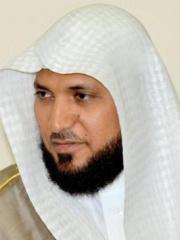
Maher Al-Mu'aiqly
1969 - Present
HPI: 52.69
Rank: 3,020

James J. Martin
1960 - Present
HPI: 52.69
Rank: 3,021
Sumuel
HPI: 52.66
Rank: 3,022

Comgall mac Domangairt
500 - 538
HPI: 52.59
Rank: 3,023

Samprati
HPI: 52.44
Rank: 3,024
Chris Gueffroy
1968 - 1989
HPI: 52.42
Rank: 3,025

Contemporaries
Among people born in 1960, Paolo Pezzi ranks 438. Before him are Malouma, Johnny Van Zant, Catherine Destivelle, Corine Mauch, Rimantas Šadžius, and Pascal Fabre. After him are James J. Martin, Anton Rop, Gerard Joling, Shelly Yachimovich, Sergei Ponomarenko, and Franz Viehböck.
Others Born in 1960
Go to all Rankings
Malouma
MUSICIAN
1960 - Present
HPI: 52.83
Rank: 432
Johnny Van Zant
MUSICIAN
1960 - Present
HPI: 52.80
Rank: 433

Catherine Destivelle
MOUNTAINEER
1960 - Present
HPI: 52.79
Rank: 434

Corine Mauch
POLITICIAN
1960 - Present
HPI: 52.79
Rank: 435

Rimantas Šadžius
POLITICIAN
1960 - Present
HPI: 52.77
Rank: 436

Pascal Fabre
RACING DRIVER
1960 - Present
HPI: 52.73
Rank: 437
Paolo Pezzi
RELIGIOUS FIGURE
1960 - Present
HPI: 52.72
Rank: 438
James J. Martin
RELIGIOUS FIGURE
1960 - Present
HPI: 52.69
Rank: 439

Anton Rop
POLITICIAN
1960 - Present
HPI: 52.68
Rank: 440

Gerard Joling
SINGER
1960 - Present
HPI: 52.67
Rank: 441

Shelly Yachimovich
POLITICIAN
1960 - Present
HPI: 52.64
Rank: 442
Sergei Ponomarenko
POLITICIAN
1960 - Present
HPI: 52.63
Rank: 443

Franz Viehböck
ASTRONAUT
1960 - Present
HPI: 52.62
Rank: 444
In Италия
Among people born in Италия, Paolo Pezzi ranks 4,128 out of NaN. Before him are Beppe Gabbiani (1957), Lamberto Leoni (1953), Gino Munaron (1928), Ernesto Prinoth (1923), Bruno Nicolè (1940), and Marcus Furius Bibaculus (-103). After him are Carlo Vanzina (1951), Maura Tombelli (1952), Violante Placido (1976), Salvatore Bagni (1956), Giovanni D'Anzi (1906), and Damiano Tommasi (1974).
Others born in Италия
Go to all Rankings
Beppe Gabbiani
RACING DRIVER
1957 - Present
HPI: 52.85
Rank: 4,122
Lamberto Leoni
RACING DRIVER
1953 - Present
HPI: 52.80
Rank: 4,123
Gino Munaron
RACING DRIVER
1928 - 2009
HPI: 52.77
Rank: 4,124

Ernesto Prinoth
RACING DRIVER
1923 - 1981
HPI: 52.76
Rank: 4,125

Bruno Nicolè
SOCCER PLAYER
1940 - 2019
HPI: 52.74
Rank: 4,126

Marcus Furius Bibaculus
WRITER
103 BC - 100 BC
HPI: 52.72
Rank: 4,127
Paolo Pezzi
RELIGIOUS FIGURE
1960 - Present
HPI: 52.72
Rank: 4,128
Carlo Vanzina
FILM DIRECTOR
1951 - 2018
HPI: 52.69
Rank: 4,129

Maura Tombelli
ASTRONOMER
1952 - Present
HPI: 52.69
Rank: 4,130

Violante Placido
ACTOR
1976 - Present
HPI: 52.69
Rank: 4,131

Salvatore Bagni
SOCCER PLAYER
1956 - Present
HPI: 52.68
Rank: 4,132
Giovanni D'Anzi
MUSICIAN
1906 - 1974
HPI: 52.66
Rank: 4,133

Damiano Tommasi
SOCCER PLAYER
1974 - Present
HPI: 52.66
Rank: 4,134
Among Религиозный деятель In Италия
Among религиозный деятель born in Италия, Paolo Pezzi ranks 560. Before him are Fabio Baggio (1965), Michele Giordano (1930), Egidio Miragoli (1955), Luigi Ferrando (1941), Paulinus of York (null), and Domenico Battaglia (1963). After him are Paolo Magnani (1926), Roberto Repole (1967), Antonio Napolioni (1957), Giovanni Cesare Pagazzi (1965), Berel Lazar (1964), and Salvatore Nunnari (1939).

Fabio Baggio
1965 - Present
HPI: 53.94
Rank: 554

Michele Giordano
1930 - 2010
HPI: 53.79
Rank: 555
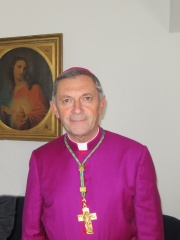
Egidio Miragoli
1955 - Present
HPI: 53.75
Rank: 556

Luigi Ferrando
1941 - Present
HPI: 53.43
Rank: 557

Paulinus of York
HPI: 53.09
Rank: 558
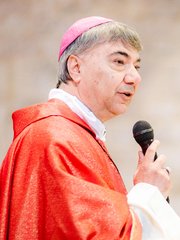
Domenico Battaglia
1963 - Present
HPI: 52.96
Rank: 559
Paolo Pezzi
1960 - Present
HPI: 52.72
Rank: 560
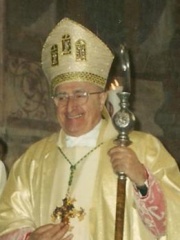
Paolo Magnani
1926 - 2023
HPI: 52.20
Rank: 561
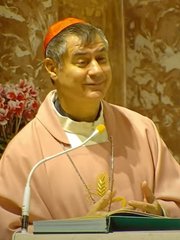
Roberto Repole
1967 - Present
HPI: 51.16
Rank: 562
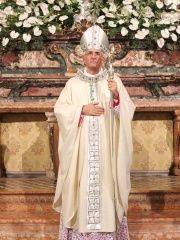
Antonio Napolioni
1957 - Present
HPI: 50.59
Rank: 563
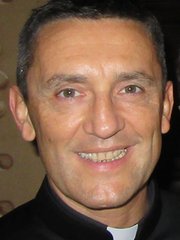
Giovanni Cesare Pagazzi
1965 - Present
HPI: 49.95
Rank: 564

Berel Lazar
1964 - Present
HPI: 49.86
Rank: 565
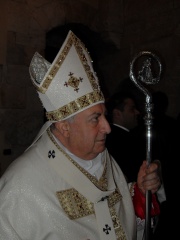
Salvatore Nunnari
1939 - Present
HPI: 49.75
Rank: 566




