宗教人物
Juliana of Nicomedia
285 - 304
 Juliana of Nicomedia
Memorability Metrics
46k
Page Views
Past 12 months
70.03
HPI
Historical Popularity Index
Page views of Juliana of Nicomedia by language
Among 宗教人物
Among 宗教人物, Juliana of Nicomedia ranks 744 out of 3,187. Before her are Benkei, Mordecai, Saint Remigius, Olaus Magnus, Matteo Zuppi, and Pope Shenouda III of Alexandria. After her are Theophilus of Antioch, Eleazar, Mattathias, Ilia II of Georgia, Romanos the Melodist, and Célestin Freinet.
Most Popular 宗教人物 in Wikipedia
Go to all Rankings

Benkei
1155 - 1189
HPI: 70.14
Rank: 738

Mordecai
HPI: 70.14
Rank: 739

Saint Remigius
437 - 533
HPI: 70.12
Rank: 740

Olaus Magnus
1490 - 1557
HPI: 70.10
Rank: 741

Matteo Zuppi
1955 - Present
HPI: 70.05
Rank: 742

Pope Shenouda III of Alexandria
1923 - 2012
HPI: 70.03
Rank: 743

Juliana of Nicomedia
285 - 304
HPI: 70.03
Rank: 744

Theophilus of Antioch
140 - 183
HPI: 69.99
Rank: 745
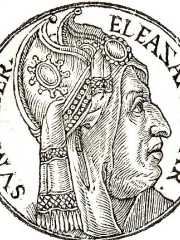
Eleazar
1192 BC - 1100 BC
HPI: 69.99
Rank: 746
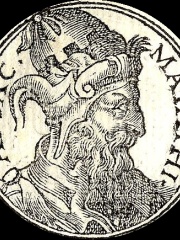
Mattathias
200 BC - 166 BC
HPI: 69.97
Rank: 747

Ilia II of Georgia
1933 - 2026
HPI: 69.97
Rank: 748

Romanos the Melodist
490 - 556
HPI: 69.91
Rank: 749

Célestin Freinet
1896 - 1966
HPI: 69.91
Rank: 750

Contemporaries
Among people born in 285, Juliana of Nicomedia ranks 2. Before her is Saint Menas. After her is Marcellus of Ancyra. Among people deceased in 304, Juliana of Nicomedia ranks 10. Before her are Pope Marcellinus, Anastasia of Sirmium, Philomena, Christina of Bolsena, Pancras of Rome, and Eulalia of Mérida. After her are Euphemia, Saint Afra, Emerentiana, and Saint Domnius.
Others Born in 285
Go to all Rankings
Saint Menas
RELIGIOUS FIGURE
285 - 309
HPI: 73.04
Rank: 1
Juliana of Nicomedia
RELIGIOUS FIGURE
285 - 304
HPI: 70.03
Rank: 2

Marcellus of Ancyra
WRITER
285 - 374
HPI: 61.04
Rank: 3
Others Deceased in 304
Go to all Rankings
Pope Marcellinus
RELIGIOUS FIGURE
250 - 304
HPI: 73.77
Rank: 4
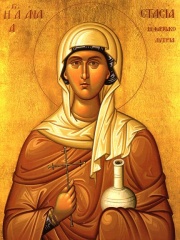
Anastasia of Sirmium
RELIGIOUS FIGURE
281 - 304
HPI: 73.46
Rank: 5
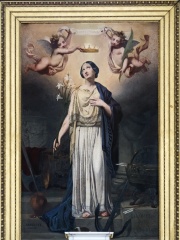
Philomena
RELIGIOUS FIGURE
291 - 304
HPI: 73.04
Rank: 6
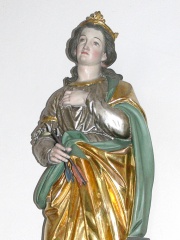
Christina of Bolsena
RELIGIOUS FIGURE
210 - 304
HPI: 72.38
Rank: 7
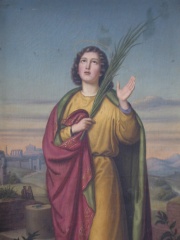
Pancras of Rome
RELIGIOUS FIGURE
289 - 304
HPI: 72.06
Rank: 8

Eulalia of Mérida
RELIGIOUS FIGURE
290 - 304
HPI: 70.29
Rank: 9
Juliana of Nicomedia
RELIGIOUS FIGURE
285 - 304
HPI: 70.03
Rank: 10

Euphemia
RELIGIOUS FIGURE
289 - 304
HPI: 69.12
Rank: 11
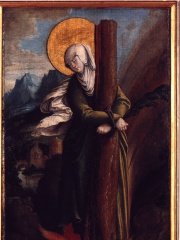
Saint Afra
RELIGIOUS FIGURE
300 - 304
HPI: 64.95
Rank: 12
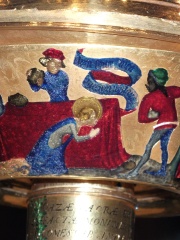
Emerentiana
RELIGIOUS FIGURE
250 - 304
HPI: 61.70
Rank: 13

Saint Domnius
RELIGIOUS FIGURE
300 - 304
HPI: 60.81
Rank: 14
In 意大利
Among people born in 意大利, Juliana of Nicomedia ranks 943 out of NaN. Before her are Matteo Zuppi (1955), Gianna Nannini (1954), Salvator Rosa (1615), Theognis of Megara (-570), Errico Malatesta (1853), and Michelozzo (1396). After her are Sandro Mazzola (1942), Decimus Junius Brutus Albinus (-84), Francesco Primaticcio (1504), Maximilian Sforza (1493), Clementia of Hungary (1293), and Lucius Junius Gallio Annaeanus (-3).
Others born in 意大利
Go to all RankingsMatteo Zuppi
RELIGIOUS FIGURE
1955 - Present
HPI: 70.05
Rank: 937

Gianna Nannini
MUSICIAN
1954 - Present
HPI: 70.05
Rank: 938
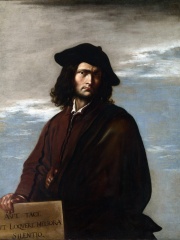
Salvator Rosa
PAINTER
1615 - 1673
HPI: 70.04
Rank: 939
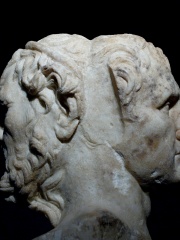
Theognis of Megara
WRITER
570 BC - 485 BC
HPI: 70.03
Rank: 940

Errico Malatesta
SOCIAL ACTIVIST
1853 - 1932
HPI: 70.03
Rank: 941

Michelozzo
ARCHITECT
1396 - 1472
HPI: 70.03
Rank: 942
Juliana of Nicomedia
RELIGIOUS FIGURE
285 - 304
HPI: 70.03
Rank: 943

Sandro Mazzola
SOCCER PLAYER
1942 - Present
HPI: 70.02
Rank: 944

Decimus Junius Brutus Albinus
POLITICIAN
84 BC - 42 BC
HPI: 70.02
Rank: 945

Francesco Primaticcio
PAINTER
1504 - 1570
HPI: 70.02
Rank: 946

Maximilian Sforza
NOBLEMAN
1493 - 1530
HPI: 70.01
Rank: 947

Clementia of Hungary
COMPANION
1293 - 1328
HPI: 70.00
Rank: 948

Lucius Junius Gallio Annaeanus
POLITICIAN
3 BC - 65
HPI: 69.99
Rank: 949
Among 宗教人物 In 意大利
Among 宗教人物 born in 意大利, Juliana of Nicomedia ranks 267. Before her are Antipope Felix II (300), Giulia Farnese (1474), Joseph of Cupertino (1603), Silas (1), Angelo Scola (1941), and Matteo Zuppi (1955). After her are Gemma Galgani (1878), Frances of Rome (1384), Antipope John XVI (1000), Giovanni Angelo Becciu (1948), Antipope Paschal III (1110), and Augustine of Canterbury (510).
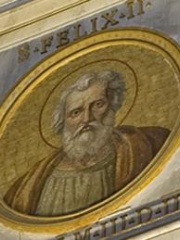
Antipope Felix II
300 - 365
HPI: 70.65
Rank: 261
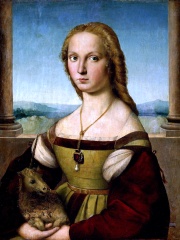
Giulia Farnese
1474 - 1524
HPI: 70.60
Rank: 262

Joseph of Cupertino
1603 - 1663
HPI: 70.52
Rank: 263

Silas
1 - 100
HPI: 70.37
Rank: 264

Angelo Scola
1941 - Present
HPI: 70.24
Rank: 265
Matteo Zuppi
1955 - Present
HPI: 70.05
Rank: 266
Juliana of Nicomedia
285 - 304
HPI: 70.03
Rank: 267
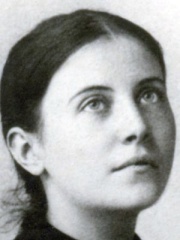
Gemma Galgani
1878 - 1903
HPI: 69.83
Rank: 268

Frances of Rome
1384 - 1440
HPI: 69.83
Rank: 269
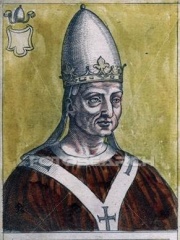
Antipope John XVI
1000 - 1001
HPI: 69.69
Rank: 270
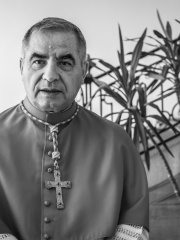
Giovanni Angelo Becciu
1948 - Present
HPI: 69.64
Rank: 271
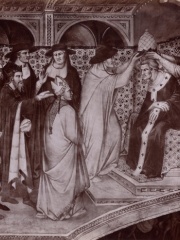
Antipope Paschal III
1110 - 1168
HPI: 69.59
Rank: 272

Augustine of Canterbury
510 - 604
HPI: 69.53
Rank: 273




