Религиозный деятель
Flavian I of Antioch
320 - 404
RU.WIKIPEDIA PAGE VIEWS (PV)

 Flavian I of Antioch
Его биография доступна на 15 различных языках в Википедии. Flavian I of Antioch занимает 2795-е место среди самых популярных религиозный деятель (снижение с 2619-е места в 2024 году), занимает 1138-е место среди самых популярных биографий из Турции (снижение с 1131-е места в 2019 году) и занимает 163-е место среди религиозный деятель Турция.
Memorability Metrics
2.8k
Page Views
Past 12 months
55.99
HPI
Historical Popularity Index
Page views of Flavian I of Antioch by language
Among Религиозный деятель
Among религиозный деятель, Flavian I of Antioch ranks 2,795 out of 3,187. Before him are Paul Shan Kuo-hsi, Pino Puglisi, Simeon the Holy Fool, Jorge Liberato Urosa Savino, Kolos Ferenc Vaszary, and Michel Garicoïts. After him are Arnobius the Younger, Jean Marcel Honoré, Fakhr-un-Nisa, Vladimir Lossky, Jean de Sponde, and Leo Makkonen.
Most Popular Религиозный деятель in Wikipedia
Go to all Rankings

Paul Shan Kuo-hsi
1924 - 2012
HPI: 56.07
Rank: 2,789

Pino Puglisi
1937 - 1993
HPI: 56.06
Rank: 2,790
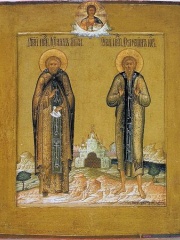
Simeon the Holy Fool
522 - 588
HPI: 56.04
Rank: 2,791

Jorge Liberato Urosa Savino
1942 - 2021
HPI: 56.03
Rank: 2,792
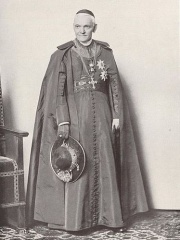
Kolos Ferenc Vaszary
1832 - 1915
HPI: 56.00
Rank: 2,793
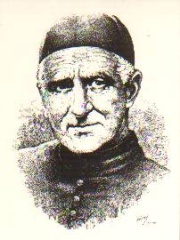
Michel Garicoïts
1797 - 1863
HPI: 55.99
Rank: 2,794
Flavian I of Antioch
320 - 404
HPI: 55.99
Rank: 2,795

Arnobius the Younger
500 - 455
HPI: 55.96
Rank: 2,796

Jean Marcel Honoré
1920 - 2013
HPI: 55.96
Rank: 2,797

Fakhr-un-Nisa
1092 - 1178
HPI: 55.96
Rank: 2,798
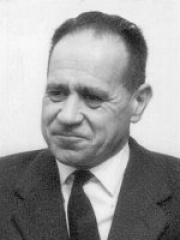
Vladimir Lossky
1903 - 1958
HPI: 55.92
Rank: 2,799
Jean de Sponde
1557 - 1595
HPI: 55.90
Rank: 2,800

Leo Makkonen
1948 - Present
HPI: 55.89
Rank: 2,801

Contemporaries
Among people born in 320, Flavian I of Antioch ranks 9. Before him are Onuphrius, Eutropius, Aelius Donatus, Emperor Jianwen of Jin, Firmus, and Pishoy. Among people deceased in 404, Flavian I of Antioch ranks 4. Before him are Claudian, Aelia Eudoxia, and Saint Telemachus.
Others Born in 320
Go to all Rankings
Onuphrius
RELIGIOUS FIGURE
320 - 400
HPI: 71.17
Rank: 3
Eutropius
HISTORIAN
320 - 400
HPI: 68.75
Rank: 4
Aelius Donatus
WRITER
320 - 380
HPI: 68.54
Rank: 5

Emperor Jianwen of Jin
POLITICIAN
320 - 372
HPI: 61.05
Rank: 6

Firmus
POLITICIAN
320 - 375
HPI: 60.31
Rank: 7

Pishoy
RELIGIOUS FIGURE
320 - 417
HPI: 59.93
Rank: 8
Flavian I of Antioch
RELIGIOUS FIGURE
320 - 404
HPI: 55.99
Rank: 9
Others Deceased in 404
Go to all Rankings
Claudian
WRITER
370 - 404
HPI: 70.15
Rank: 1
Aelia Eudoxia
POLITICIAN
301 - 404
HPI: 69.37
Rank: 2
Saint Telemachus
RELIGIOUS FIGURE
301 - 404
HPI: 60.44
Rank: 3
Flavian I of Antioch
RELIGIOUS FIGURE
320 - 404
HPI: 55.99
Rank: 4
In Турция
Among people born in Турция, Flavian I of Antioch ranks 1,138 out of NaN. Before him are Dilhan Eryurt (1926), Gaius Julius Quadratus Bassus (70), Andon Bedros IX Hassoun (1809), Selahattin Demirtaş (1973), Simeon the Holy Fool (522), and Bedros Tourian (1851). After him are Zeki Rıza Sporel (1898), Muharrem İnce (1964), Nene Hatun (1857), Naci Erdem (1931), Bülent Eken (1923), and Ferit Melen (1906).
Others born in Турция
Go to all Rankings
Dilhan Eryurt
ASTRONOMER
1926 - 2012
HPI: 56.17
Rank: 1,132
Gaius Julius Quadratus Bassus
POLITICIAN
70 - 117
HPI: 56.11
Rank: 1,133
Andon Bedros IX Hassoun
RELIGIOUS FIGURE
1809 - 1884
HPI: 56.07
Rank: 1,134

Selahattin Demirtaş
POLITICIAN
1973 - Present
HPI: 56.05
Rank: 1,135
Simeon the Holy Fool
RELIGIOUS FIGURE
522 - 588
HPI: 56.04
Rank: 1,136
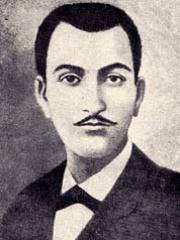
Bedros Tourian
WRITER
1851 - 1872
HPI: 56.02
Rank: 1,137
Flavian I of Antioch
RELIGIOUS FIGURE
320 - 404
HPI: 55.99
Rank: 1,138
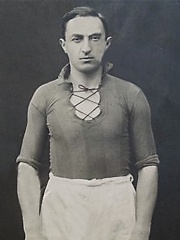
Zeki Rıza Sporel
SOCCER PLAYER
1898 - 1969
HPI: 55.97
Rank: 1,139

Muharrem İnce
POLITICIAN
1964 - Present
HPI: 55.94
Rank: 1,140

Nene Hatun
MILITARY PERSONNEL
1857 - 1955
HPI: 55.94
Rank: 1,141

Naci Erdem
SOCCER PLAYER
1931 - 2022
HPI: 55.93
Rank: 1,142

Bülent Eken
SOCCER PLAYER
1923 - 2016
HPI: 55.91
Rank: 1,143
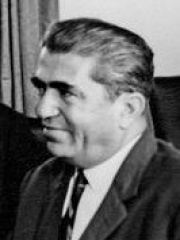
Ferit Melen
POLITICIAN
1906 - 1988
HPI: 55.88
Rank: 1,144
Among Религиозный деятель In Турция
Among религиозный деятель born in Турция, Flavian I of Antioch ranks 163. Before him are Gennadius of Constantinople (458), Theodotus of Byzantium (200), Arsacius of Tarsus (400), Polycrates of Ephesus (125), Andon Bedros IX Hassoun (1809), and Simeon the Holy Fool (522). After him are Evagrius of Constantinople (350), Epenetus of Carthage (1), Theophylact (793), and Ali Erbaş (1961).
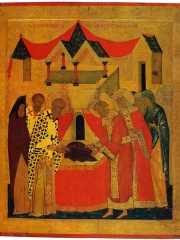
Gennadius of Constantinople
458 - 471
HPI: 57.50
Rank: 157

Theodotus of Byzantium
200 - Present
HPI: 57.42
Rank: 158

Arsacius of Tarsus
400 - 405
HPI: 57.33
Rank: 159

Polycrates of Ephesus
125 - 196
HPI: 56.55
Rank: 160
Andon Bedros IX Hassoun
1809 - 1884
HPI: 56.07
Rank: 161
Simeon the Holy Fool
522 - 588
HPI: 56.04
Rank: 162
Flavian I of Antioch
320 - 404
HPI: 55.99
Rank: 163

Evagrius of Constantinople
350 - 380
HPI: 54.90
Rank: 164
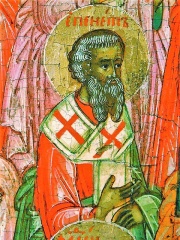
Epenetus of Carthage
1 - 64
HPI: 53.42
Rank: 165
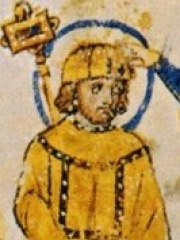
Theophylact
793 - 849
HPI: 49.86
Rank: 166

Ali Erbaş
1961 - Present
HPI: 45.87
Rank: 167




