Politikus
Orodes II
70 BC - 38 BC
HU.WIKIPEDIA OLDALMEGTEKINTÉSEK (PV)
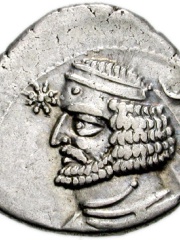
 Orodes II
Életrajza 39 különböző nyelven érhető el a Wikipédián (növekedés 37-ről 2024-ben). Orodes II a 3,226th legnépszerűbb politikus (csökkenés a 2,643rd-ről 2024-ben), a 108th legnépszerűbb életrajz Irán országából (csökkenés a 105th-ről 2019-ben) és a 63rd legnépszerűbb Iránból politikus.
Ismertségi mutatók
52k
Oldalmegtekintések
Elmúlt 12 hónap
69.28
HPI
Történelmi népszerűségi index
Adatérdekességek
#10,070
Több mint 20 évszázaddal a halála után Orodes II még mindig a(z) 10,070. helyen áll a Pantheon összes személyisége között.
39
Orodes II életrajza a Wikipédia 39 nyelvi változatában szerepel — több nyelven, mint a(z) Politikus 82%-a esetében.
Orodes II oldalmegtekintései nyelvenként
A(z) Politikus között
A(z) Politikus között Orodes II a(z) 3,224. helyen áll 19,576 közül. Előtte állnak: John I Albert, Friedrich Karl Ludwig, Duke of Schleswig-Holstein-Sonderburg-Beck, Sverker I of Sweden, James Callaghan, Sancho III of Pamplona, és Emperor Ling of Han. Utána következnek: Zhao Bing, Princess Mafalda of Savoy, Demetrius II Nicator, Ernst Gideon von Laudon, Jie of Xia, és Wilhelm Liebknecht.
A legnépszerűbb Politikus a Wikipédián
Összes rangsor megtekintése
John I Albert
1459 - 1501
HPI: 69.29
Helyezés: 3,220
Friedrich Karl Ludwig, Duke of Schleswig-Holstein-Sonderburg-Beck
1757 - 1816
HPI: 69.29
Helyezés: 3,221
Sverker I of Sweden
1100 - 1156
HPI: 69.29
Helyezés: 3,222
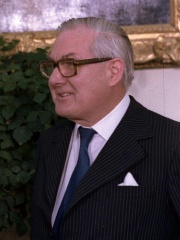
James Callaghan
1912 - 2005
HPI: 69.28
Helyezés: 3,223
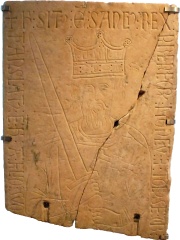
Sancho III of Pamplona
990 - 1035
HPI: 69.28
Helyezés: 3,224

Emperor Ling of Han
156 - 189
HPI: 69.28
Helyezés: 3,225
Orodes II
70 BC - 38 BC
HPI: 69.28
Helyezés: 3,226
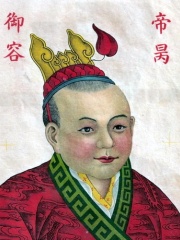
Zhao Bing
1271 - 1279
HPI: 69.27
Helyezés: 3,227
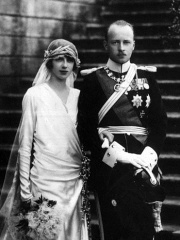
Princess Mafalda of Savoy
1902 - 1944
HPI: 69.27
Helyezés: 3,228
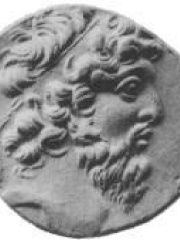
Demetrius II Nicator
161 BC - 125 BC
HPI: 69.27
Helyezés: 3,229
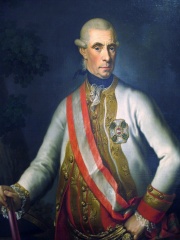
Ernst Gideon von Laudon
1717 - 1790
HPI: 69.27
Helyezés: 3,230
Jie of Xia
1728 BC - 1675 BC
HPI: 69.26
Helyezés: 3,231
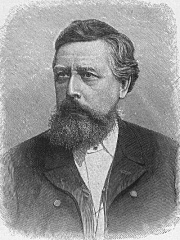
Wilhelm Liebknecht
1826 - 1900
HPI: 69.26
Helyezés: 3,232

Kortársak
A(z) 70 BC. évben születettek között Orodes II a(z) 3. helyen áll. Előtte állnak: Virgil, és Scribonia. Utána következnek: Publius Cornelius Dolabella, és Junia Tertia. A(z) 38 BC. évben elhunytak között Orodes II a(z) 2. helyen áll. Előtte áll: Antiochus I Theos of Commagene. Utána következnek: Pacorus I, és Quintus Labienus.
További személyek, akik a(z) 70 BC. évben születtek
Összes rangsor megtekintése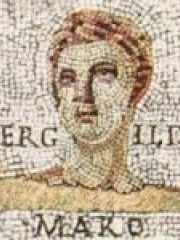
Virgil
WRITER
70 BC - 19 BC
HPI: 88.05
Helyezés: 1
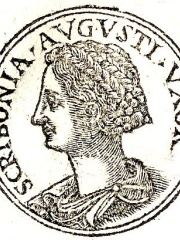
Scribonia
COMPANION
70 BC - 16
HPI: 73.96
Helyezés: 2
Orodes II
POLITICIAN
70 BC - 38 BC
HPI: 69.28
Helyezés: 3

Publius Cornelius Dolabella
POLITICIAN
70 BC - 43 BC
HPI: 68.89
Helyezés: 4

Junia Tertia
RELIGIOUS FIGURE
70 BC - 22
HPI: 57.74
Helyezés: 5
További személyek, akik a(z) 38 BC. évben hunytak el
Összes rangsor megtekintése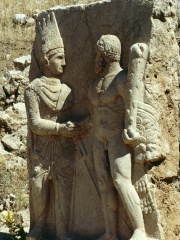
Antiochus I Theos of Commagene
POLITICIAN
86 BC - 38 BC
HPI: 72.01
Helyezés: 1
Orodes II
POLITICIAN
70 BC - 38 BC
HPI: 69.28
Helyezés: 2
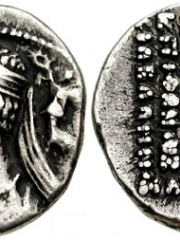
Pacorus I
POLITICIAN
63 BC - 38 BC
HPI: 67.32
Helyezés: 3
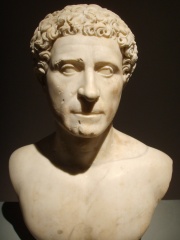
Quintus Labienus
MILITARY PERSONNEL
100 BC - 38 BC
HPI: 61.19
Helyezés: 4
A(z) Irán rangsorában
A(z) Irán területén születettek között Orodes II a(z) 108. helyen áll 631 közül. Előtte állnak: Artavasdes II of Armenia (-100), Sinatruces of Parthia (-157), Safi of Persia (1611), Qazi Muhammad (1893), Atossa (-550), és Vologases I of Parthia (1). Utána következnek: Demetrius II Nicator (-161), Yazdegerd II (500), Imad ad-Din al-Isfahani (1125), Ali Shariati (1933), Qasem Soleimani (1957), és Ibn al-Muqaffa' (724).
További személyek, akik Irán területén születtek
Összes rangsor megtekintése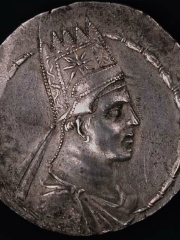
Artavasdes II of Armenia
POLITICIAN
100 BC - 31 BC
HPI: 69.54
Helyezés: 102
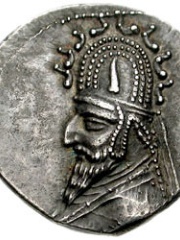
Sinatruces of Parthia
POLITICIAN
157 BC - 70 BC
HPI: 69.54
Helyezés: 103
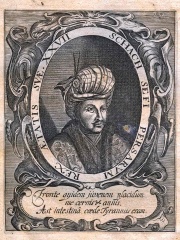
Safi of Persia
POLITICIAN
1611 - 1642
HPI: 69.53
Helyezés: 104
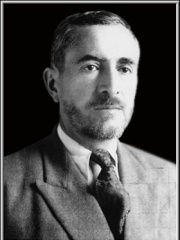
Qazi Muhammad
POLITICIAN
1893 - 1947
HPI: 69.52
Helyezés: 105
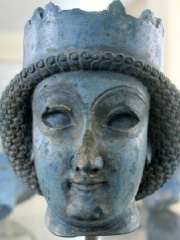
Atossa
POLITICIAN
550 BC - 475 BC
HPI: 69.51
Helyezés: 106
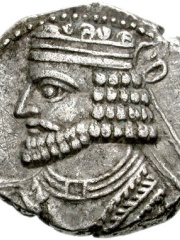
Vologases I of Parthia
POLITICIAN
1 - 78
HPI: 69.49
Helyezés: 107
Orodes II
POLITICIAN
70 BC - 38 BC
HPI: 69.28
Helyezés: 108
Demetrius II Nicator
POLITICIAN
161 BC - 125 BC
HPI: 69.27
Helyezés: 109
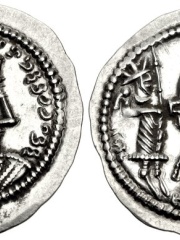
Yazdegerd II
POLITICIAN
500 - 457
HPI: 69.20
Helyezés: 110
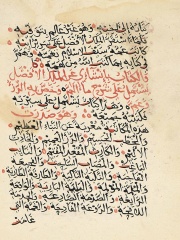
Imad ad-Din al-Isfahani
WRITER
1125 - 1201
HPI: 69.16
Helyezés: 111
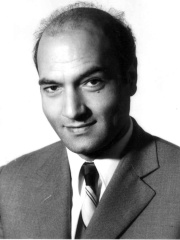
Ali Shariati
WRITER
1933 - 1977
HPI: 69.15
Helyezés: 112
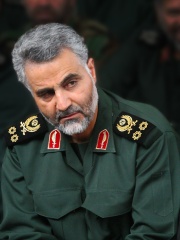
Qasem Soleimani
MILITARY PERSONNEL
1957 - 2020
HPI: 69.10
Helyezés: 113
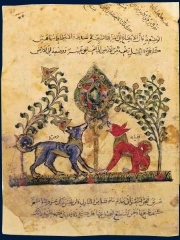
Ibn al-Muqaffa'
WRITER
724 - 756
HPI: 68.95
Helyezés: 114
A(z) Politikus között – Irán
A(z) Irán területén született Politikus között Orodes II a(z) 63. helyen áll. Előtte állnak: Artavasdes II of Armenia (-100), Sinatruces of Parthia (-157), Safi of Persia (1611), Qazi Muhammad (1893), Atossa (-550), és Vologases I of Parthia (1). Utána következnek: Demetrius II Nicator (-161), Yazdegerd II (500), Abolhassan Banisadr (1933), Mohammad Ali Shah Qajar (1872), Ebrahim Raisi (1960), és Bardiya (-580).
Artavasdes II of Armenia
100 BC - 31 BC
HPI: 69.54
Helyezés: 57
Sinatruces of Parthia
157 BC - 70 BC
HPI: 69.54
Helyezés: 58
Safi of Persia
1611 - 1642
HPI: 69.53
Helyezés: 59
Qazi Muhammad
1893 - 1947
HPI: 69.52
Helyezés: 60
Atossa
550 BC - 475 BC
HPI: 69.51
Helyezés: 61
Vologases I of Parthia
1 - 78
HPI: 69.49
Helyezés: 62
Orodes II
70 BC - 38 BC
HPI: 69.28
Helyezés: 63
Demetrius II Nicator
161 BC - 125 BC
HPI: 69.27
Helyezés: 64
Yazdegerd II
500 - 457
HPI: 69.20
Helyezés: 65
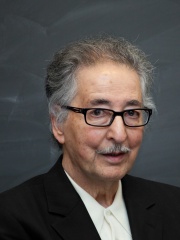
Abolhassan Banisadr
1933 - 2021
HPI: 68.91
Helyezés: 66
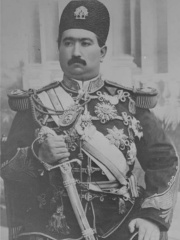
Mohammad Ali Shah Qajar
1872 - 1925
HPI: 68.84
Helyezés: 67
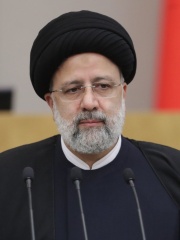
Ebrahim Raisi
1960 - 2024
HPI: 68.80
Helyezés: 68
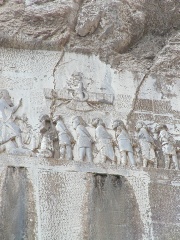
Bardiya
580 BC - 522 BC
HPI: 68.66
Helyezés: 69




