Writer
Sakya Pandita
Tibetan Lama
1182 - 1251
EN.WIKIPEDIA PAGE VIEWS (PV)
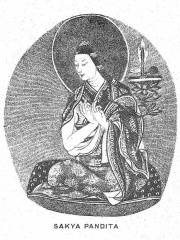
 Sakya Pandita
His biography is available in 18 different languages on Wikipedia (up from 17 in 2024). Sakya Pandita is the 2,324th most popular writer (up from 3,266th in 2024), the 612th most popular biography from China (up from 757th in 2019) and the 62nd most popular Chinese Writer.
Memorability Metrics
19k
Page Views
Past 12 months
62.24
HPI
Historical Popularity Index
Page views of Sakya Pandita by language
Among Writers
Among writers, Sakya Pandita ranks 2,324 out of 7,302. Before him are Lydia Davis, Wahb ibn Munabbih, August Derleth, Li Yu, Berthold Auerbach, and Christian Fürchtegott Gellert. After him are Andrey Kurbsky, Johann Peter Hebel, Cornell Woolrich, Bella Rosenfeld, Vasyl Sukhomlynsky, and Wieland Wagner.
Most Popular Writers in Wikipedia
Go to all Rankings

Lydia Davis
1947 - Present
HPI: 62.26
Rank: 2,318

Wahb ibn Munabbih
655 - 738
HPI: 62.26
Rank: 2,319
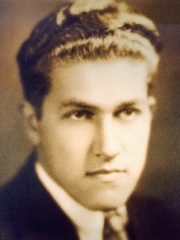
August Derleth
1909 - 1971
HPI: 62.25
Rank: 2,320

Li Yu
1610 - 1680
HPI: 62.25
Rank: 2,321
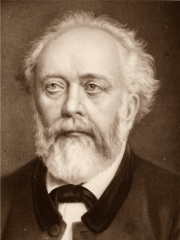
Berthold Auerbach
1812 - 1882
HPI: 62.25
Rank: 2,322
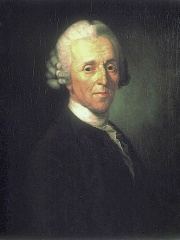
Christian Fürchtegott Gellert
1715 - 1769
HPI: 62.24
Rank: 2,323
Sakya Pandita
1182 - 1251
HPI: 62.24
Rank: 2,324
Andrey Kurbsky
1528 - 1583
HPI: 62.24
Rank: 2,325
Johann Peter Hebel
1760 - 1826
HPI: 62.24
Rank: 2,326
Cornell Woolrich
1903 - 1968
HPI: 62.24
Rank: 2,327

Bella Rosenfeld
1889 - 1944
HPI: 62.23
Rank: 2,328
Vasyl Sukhomlynsky
1918 - 1970
HPI: 62.23
Rank: 2,329
Wieland Wagner
1917 - 1966
HPI: 62.23
Rank: 2,330

Contemporaries
Among people born in 1182, Sakya Pandita ranks 10. Before him are Alexios IV Angelos, Alexios I of Trebizond, Maria of Montpellier, Lutgardis, Accursius, and Minamoto no Yoriie. After him are Peter of Vaux-de-Cernay, and Eleanor, Fair Maid of Brittany. Among people deceased in 1251, Sakya Pandita ranks 6. Before him are Oghul Qaimish, Yesü Möngke, Godan Khan, William of Modena, and William II, Count of Flanders. After him are Berthold, and Matthias II, Duke of Lorraine.
Others Born in 1182
Go to all Rankings
Alexios IV Angelos
POLITICIAN
1182 - 1204
HPI: 72.69
Rank: 4
Alexios I of Trebizond
POLITICIAN
1182 - 1222
HPI: 68.87
Rank: 5

Maria of Montpellier
POLITICIAN
1182 - 1213
HPI: 66.04
Rank: 6
Lutgardis
RELIGIOUS FIGURE
1182 - 1246
HPI: 64.88
Rank: 7
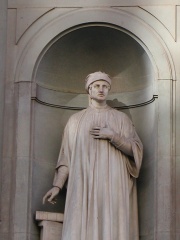
Accursius
RELIGIOUS FIGURE
1182 - 1260
HPI: 64.33
Rank: 8
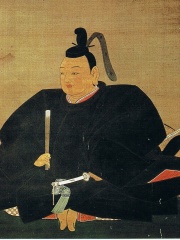
Minamoto no Yoriie
POLITICIAN
1182 - 1204
HPI: 63.12
Rank: 9
Sakya Pandita
WRITER
1182 - 1251
HPI: 62.24
Rank: 10

Peter of Vaux-de-Cernay
RELIGIOUS FIGURE
1182 - 1218
HPI: 61.24
Rank: 11
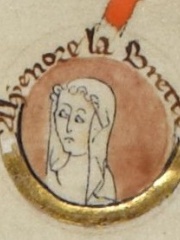
Eleanor, Fair Maid of Brittany
POLITICIAN
1182 - 1241
HPI: 59.77
Rank: 12
Others Deceased in 1251
Go to all Rankings
Oghul Qaimish
MILITARY PERSONNEL
1250 - 1251
HPI: 66.32
Rank: 1

Yesü Möngke
POLITICIAN
1221 - 1251
HPI: 64.16
Rank: 2

Godan Khan
POLITICIAN
1206 - 1251
HPI: 64.07
Rank: 3

William of Modena
POLITICIAN
1184 - 1251
HPI: 63.13
Rank: 4

William II, Count of Flanders
POLITICIAN
1224 - 1251
HPI: 62.48
Rank: 5
Sakya Pandita
WRITER
1182 - 1251
HPI: 62.24
Rank: 6
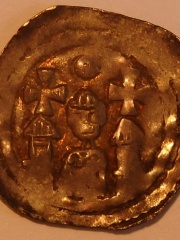
Berthold
RELIGIOUS FIGURE
1180 - 1251
HPI: 60.25
Rank: 7
Matthias II, Duke of Lorraine
POLITICIAN
1193 - 1251
HPI: 58.62
Rank: 8
In China
Among people born in China, Sakya Pandita ranks 612 out of NaN. Before him are Peng Zhen (1902), Ban Biao (3), Zhang Zai (1020), Li Hong (null), Li Yu (1610), and Roy Chiao (1927). After him are Liu Yongfu (1837), Qin Liangyu (1574), Wu Yi (1938), Zhou Daguan (1266), Gongsun Du (200), and Ma Yuan (1160).
Others born in China
Go to all Rankings
Peng Zhen
POLITICIAN
1902 - 1997
HPI: 62.34
Rank: 606

Ban Biao
POLITICIAN
3 - 54
HPI: 62.33
Rank: 607
Zhang Zai
PHILOSOPHER
1020 - 1077
HPI: 62.28
Rank: 608

Li Hong
ATHLETE
HPI: 62.25
Rank: 609
Li Yu
WRITER
1610 - 1680
HPI: 62.25
Rank: 610
Roy Chiao
ACTOR
1927 - 1999
HPI: 62.24
Rank: 611
Sakya Pandita
WRITER
1182 - 1251
HPI: 62.24
Rank: 612
Liu Yongfu
POLITICIAN
1837 - 1917
HPI: 62.23
Rank: 613
Qin Liangyu
MILITARY PERSONNEL
1574 - 1648
HPI: 62.19
Rank: 614
Wu Yi
POLITICIAN
1938 - Present
HPI: 62.16
Rank: 615

Zhou Daguan
WRITER
1266 - 1346
HPI: 62.15
Rank: 616
Gongsun Du
MILITARY PERSONNEL
200 - Present
HPI: 62.13
Rank: 617
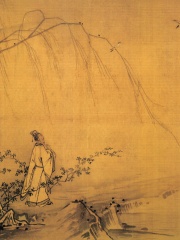
Ma Yuan
PAINTER
1160 - 1225
HPI: 62.13
Rank: 618
Among Writers In China
Among writers born in China, Sakya Pandita ranks 62. Before him are Li Shangyin (813), Yuan Mei (1716), Ai Qing (1910), Erin Hunter (null), Ding Ling (1904), and Li Yu (1610). After him are Zhou Daguan (1266), Tian Han (1898), Gu Yanwu (1613), Tang Xianzu (1550), Sogyal Rinpoche (1947), and Song Yingxing (1587).
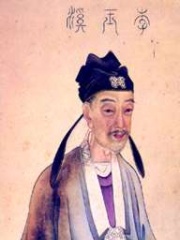
Li Shangyin
813 - 858
HPI: 62.73
Rank: 56
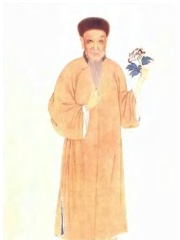
Yuan Mei
1716 - 1798
HPI: 62.71
Rank: 57
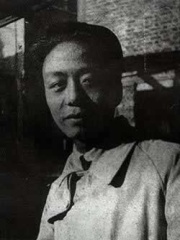
Ai Qing
1910 - 1996
HPI: 62.67
Rank: 58

Erin Hunter
HPI: 62.42
Rank: 59
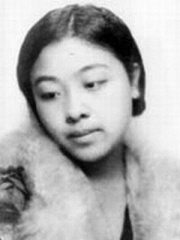
Ding Ling
1904 - 1986
HPI: 62.35
Rank: 60
Li Yu
1610 - 1680
HPI: 62.25
Rank: 61
Sakya Pandita
1182 - 1251
HPI: 62.24
Rank: 62
Zhou Daguan
1266 - 1346
HPI: 62.15
Rank: 63

Tian Han
1898 - 1968
HPI: 62.08
Rank: 64
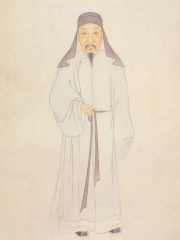
Gu Yanwu
1613 - 1682
HPI: 62.02
Rank: 65
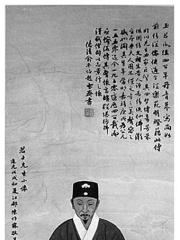
Tang Xianzu
1550 - 1616
HPI: 61.92
Rank: 66
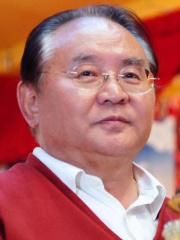
Sogyal Rinpoche
1947 - 2019
HPI: 61.68
Rank: 67
Song Yingxing
1587 - 1666
HPI: 61.62
Rank: 68




