军人
Lü Meng
178 - 220
ZH.WIKIPEDIA PAGE VIEWS (PV)
 Lü Meng
Memorability Metrics
110k
Page Views
Past 12 months
67.58
HPI
Historical Popularity Index
Page views of Lü Meng by language
Among 军人
Among 军人, Lü Meng ranks 439 out of 2,058. Before him are Carl-Heinrich von Stülpnagel, Vjekoslav Luburić, George I Rákóczi, Pavel Nakhimov, Giovanni Messe, and Walter Nowotny. After him are Zinovy Rozhestvensky, August Neidhardt von Gneisenau, Petre Dumitrescu, Thrasybulus, Karl Mack von Leiberich, and Archduke Karl Ferdinand of Austria.
Most Popular 军人 in Wikipedia
Go to all Rankings
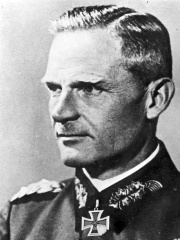
Carl-Heinrich von Stülpnagel
1886 - 1944
HPI: 67.71
Rank: 433
Vjekoslav Luburić
1914 - 1969
HPI: 67.65
Rank: 434
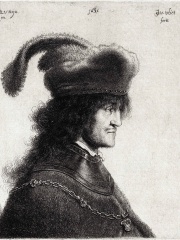
George I Rákóczi
1593 - 1648
HPI: 67.63
Rank: 435
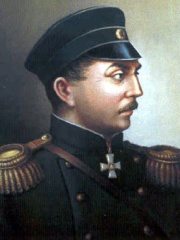
Pavel Nakhimov
1802 - 1855
HPI: 67.63
Rank: 436
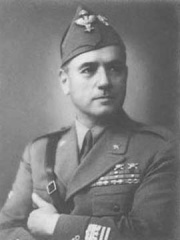
Giovanni Messe
1883 - 1968
HPI: 67.60
Rank: 437
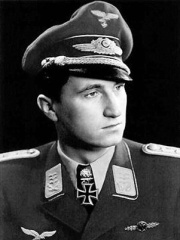
Walter Nowotny
1920 - 1944
HPI: 67.58
Rank: 438

Lü Meng
178 - 220
HPI: 67.58
Rank: 439
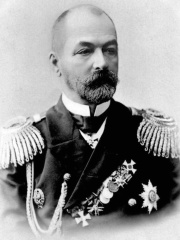
Zinovy Rozhestvensky
1848 - 1909
HPI: 67.54
Rank: 440
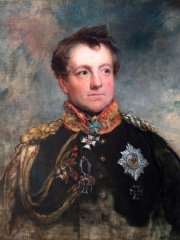
August Neidhardt von Gneisenau
1760 - 1831
HPI: 67.53
Rank: 441
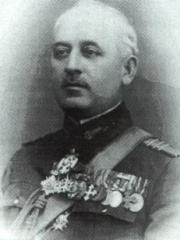
Petre Dumitrescu
1882 - 1950
HPI: 67.52
Rank: 442

Thrasybulus
440 BC - 389 BC
HPI: 67.45
Rank: 443
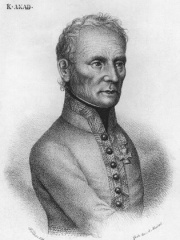
Karl Mack von Leiberich
1752 - 1828
HPI: 67.44
Rank: 444
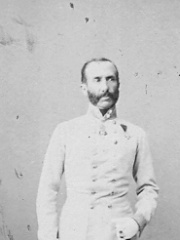
Archduke Karl Ferdinand of Austria
1818 - 1874
HPI: 67.44
Rank: 445

Contemporaries
Among people born in 178, Lü Meng ranks 2. Before him is Balbinus. Among people deceased in 220, Lü Meng ranks 6. Before him are Cao Cao, Guan Yu, Tertullian, Xiahou Dun, and Huang Zhong. After him is Julius Paulus Prudentissimus.
Others Born in 178
Go to all Rankings
Others Deceased in 220
Go to all Rankings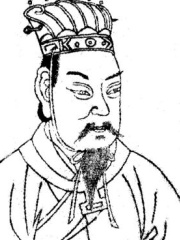
Cao Cao
MILITARY PERSONNEL
155 - 220
HPI: 80.54
Rank: 1
Guan Yu
MILITARY PERSONNEL
162 - 220
HPI: 78.46
Rank: 2

Tertullian
PHILOSOPHER
155 - 220
HPI: 78.04
Rank: 3
Xiahou Dun
MILITARY PERSONNEL
155 - 220
HPI: 69.55
Rank: 4
Huang Zhong
MILITARY PERSONNEL
148 - 220
HPI: 67.95
Rank: 5
Lü Meng
MILITARY PERSONNEL
178 - 220
HPI: 67.58
Rank: 6
Julius Paulus Prudentissimus
POLITICIAN
190 - 220
HPI: 67.22
Rank: 7
In 中国
Among people born in 中国, Lü Meng ranks 280 out of NaN. Before him are 12th Dalai Lama (1857), Emperor Yuan of Han (-75), Dong Zhongshu (-179), Emperor Dezong of Tang (742), Li Yuanhong (1864), and Chen Shou (233). After him are Emperor Zhang of Han (57), Yijing (635), Zhu Rongji (1928), Emperor Gaozong of Song (1107), Gong Li (1965), and Zhiyi (538).
Others born in 中国
Go to all Rankings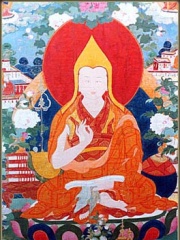
12th Dalai Lama
POLITICIAN
1857 - 1875
HPI: 67.76
Rank: 274

Emperor Yuan of Han
POLITICIAN
75 BC - 33 BC
HPI: 67.74
Rank: 275
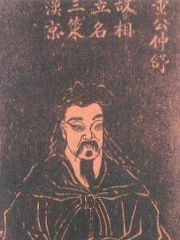
Dong Zhongshu
PHILOSOPHER
179 BC - 104 BC
HPI: 67.73
Rank: 276
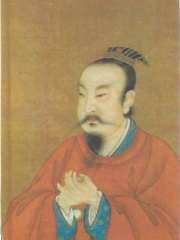
Emperor Dezong of Tang
POLITICIAN
742 - 805
HPI: 67.71
Rank: 277
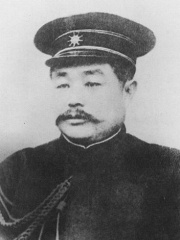
Li Yuanhong
POLITICIAN
1864 - 1928
HPI: 67.61
Rank: 278
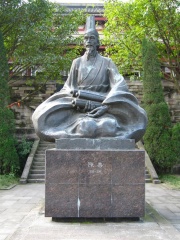
Chen Shou
POLITICIAN
233 - 297
HPI: 67.59
Rank: 279
Lü Meng
MILITARY PERSONNEL
178 - 220
HPI: 67.58
Rank: 280
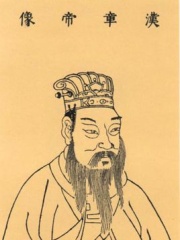
Emperor Zhang of Han
POLITICIAN
57 - 88
HPI: 67.53
Rank: 281
Yijing
RELIGIOUS FIGURE
635 - 713
HPI: 67.50
Rank: 282
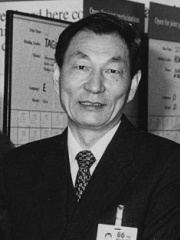
Zhu Rongji
POLITICIAN
1928 - Present
HPI: 67.45
Rank: 283
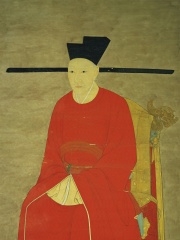
Emperor Gaozong of Song
POLITICIAN
1107 - 1187
HPI: 67.40
Rank: 284
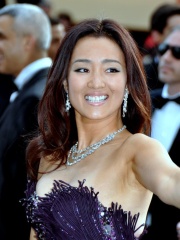
Gong Li
ACTOR
1965 - Present
HPI: 67.37
Rank: 285
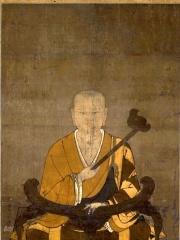
Zhiyi
PHILOSOPHER
538 - 597
HPI: 67.35
Rank: 286
Among 军人 In 中国
Among 军人 born in 中国, Lü Meng ranks 22. Before him are Zhang Liao (169), Xiahou Dun (155), Jiang Wei (202), Meng Tian (-250), Ban Chao (32), and Huang Zhong (148). After him are Cao Ren (168), Zhang He (167), Gan Ning (175), Yoshiko Kawashima (1907), Xiahou Yuan (200), and Xu Huang (169).
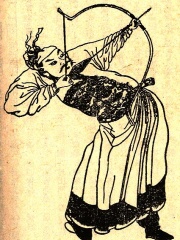
Zhang Liao
169 - 222
HPI: 69.67
Rank: 16
Xiahou Dun
155 - 220
HPI: 69.55
Rank: 17
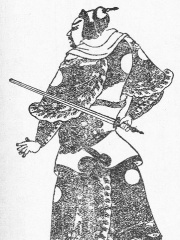
Jiang Wei
202 - 264
HPI: 69.49
Rank: 18

Meng Tian
250 BC - 210 BC
HPI: 69.29
Rank: 19
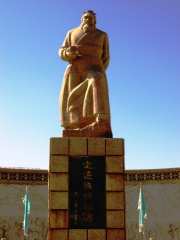
Ban Chao
32 - 102
HPI: 68.87
Rank: 20
Huang Zhong
148 - 220
HPI: 67.95
Rank: 21
Lü Meng
178 - 220
HPI: 67.58
Rank: 22
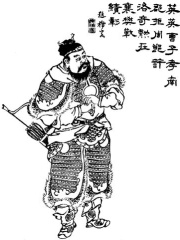
Cao Ren
168 - 223
HPI: 67.28
Rank: 23
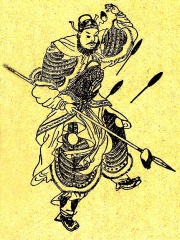
Zhang He
167 - 231
HPI: 67.26
Rank: 24
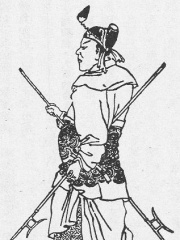
Gan Ning
175 - 222
HPI: 67.08
Rank: 25
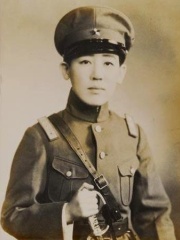
Yoshiko Kawashima
1907 - 1948
HPI: 66.95
Rank: 26
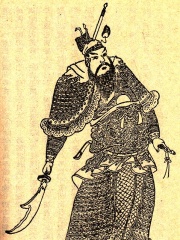
Xiahou Yuan
200 - 219
HPI: 66.91
Rank: 27
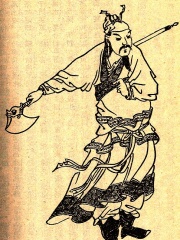
Xu Huang
169 - 227
HPI: 66.87
Rank: 28




