Matematico
John Milnor
1931 - presente
VISUALIZZAZIONI SU IT.WIKIPEDIA (PV)

 John Milnor
La sua biografia è disponibile in 43 lingue su Wikipedia. John Milnor è il 378° matematico più popolare (in calo dal 313° nel 2024), la 3118ª biografia più popolare della Stati Uniti (in calo dal 2444ª nel 2019) e il 22° matematico più popolare della Stati Uniti.
Metriche di memorabilità
41k
Visualizzazioni
Ultimi 12 mesi
62.77
HPI
Indice di popolarità storica
Dati in evidenza
43
La biografia di John Milnor copre 43 edizioni linguistiche di Wikipedia e ottiene un Indice di Popolarità Storica di 62.77.
Visualizzazioni della pagina di John Milnor per lingua
Tra Matematico
Tra Matematico, John Milnor occupa la posizione 378 su 1,010. Prima di lui ci sono Sergei Sobolev, Antoine Gombaud, Vladimir Drinfeld, Michael Maestlin, László Lovász, e Claude Gaspard Bachet de Méziriac. Dopo di lui ci sono Raymond Smullyan, Guillaume Postel, Simon Antoine Jean L'Huilier, Thomas Heath, Marshall Harvey Stone, e Louis Nirenberg.
Matematico più popolari su Wikipedia
Vai a tutte le classifiche

Sergei Sobolev
1908 - 1989
HPI: 62.95
Posizione: 372

Antoine Gombaud
1607 - 1684
HPI: 62.94
Posizione: 373

Vladimir Drinfeld
1954 - presente
HPI: 62.91
Posizione: 374

Michael Maestlin
1550 - 1631
HPI: 62.88
Posizione: 375

László Lovász
1948 - presente
HPI: 62.77
Posizione: 376

Claude Gaspard Bachet de Méziriac
1581 - 1638
HPI: 62.77
Posizione: 377
John Milnor
1931 - presente
HPI: 62.77
Posizione: 378

Raymond Smullyan
1919 - 2017
HPI: 62.76
Posizione: 379

Guillaume Postel
1510 - 1581
HPI: 62.75
Posizione: 380

Simon Antoine Jean L'Huilier
1750 - 1840
HPI: 62.69
Posizione: 381

Thomas Heath
1861 - 1940
HPI: 62.67
Posizione: 382

Marshall Harvey Stone
1903 - 1989
HPI: 62.66
Posizione: 383

Louis Nirenberg
1925 - 2020
HPI: 62.64
Posizione: 384

Contemporanei
Tra le persone nate nel 1931, John Milnor occupa la posizione 153. Prima di lui ci sono Marianne Koch, Uri Orlev, Peter Collins, Te Atairangikaahu, George Vassiliou, e Magali Noël. Dopo di lui ci sono Franco Interlenghi, Olympia Dukakis, Claude Piron, Rubens de Falco, Sébastien Japrisot, e Christian Metz.
Altre persone nate nel 1931
Vai a tutte le classifiche
Marianne Koch
ACTOR
1931 - presente
HPI: 63.04
Posizione: 147

Uri Orlev
WRITER
1931 - 2022
HPI: 63.03
Posizione: 148

Peter Collins
RACING DRIVER
1931 - 1958
HPI: 62.84
Posizione: 149

Te Atairangikaahu
POLITICIAN
1931 - 2006
HPI: 62.82
Posizione: 150

George Vassiliou
POLITICIAN
1931 - 2026
HPI: 62.80
Posizione: 151

Magali Noël
ACTOR
1931 - 2015
HPI: 62.79
Posizione: 152
John Milnor
MATHEMATICIAN
1931 - presente
HPI: 62.77
Posizione: 153

Franco Interlenghi
ACTOR
1931 - 2015
HPI: 62.74
Posizione: 154

Olympia Dukakis
ACTOR
1931 - 2021
HPI: 62.73
Posizione: 155

Claude Piron
LINGUIST
1931 - 2008
HPI: 62.73
Posizione: 156

Rubens de Falco
ACTOR
1931 - 2008
HPI: 62.71
Posizione: 157

Sébastien Japrisot
WRITER
1931 - 2003
HPI: 62.67
Posizione: 158

Christian Metz
POLITICIAN
1931 - 1993
HPI: 62.60
Posizione: 159
In Stati Uniti
Tra le persone nate in Stati Uniti, John Milnor occupa la posizione 3,118 su 23,232. Prima di lui ci sono Elizabeth Bolden (1890), Bill Cobbs (1934), John Kennedy Toole (1937), Alfre Woodard (1952), Gabby Giffords (1970), e Marion Zimmer Bradley (1930). Dopo di lui ci sono JB Pritzker (1965), Matthew Fox (1966), Raymond Smullyan (1919), Virginia Eliza Clemm Poe (1822), Marian Anderson (1897), e Sofia Coppola (1971).
Altre persone nate in Stati Uniti
Vai a tutte le classifiche
Elizabeth Bolden
RELIGIOUS FIGURE
1890 - 2006
HPI: 62.78
Posizione: 3,112

Bill Cobbs
ACTOR
1934 - 2024
HPI: 62.77
Posizione: 3,113
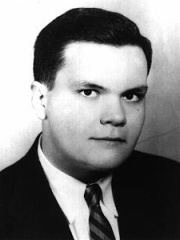
John Kennedy Toole
WRITER
1937 - 1969
HPI: 62.77
Posizione: 3,114

Alfre Woodard
ACTOR
1952 - presente
HPI: 62.77
Posizione: 3,115

Gabby Giffords
POLITICIAN
1970 - presente
HPI: 62.77
Posizione: 3,116

Marion Zimmer Bradley
WRITER
1930 - 1999
HPI: 62.77
Posizione: 3,117
John Milnor
MATHEMATICIAN
1931 - presente
HPI: 62.77
Posizione: 3,118

JB Pritzker
POLITICIAN
1965 - presente
HPI: 62.76
Posizione: 3,119

Matthew Fox
ACTOR
1966 - presente
HPI: 62.76
Posizione: 3,120
Raymond Smullyan
MATHEMATICIAN
1919 - 2017
HPI: 62.76
Posizione: 3,121

Virginia Eliza Clemm Poe
WRITER
1822 - 1847
HPI: 62.76
Posizione: 3,122

Marian Anderson
SINGER
1897 - 1993
HPI: 62.75
Posizione: 3,123

Sofia Coppola
FILM DIRECTOR
1971 - presente
HPI: 62.75
Posizione: 3,124
Tra Matematico in Stati Uniti
Tra Matematico nati in Stati Uniti, John Milnor occupa la posizione 22. Prima di lui ci sono John G. Thompson (1932), Jesse Douglas (1897), Robert Axelrod (1943), Stephen Smale (1930), Edward Kasner (1878), e Martin Davis (1928). Dopo di lui ci sono Raymond Smullyan (1919), Marshall Harvey Stone (1903), Sal Khan (1976), Mitchell Feigenbaum (1944), William Thurston (1946), e Sam Loyd (1841).

John G. Thompson
1932 - presente
HPI: 64.88
Posizione: 16

Jesse Douglas
1897 - 1965
HPI: 64.74
Posizione: 17

Robert Axelrod
1943 - presente
HPI: 64.65
Posizione: 18

Stephen Smale
1930 - presente
HPI: 64.46
Posizione: 19

Edward Kasner
1878 - 1955
HPI: 64.01
Posizione: 20

Martin Davis
1928 - 2023
HPI: 63.10
Posizione: 21
John Milnor
1931 - presente
HPI: 62.77
Posizione: 22
Raymond Smullyan
1919 - 2017
HPI: 62.76
Posizione: 23
Marshall Harvey Stone
1903 - 1989
HPI: 62.66
Posizione: 24

Sal Khan
1976 - presente
HPI: 62.13
Posizione: 25

Mitchell Feigenbaum
1944 - 2019
HPI: 61.91
Posizione: 26

William Thurston
1946 - 2012
HPI: 61.71
Posizione: 27
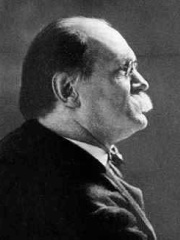
Sam Loyd
1841 - 1911
HPI: 61.31
Posizione: 28




