Político
Empress Genshō
680 - 748
ES.WIKIPEDIA PAGE VIEWS (PV)

 Empress Genshō
Su biografía está disponible en 35 idiomas en Wikipedia (aumentó de 34 en 2024). Empress Genshō ocupa el puesto 3350 entre los político más populares (subió del puesto 3685 en 2024), el puesto 162 entre las biografías más populares de Japón (subió del puesto 201 en 2019) y el puesto 55 entre los político de japón más populares.
Memorability Metrics
120k
Page Views
Past 12 months
69.03
HPI
Historical Popularity Index
Page views of Empress Genshō by language
Among Políticos
Among políticos, Empress Genshō ranks 3,348 out of 19,576. Before her are Shamshi-Adad I, Louis Desaix, Emperor Go-Sai, Alfonso I of Asturias, Shalmaneser V, and Lucius Vitellius the Elder. After her are Colin Powell, Kyriakos Mitsotakis, Ibn Tumart, Albert VI, Archduke of Austria, Muwatalli II, and Fuad II of Egypt.
Most Popular Políticos in Wikipedia
Go to all Rankings
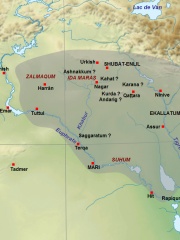
Shamshi-Adad I
1860 BC - 1776 BC
HPI: 69.04
Rank: 3,344
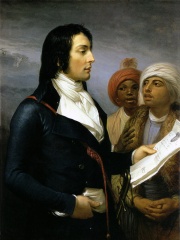
Louis Desaix
1768 - 1800
HPI: 69.04
Rank: 3,345
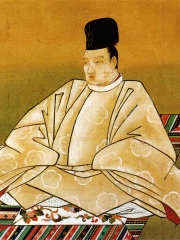
Emperor Go-Sai
1638 - 1685
HPI: 69.04
Rank: 3,346
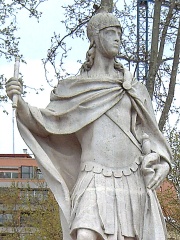
Alfonso I of Asturias
693 - 757
HPI: 69.03
Rank: 3,347
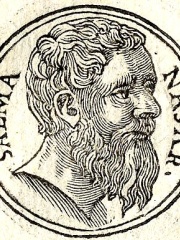
Shalmaneser V
790 BC - 722 BC
HPI: 69.03
Rank: 3,348
Lucius Vitellius the Elder
10 BC - 51
HPI: 69.03
Rank: 3,349
Empress Genshō
680 - 748
HPI: 69.03
Rank: 3,350
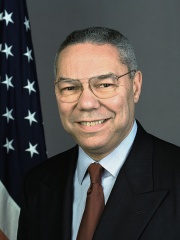
Colin Powell
1937 - 2021
HPI: 69.03
Rank: 3,351
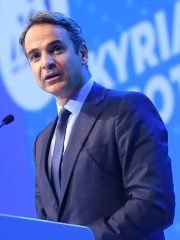
Kyriakos Mitsotakis
1968 - Present
HPI: 69.03
Rank: 3,352
Ibn Tumart
1097 - 1130
HPI: 69.02
Rank: 3,353
Albert VI, Archduke of Austria
1418 - 1463
HPI: 69.02
Rank: 3,354
Muwatalli II
1300 BC - 1300 BC
HPI: 69.01
Rank: 3,355
Fuad II of Egypt
1952 - Present
HPI: 69.01
Rank: 3,356

Contemporaries
Among people born in 680, Empress Genshō ranks 3. Before her are Saint Boniface, and Mus‘ab ibn 'Umair. After her are Wu Daozi, Liutpert, and Aripert II. Among people deceased in 748, Empress Genshō ranks 1. After her are Wasil ibn Ata, and Odilo, Duke of Bavaria.
Others Born in 680
Go to all Rankings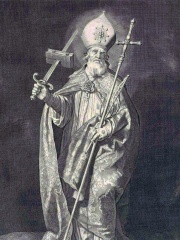
Saint Boniface
RELIGIOUS FIGURE
680 - 754
HPI: 77.14
Rank: 1

Mus‘ab ibn 'Umair
RELIGIOUS FIGURE
680 - 625
HPI: 72.06
Rank: 2
Empress Genshō
POLITICIAN
680 - 748
HPI: 69.03
Rank: 3
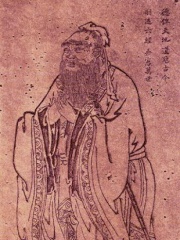
Wu Daozi
PAINTER
680 - 740
HPI: 62.74
Rank: 4

Liutpert
POLITICIAN
680 - 702
HPI: 62.54
Rank: 5

Aripert II
POLITICIAN
680 - 712
HPI: 62.52
Rank: 6
Others Deceased in 748
Go to all RankingsEmpress Genshō
POLITICIAN
680 - 748
HPI: 69.03
Rank: 1

Wasil ibn Ata
RELIGIOUS FIGURE
700 - 748
HPI: 64.50
Rank: 2

Odilo, Duke of Bavaria
POLITICIAN
HPI: 60.84
Rank: 3
In Japón
Among people born in Japón, Empress Genshō ranks 162 out of NaN. Before her are Yasuo Takamori (1934), Sen no Rikyū (1522), Shoichi Nishimura (1912), Ashikaga Takauji (1305), Masao Uchino (1934), and Emperor Go-Sai (1638). After her are Kenichi Fukui (1918), Takashi Furukawa (1981), Shunroku Hata (1879), Emperor Sujin (-147), Utagawa Kuniyoshi (1797), and Issey Miyake (1938).
Others born in Japón
Go to all Rankings
Yasuo Takamori
SOCCER PLAYER
1934 - 2016
HPI: 69.19
Rank: 156
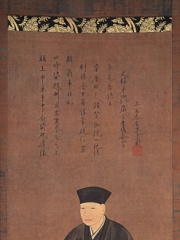
Sen no Rikyū
RELIGIOUS FIGURE
1522 - 1591
HPI: 69.18
Rank: 157

Shoichi Nishimura
SOCCER PLAYER
1912 - 1998
HPI: 69.17
Rank: 158
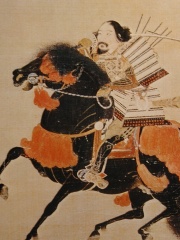
Ashikaga Takauji
POLITICIAN
1305 - 1358
HPI: 69.11
Rank: 159

Masao Uchino
SOCCER PLAYER
1934 - 2013
HPI: 69.07
Rank: 160
Emperor Go-Sai
POLITICIAN
1638 - 1685
HPI: 69.04
Rank: 161
Empress Genshō
POLITICIAN
680 - 748
HPI: 69.03
Rank: 162
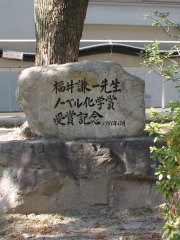
Kenichi Fukui
CHEMIST
1918 - 1998
HPI: 69.03
Rank: 163

Takashi Furukawa
SOCCER PLAYER
1981 - Present
HPI: 69.01
Rank: 164
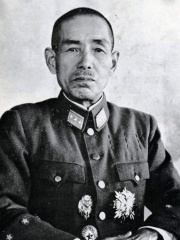
Shunroku Hata
MILITARY PERSONNEL
1879 - 1962
HPI: 69.00
Rank: 165
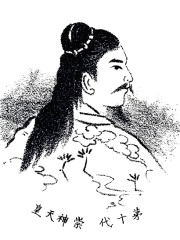
Emperor Sujin
POLITICIAN
147 BC - 29 BC
HPI: 69.00
Rank: 166
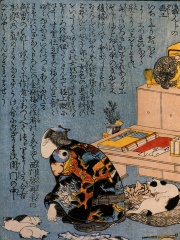
Utagawa Kuniyoshi
PAINTER
1797 - 1861
HPI: 68.97
Rank: 167
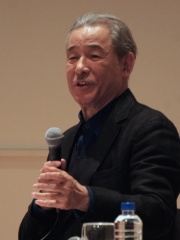
Issey Miyake
POLITICIAN
1938 - 2022
HPI: 68.95
Rank: 168
Among Políticos In Japón
Among políticos born in Japón, Empress Genshō ranks 55. Before her are Emperor Kōrei (-341), Tarō Asō (1940), Junichiro Koizumi (1942), Nobusuke Kishi (1896), Ashikaga Takauji (1305), and Emperor Go-Sai (1638). After her are Emperor Sujin (-147), Issey Miyake (1938), Kuniaki Koiso (1880), Emperor Suinin (-69), Emperor Kōtoku (596), and Fujiko Fujio (1934).
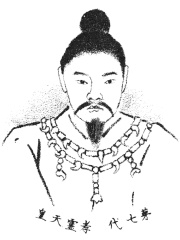
Emperor Kōrei
341 BC - 214 BC
HPI: 69.24
Rank: 49
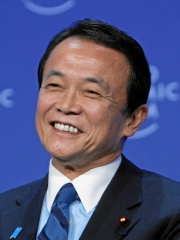
Tarō Asō
1940 - Present
HPI: 69.22
Rank: 50
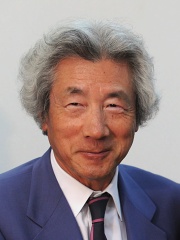
Junichiro Koizumi
1942 - Present
HPI: 69.21
Rank: 51
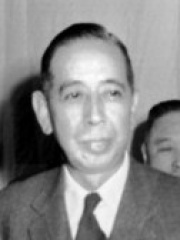
Nobusuke Kishi
1896 - 1987
HPI: 69.20
Rank: 52
Ashikaga Takauji
1305 - 1358
HPI: 69.11
Rank: 53
Emperor Go-Sai
1638 - 1685
HPI: 69.04
Rank: 54
Empress Genshō
680 - 748
HPI: 69.03
Rank: 55
Emperor Sujin
147 BC - 29 BC
HPI: 69.00
Rank: 56
Issey Miyake
1938 - 2022
HPI: 68.95
Rank: 57
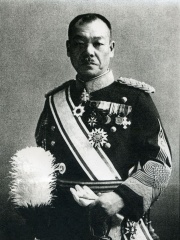
Kuniaki Koiso
1880 - 1950
HPI: 68.90
Rank: 58
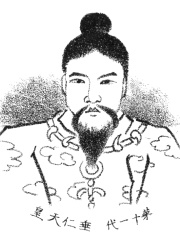
Emperor Suinin
69 BC - 70
HPI: 68.89
Rank: 59
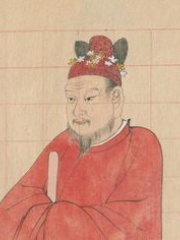
Emperor Kōtoku
596 - 654
HPI: 68.81
Rank: 60
Fujiko Fujio
1934 - 1996
HPI: 68.81
Rank: 61




