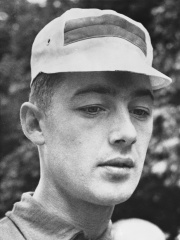
Charly Gaul
1932–2005 · Luxembourg City
HPI 63.8127 languages
Luxembourgian cyclist
14 cyclists out of 113 people from Luxembourg
Pantheon ranks 14 Luxembourger cyclists by Historical Popularity Index (HPI). Luxembourg ranks #28 of 83 countries by number of cyclists, with 0.6% of the 2,183 in the dataset.
Ranked by Pantheon's Historical Popularity Index (HPI), which combines how many Wikipedia language editions cover a person, how widely their articles are read, and how long ago they lived. All 14 Luxembourger Cyclists, Ranked ↓
1932–2005 · Luxembourg City
Luxembourgian cyclist

1899–1985 · Mamer
Luxembourgian cyclist

b. 1942 · Grevenmacher
Luxembourgian cyclist

b. 1985 · Luxembourg City
Luxembourgish road bicycle racer

b. 1980 · Luxembourg City
Luxembourgish cyclist

b. 1978 · Luxembourg City
Luxembourg cyclist

b. 1992 · Rollingen
Luxembourgish road bicycle racer

b. 1986 · Sandweiler
Luxembourgish road cyclist

b. 1984 · Dippach
Luxembourgish racing cyclist

b. 1987 · Luxembourg
Luxembourgian racing cyclist
The complete list, continued from the top 10.
Rank changes since Pantheon's 2024 edition.
Luxembourg ranks #28 of 83 countries, with 14 of 2,183 cyclists (0.6%).
The cities and towns in Luxembourg that produced the most people on this list.
Grouped by when they were born, most famous first.
Which of them were alive at the same time? The lifespans of the 12 most famous, born since 1700.
Charly Gaul (1932–2005) is the most famous Luxembourger cyclist in Pantheon, with a Historical Popularity Index of 63.8 and Wikipedia biographies in 27 languages. Next on the list are Nicolas Frantz and Johny Schleck.
Pantheon includes 14 Luxembourger cyclists, 0.6% of the 2,183 cyclists in its global dataset. That places Luxembourg #28 among 83 countries.
France leads with 261 cyclists (12% of the global total), followed by Italy and Belgium.
Christine Majerus (b. 1987) is the highest-ranked woman on this list, at #10 overall.
Johny Schleck (born 1942) is the highest-ranked living person on this list, at #3 overall.
Pantheon ranks people by the Historical Popularity Index (HPI), which combines how many Wikipedia language editions have an article about a person, how many views those articles get outside English Wikipedia, how stable that attention is over time, and how long ago the person lived. Read the methodology →