Esploratore
Rodrigo de Jerez
1350 - presente
VISUALIZZAZIONI SU IT.WIKIPEDIA (PV)

 Rodrigo de Jerez
La sua biografia è disponibile in 16 lingue su Wikipedia. Rodrigo de Jerez è il 261° esploratore più popolare (in calo dal 246° nel 2024), la 928ª biografia più popolare della Spagna (in calo dal 912ª nel 2019) e il 42° esploratore più popolare della Spagna.
Metriche di memorabilità
10k
Visualizzazioni
Ultimi 12 mesi
60.97
HPI
Indice di popolarità storica
Dati in evidenza
16
La biografia di Rodrigo de Jerez copre 16 edizioni linguistiche di Wikipedia e ottiene un Indice di Popolarità Storica di 60.97.
Visualizzazioni della pagina di Rodrigo de Jerez per lingua
Tra Esploratore
Tra Esploratore, Rodrigo de Jerez occupa la posizione 261 su 500. Prima di lui ci sono Dinis Dias, Thekla Resvoll, Karl Weyprecht, Oscar Wisting, Bento de Góis, e Julius Popper. Dopo di lui ci sono Karl Maximovich, Edward Bransfield, Ada Blackjack, Adolf Lüderitz, Jedediah Smith, e Man of the Hole.
Esploratore più popolari su Wikipedia
Vai a tutte le classifiche
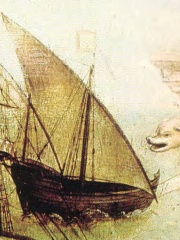
Dinis Dias
HPI: 61.11
Posizione: 255
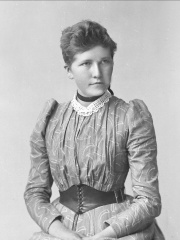
Thekla Resvoll
1871 - 1948
HPI: 61.06
Posizione: 256
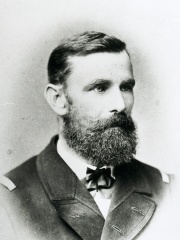
Karl Weyprecht
1838 - 1881
HPI: 61.05
Posizione: 257
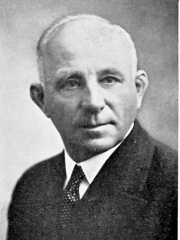
Oscar Wisting
1871 - 1936
HPI: 61.04
Posizione: 258
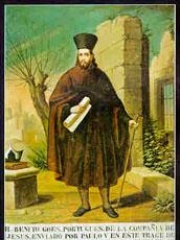
Bento de Góis
1562 - 1607
HPI: 61.02
Posizione: 259
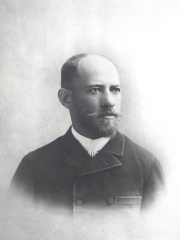
Julius Popper
1857 - 1893
HPI: 61.01
Posizione: 260
Rodrigo de Jerez
1350 - presente
HPI: 60.97
Posizione: 261
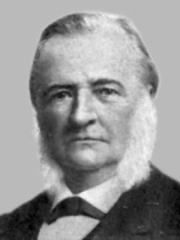
Karl Maximovich
1827 - 1891
HPI: 60.86
Posizione: 262

Edward Bransfield
1785 - 1852
HPI: 60.83
Posizione: 263
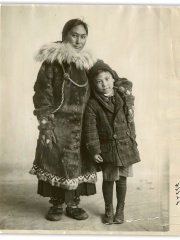
Ada Blackjack
1898 - 1983
HPI: 60.81
Posizione: 264
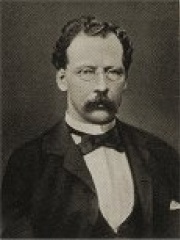
Adolf Lüderitz
1834 - 1886
HPI: 60.76
Posizione: 265
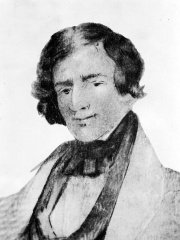
Jedediah Smith
1799 - 1831
HPI: 60.68
Posizione: 266

Man of the Hole
HPI: 60.65
Posizione: 267

Contemporanei
Tra le persone nate nel 1350, Rodrigo de Jerez occupa la posizione 27. Prima di lui ci sono Guillaume Cale, Ilyas Khoja, Dan II of Wallachia, Leonor Teles, Jehuda Cresques, e Rudolf VI, Margrave of Baden. Dopo di lui ci sono Nawruz Beg, Johannes von Tepl, Qulpa, George Kodinos, Maria Angelina Doukaina Palaiologina, e Katherine Swynford.
Altre persone nate nel 1350
Vai a tutte le classifiche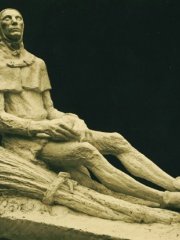
Guillaume Cale
SOCIAL ACTIVIST
1350 - 1358
HPI: 62.27
Posizione: 21

Ilyas Khoja
POLITICIAN
1350 - 1368
HPI: 61.43
Posizione: 22
Dan II of Wallachia
POLITICIAN
1350 - 1431
HPI: 61.35
Posizione: 23
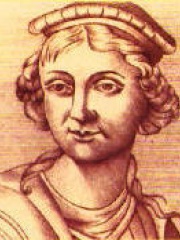
Leonor Teles
POLITICIAN
1350 - 1386
HPI: 61.31
Posizione: 24
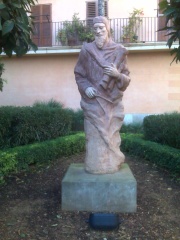
Jehuda Cresques
GEOGRAPHER
1350 - 1427
HPI: 61.12
Posizione: 25
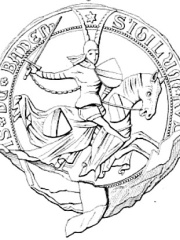
Rudolf VI, Margrave of Baden
NOBLEMAN
1350 - 1372
HPI: 61.04
Posizione: 26
Rodrigo de Jerez
EXPLORER
1350 - presente
HPI: 60.97
Posizione: 27
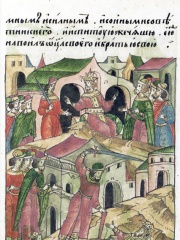
Nawruz Beg
POLITICIAN
1350 - 1360
HPI: 59.82
Posizione: 28
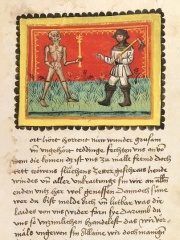
Johannes von Tepl
WRITER
1350 - 1414
HPI: 59.62
Posizione: 29
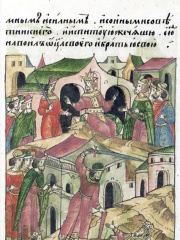
Qulpa
POLITICIAN
1350 - 1360
HPI: 59.61
Posizione: 30

George Kodinos
WRITER
1350 - 1401
HPI: 58.92
Posizione: 31
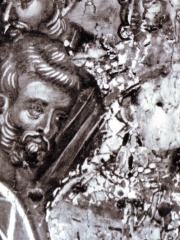
Maria Angelina Doukaina Palaiologina
POLITICIAN
1350 - 1394
HPI: 58.79
Posizione: 32
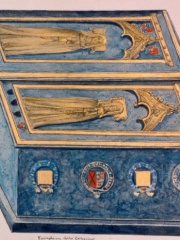
Katherine Swynford
COMPANION
1350 - 1403
HPI: 58.35
Posizione: 33
In Spagna
Tra le persone nate in Spagna, Rodrigo de Jerez occupa la posizione 928 su 3,981. Prima di lui ci sono Luis García Berlanga (1921), Jaume Huguet (1412), Gaspar de Borja y Velasco (1580), Juan Carlos Ferrero (1980), Luis Cernuda (1902), e Toda of Pamplona (876). Dopo di lui ci sono Mathieu Orfila (1787), Pelagius of Córdoba (912), Miguel Cabanellas (1872), Jimena Díaz (1046), Domènec Balmanya (1914), e Francisco Herrera the Younger (1622).
Altre persone nate in Spagna
Vai a tutte le classifiche
Luis García Berlanga
FILM DIRECTOR
1921 - 2010
HPI: 61.03
Posizione: 922
Jaume Huguet
PAINTER
1412 - 1492
HPI: 61.03
Posizione: 923
Gaspar de Borja y Velasco
POLITICIAN
1580 - 1645
HPI: 61.02
Posizione: 924

Juan Carlos Ferrero
TENNIS PLAYER
1980 - presente
HPI: 61.01
Posizione: 925
Luis Cernuda
WRITER
1902 - 1963
HPI: 61.00
Posizione: 926
Toda of Pamplona
COMPANION
876 - 958
HPI: 60.98
Posizione: 927
Rodrigo de Jerez
EXPLORER
1350 - presente
HPI: 60.97
Posizione: 928
Mathieu Orfila
CHEMIST
1787 - 1853
HPI: 60.97
Posizione: 929
Pelagius of Córdoba
RELIGIOUS FIGURE
912 - 926
HPI: 60.97
Posizione: 930
Miguel Cabanellas
MILITARY PERSONNEL
1872 - 1938
HPI: 60.96
Posizione: 931
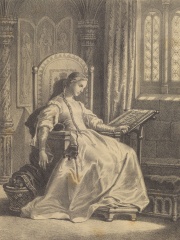
Jimena Díaz
POLITICIAN
1046 - 1116
HPI: 60.95
Posizione: 932

Domènec Balmanya
SOCCER PLAYER
1914 - 2002
HPI: 60.94
Posizione: 933

Francisco Herrera the Younger
PAINTER
1622 - 1685
HPI: 60.93
Posizione: 934
Tra Esploratore in Spagna
Tra Esploratore nati in Spagna, Rodrigo de Jerez occupa la posizione 42. Prima di lui ci sono Pedro Arias Dávila (1443), Ruy López de Villalobos (1500), Gerónimo de Aguilar (1489), Pedro Cieza de León (1520), Juan de Garay (1528), e Francisco de Bobadilla (1500). Dopo di lui ci sono Juan Fernández (1536), Pedro Menéndez de Avilés (1519), Juan Pizarro (1511), Álvaro de Saavedra Cerón (1500), Pedro Tafur (1410), e Félix de Azara (1742).
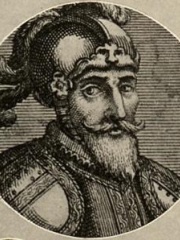
Pedro Arias Dávila
1443 - 1531
HPI: 62.95
Posizione: 36
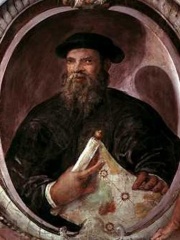
Ruy López de Villalobos
1500 - 1544
HPI: 62.64
Posizione: 37

Gerónimo de Aguilar
1489 - 1531
HPI: 62.59
Posizione: 38
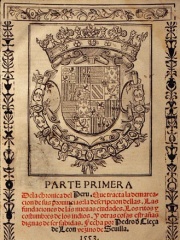
Pedro Cieza de León
1520 - 1554
HPI: 62.25
Posizione: 39
Juan de Garay
1528 - 1583
HPI: 62.07
Posizione: 40

Francisco de Bobadilla
1500 - 1502
HPI: 62.07
Posizione: 41
Rodrigo de Jerez
1350 - presente
HPI: 60.97
Posizione: 42

Juan Fernández
1536 - 1604
HPI: 60.51
Posizione: 43
Pedro Menéndez de Avilés
1519 - 1574
HPI: 60.08
Posizione: 44

Juan Pizarro
1511 - 1536
HPI: 59.76
Posizione: 45

Álvaro de Saavedra Cerón
1500 - 1529
HPI: 59.51
Posizione: 46

Pedro Tafur
1410 - 1490
HPI: 58.80
Posizione: 47
Félix de Azara
1742 - 1821
HPI: 58.75
Posizione: 48




