Mathematician
Richard Borcherds
British-American mathematician
1959 - today
EN.WIKIPEDIA PAGE VIEWS (PV)
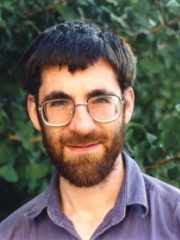
 Richard Borcherds
His biography is available in 32 different languages on Wikipedia. Richard Borcherds is the 910th most popular mathematician (down from 901st in 2024), the 185th most popular biography from South Africa (down from 175th in 2019) and the 3rd most popular South African Mathematician.
Memorability Metrics
27k
Page Views
Past 12 months
52.34
HPI
Historical Popularity Index
Data Insights
32
Richard Borcherds's biography spans 32 Wikipedia language editions and earns a Historical Popularity Index of 52.34.
Page views of Richard Borcherds by language
Among Mathematicians
Among mathematicians, Richard Borcherds ranks 910 out of 1,010. Before him are Volker Strassen, Artur Avila, James Whitbread Lee Glaisher, Elon Lindenstrauss, Christine Darden, and Armand Borel. After him are David Blackwell, Mark Kac, Salomon Bochner, Philip Hall, Don Zagier, and Branko Grünbaum.
Most Popular Mathematicians in Wikipedia
Go to all Rankings
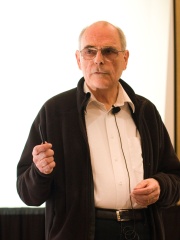
Volker Strassen
1936 - Present
HPI: 52.62
Rank: 904
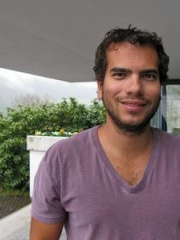
Artur Avila
1979 - Present
HPI: 52.56
Rank: 905
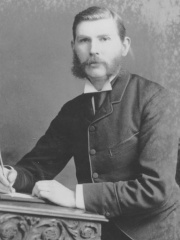
James Whitbread Lee Glaisher
1848 - 1928
HPI: 52.48
Rank: 906
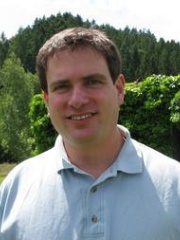
Elon Lindenstrauss
1970 - Present
HPI: 52.45
Rank: 907
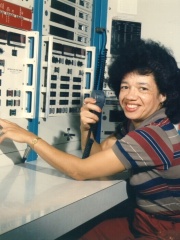
Christine Darden
1942 - Present
HPI: 52.42
Rank: 908
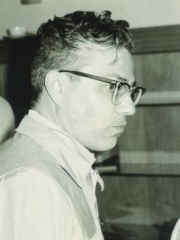
Armand Borel
1923 - 2003
HPI: 52.36
Rank: 909
Richard Borcherds
1959 - Present
HPI: 52.34
Rank: 910
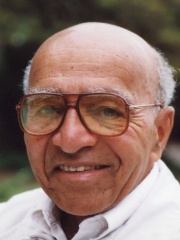
David Blackwell
1919 - 2010
HPI: 52.29
Rank: 911
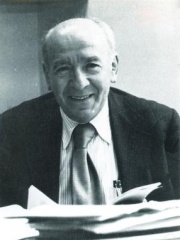
Mark Kac
1914 - 1984
HPI: 52.27
Rank: 912
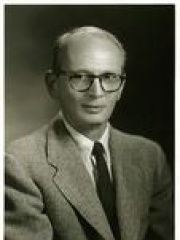
Salomon Bochner
1899 - 1982
HPI: 52.27
Rank: 913
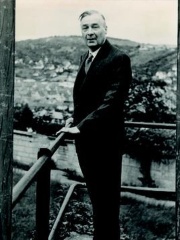
Philip Hall
1904 - 1982
HPI: 52.25
Rank: 914
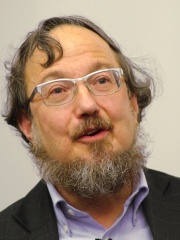
Don Zagier
1951 - Present
HPI: 52.19
Rank: 915
Branko Grünbaum
1929 - 2018
HPI: 52.17
Rank: 916

Contemporaries
Among people born in 1959, Richard Borcherds ranks 446. Before him are Alessandro Andrei, Orlando Figes, Andrzej Buncol, Valeria Ciavatta, Rob Gonsalves, and Mona Juul. After him are Alessandro Barbero, Petar Rajič, Adriana Ozores, Juan Barbas, Ben Okri, and Jack Wagner.
Others Born in 1959
Go to all Rankings
Alessandro Andrei
ATHLETE
1959 - Present
HPI: 52.41
Rank: 440
Orlando Figes
HISTORIAN
1959 - Present
HPI: 52.40
Rank: 441

Andrzej Buncol
SOCCER PLAYER
1959 - Present
HPI: 52.40
Rank: 442
Valeria Ciavatta
POLITICIAN
1959 - Present
HPI: 52.38
Rank: 443

Rob Gonsalves
PAINTER
1959 - 2017
HPI: 52.38
Rank: 444
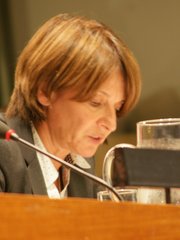
Mona Juul
DIPLOMAT
1959 - Present
HPI: 52.35
Rank: 445
Richard Borcherds
MATHEMATICIAN
1959 - Present
HPI: 52.34
Rank: 446
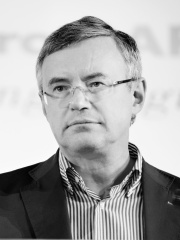
Alessandro Barbero
HISTORIAN
1959 - Present
HPI: 52.33
Rank: 447
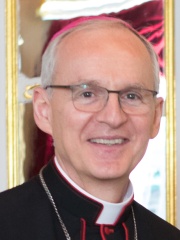
Petar Rajič
RELIGIOUS FIGURE
1959 - Present
HPI: 52.30
Rank: 448
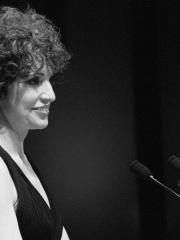
Adriana Ozores
ACTOR
1959 - Present
HPI: 52.25
Rank: 449

Juan Barbas
SOCCER PLAYER
1959 - Present
HPI: 52.24
Rank: 450
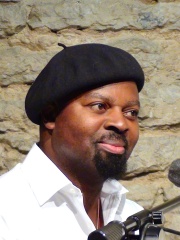
Ben Okri
WRITER
1959 - Present
HPI: 52.23
Rank: 451
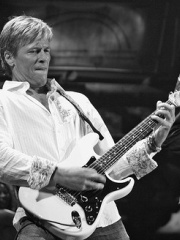
Jack Wagner
ACTOR
1959 - Present
HPI: 52.20
Rank: 452
In South Africa
Among people born in South Africa, Richard Borcherds ranks 185 out of 709. Before him are Gavin Hood (1963), Florence Fuller (1867), Denis Goldberg (1933), Ted Moore (1914), Gordon Hodgson (1904), and Clarence Walker (1898). After him are Clarence Oldfield (1899), Eddie Kramer (1942), Grace Mugabe (1965), Baleka Mbete (1949), Enoch Sontonga (1873), and Eddie Keizan (1944).
Others born in South Africa
Go to all Rankings
Gavin Hood
FILM DIRECTOR
1963 - Present
HPI: 52.71
Rank: 179

Florence Fuller
PAINTER
1867 - 1946
HPI: 52.71
Rank: 180
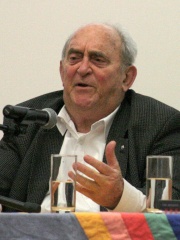
Denis Goldberg
SOCIAL ACTIVIST
1933 - 2020
HPI: 52.68
Rank: 181

Ted Moore
POLITICIAN
1914 - 1987
HPI: 52.57
Rank: 182
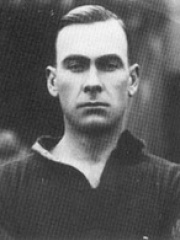
Gordon Hodgson
SOCCER PLAYER
1904 - 1951
HPI: 52.42
Rank: 183

Clarence Walker
ATHLETE
1898 - 1957
HPI: 52.41
Rank: 184
Richard Borcherds
MATHEMATICIAN
1959 - Present
HPI: 52.34
Rank: 185

Clarence Oldfield
ATHLETE
1899 - 1981
HPI: 52.29
Rank: 186
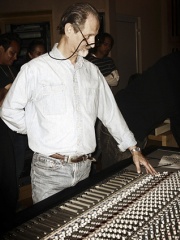
Eddie Kramer
MUSICIAN
1942 - Present
HPI: 52.26
Rank: 187
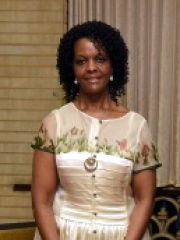
Grace Mugabe
POLITICIAN
1965 - Present
HPI: 52.22
Rank: 188
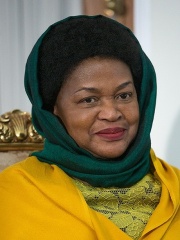
Baleka Mbete
POLITICIAN
1949 - Present
HPI: 52.20
Rank: 189
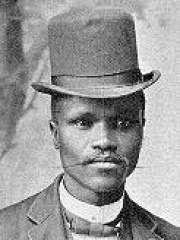
Enoch Sontonga
COMPOSER
1873 - 1905
HPI: 52.18
Rank: 190

Eddie Keizan
RACING DRIVER
1944 - 2016
HPI: 51.89
Rank: 191
Among Mathematicians In South Africa
Among mathematicians born in South Africa, Richard Borcherds ranks 3. Before him are Seymour Papert (1928), and Claude Chevalley (1909). After him are Peter Sarnak (1953), and Stanley Skewes (1899).
Seymour Papert
1928 - 2016
HPI: 65.55
Rank: 1
Claude Chevalley
1909 - 1984
HPI: 57.14
Rank: 2
Richard Borcherds
1959 - Present
HPI: 52.34
Rank: 3

Peter Sarnak
1953 - Present
HPI: 51.14
Rank: 4

Stanley Skewes
1899 - 1988
HPI: 49.00
Rank: 5




