Schriftsteller
Callimachus
310 BC - 240 BC
DE.WIKIPEDIA-SEITENAUFRUFE (PV)
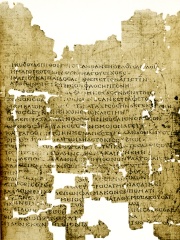
 Callimachus
Seine Biografie ist in 51 verschiedenen Sprachen auf Wikipedia verfügbar (gestiegen von 50 im Jahr 2024). Callimachus ist der 331st beliebteste Schriftsteller (gestiegen vom 339th im Jahr 2024), die 8th beliebteste Biografie aus Libyen (gestiegen vom 9th im Jahr 2019) und der beliebteste aus Libyen Schriftsteller.
Bekanntheitsmetriken
130k
Seitenaufrufe
Letzte 12 Monate
75.19
HPI
Historischer Popularitätsindex
Daten-Einblicke
#331 / 7,707
Callimachus belegt Platz 331 von 7,707 Schriftsteller weltweit und gehört damit zu den besten 5 % des Berufsstands.
51
Die Biografie von Callimachus erscheint in 51 Sprachversionen der Wikipedia, mehr als bei 91 % aller Schriftsteller.
Seitenaufrufe von Callimachus nach Sprache
Unter Schriftsteller
Unter Schriftsteller belegt Callimachus Rang 331 von 7,707. Vor ihm stehen Nadine Gordimer, Paul Celan, Colette, Anne Brontë, André Malraux, und William Golding. Nach ihm folgen Jaggi Vasudev, Apollonius of Rhodes, Philip K. Dick, Michael Ende, Saadi Shirazi, und Christine de Pizan.
Die beliebtesten Schriftsteller auf Wikipedia
Zu allen Ranglisten

Nadine Gordimer
1923 - 2014
HPI: 75.27
Rang: 325

Paul Celan
1920 - 1970
HPI: 75.26
Rang: 326
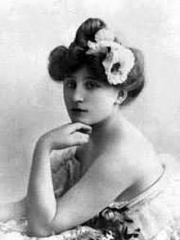
Colette
1873 - 1954
HPI: 75.22
Rang: 327
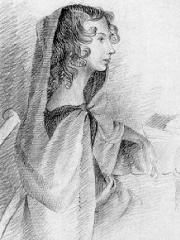
Anne Brontë
1820 - 1849
HPI: 75.21
Rang: 328
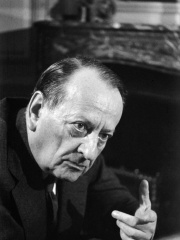
André Malraux
1901 - 1976
HPI: 75.21
Rang: 329
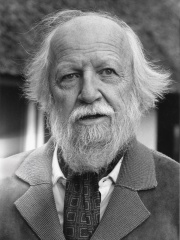
William Golding
1911 - 1993
HPI: 75.20
Rang: 330
Callimachus
310 BC - 240 BC
HPI: 75.19
Rang: 331
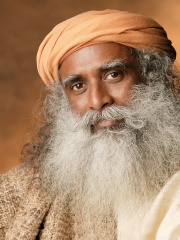
Jaggi Vasudev
1957 - heute
HPI: 75.17
Rang: 332

Apollonius of Rhodes
295 BC - 215 BC
HPI: 75.13
Rang: 333
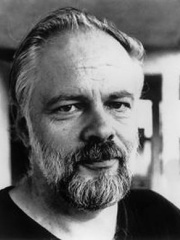
Philip K. Dick
1928 - 1982
HPI: 75.12
Rang: 334

Michael Ende
1929 - 1995
HPI: 75.11
Rang: 335
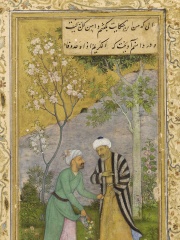
Saadi Shirazi
1210 - 1291
HPI: 75.10
Rang: 336
Christine de Pizan
1365 - 1430
HPI: 75.10
Rang: 337

Zeitgenossen
Unter den im Jahr 310 BC Geborenen belegt Callimachus Rang 1. Nach ihm folgen Posidippus, und Gnaeus Cornelius Scipio Asina. Unter den im Jahr 240 BC Verstorbenen belegt Callimachus Rang 2. Vor ihm steht Euclid. Nach ihm folgen Arcesilaus, Aratus, Zou Yan, und Posidippus.
Weitere im Jahr 310 BC Geborene
Zu allen RanglistenCallimachus
WRITER
310 BC - 240 BC
HPI: 75.19
Rang: 1

Posidippus
WRITER
310 BC - 240 BC
HPI: 62.22
Rang: 2

Gnaeus Cornelius Scipio Asina
POLITICIAN
310 BC - 220 BC
HPI: 59.46
Rang: 3
Weitere im Jahr 240 BC Verstorbene
Zu allen Ranglisten
Euclid
MATHEMATICIAN
350 BC - 240 BC
HPI: 90.02
Rang: 1
Callimachus
WRITER
310 BC - 240 BC
HPI: 75.19
Rang: 2
Arcesilaus
PHILOSOPHER
315 BC - 240 BC
HPI: 72.20
Rang: 3
Aratus
WRITER
315 BC - 240 BC
HPI: 71.21
Rang: 4

Zou Yan
PHILOSOPHER
305 BC - 240 BC
HPI: 64.16
Rang: 5
Posidippus
WRITER
310 BC - 240 BC
HPI: 62.22
Rang: 6
In Libyen
Unter den in Libyen Geborenen belegt Callimachus Rang 8 von 86. Vor ihm stehen Muammar Gaddafi (1942), Mark the Evangelist (10), Septimius Severus (145), Arius (256), Aristippus (-434), und Simon of Cyrene (-100). Nach ihm folgen Berenice II of Egypt (-267), Pope Victor I (100), Omar Mukhtar (1858), Idris of Libya (1889), Khalifa Haftar (1943), und Carneades (-214).
Weitere in Libyen geborene Personen
Zu allen Ranglisten
Muammar Gaddafi
POLITICIAN
1942 - 2011
HPI: 85.50
Rang: 2
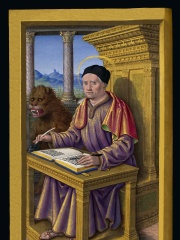
Mark the Evangelist
RELIGIOUS FIGURE
10 - 68
HPI: 85.33
Rang: 3
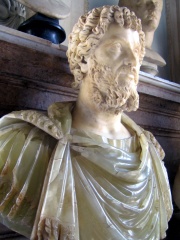
Septimius Severus
POLITICIAN
145 - 211
HPI: 82.04
Rang: 4
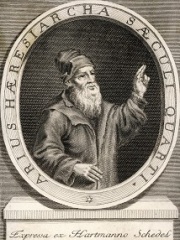
Arius
RELIGIOUS FIGURE
256 - 336
HPI: 81.19
Rang: 5
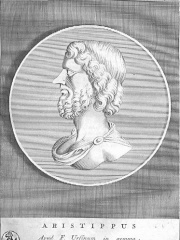
Aristippus
PHILOSOPHER
434 BC - 355 BC
HPI: 79.14
Rang: 6
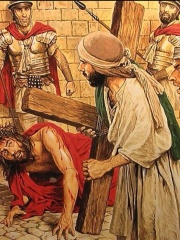
Simon of Cyrene
POLITICIAN
100 BC - 100
HPI: 76.33
Rang: 7
Callimachus
WRITER
310 BC - 240 BC
HPI: 75.19
Rang: 8
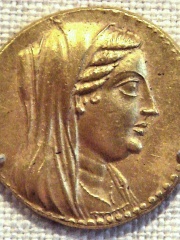
Berenice II of Egypt
COMPANION
267 BC - 221 BC
HPI: 74.99
Rang: 9
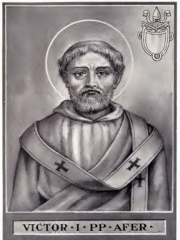
Pope Victor I
RELIGIOUS FIGURE
100 - 199
HPI: 74.96
Rang: 10
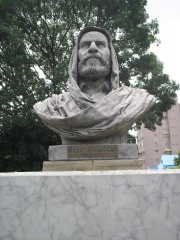
Omar Mukhtar
SOCIAL ACTIVIST
1858 - 1931
HPI: 74.73
Rang: 11
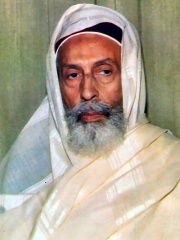
Idris of Libya
POLITICIAN
1889 - 1983
HPI: 73.19
Rang: 12
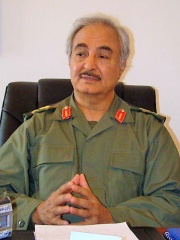
Khalifa Haftar
MILITARY PERSONNEL
1943 - heute
HPI: 72.98
Rang: 13
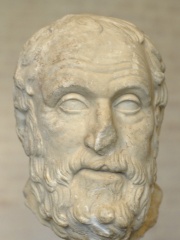
Carneades
PHILOSOPHER
214 BC - 129 BC
HPI: 72.79
Rang: 14
Unter Schriftsteller in Libyen
Unter den in Libyen geborenen Schriftsteller belegt Callimachus Rang 1. Nach ihm folgen Ibn Manzur (1233), Ibrahim Kuni (1948), und Reham Khan (1973).
Callimachus
310 BC - 240 BC
HPI: 75.19
Rang: 1

Ibn Manzur
1233 - 1312
HPI: 60.90
Rang: 2

Ibrahim Kuni
1948 - heute
HPI: 53.90
Rang: 3

Reham Khan
1973 - heute
HPI: 32.85
Rang: 4




