设计师
乔治·阿玛尼
1934 - 2025
ZH.WIKIPEDIA PAGE VIEWS (PV)

 乔治·阿玛尼
Memorability Metrics
4.9M
Page Views
Past 12 months
77.04
HPI
Historical Popularity Index
Page views of 乔治·阿玛尼 by language
Among 设计师
Among 设计师, 乔治·阿玛尼 ranks 6 out of 104. Before him are Steve Jobs, Antonio Stradivari, Thomas Andrews, Ferdinand Porsche, and Peter Carl Fabergé. After him are Gianni Versace, Hugo Boss, William Morris, Aldus Manutius, Paco Rabanne, and Giorgetto Giugiaro.
Most Popular 设计师 in Wikipedia
Go to all Rankings

Steve Jobs
1955 - 2011
HPI: 88.84
Rank: 1

Antonio Stradivari
1644 - 1737
HPI: 81.39
Rank: 2
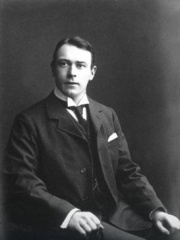
Thomas Andrews
1873 - 1912
HPI: 78.98
Rank: 3
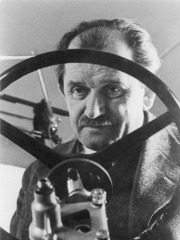
Ferdinand Porsche
1875 - 1951
HPI: 78.49
Rank: 4
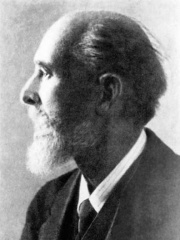
Peter Carl Fabergé
1846 - 1920
HPI: 77.25
Rank: 5
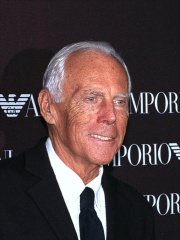
Giorgio Armani
1934 - 2025
HPI: 77.04
Rank: 6
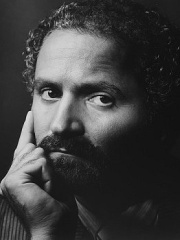
Gianni Versace
1946 - 1997
HPI: 76.76
Rank: 7
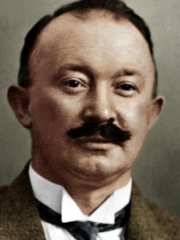
Hugo Boss
1885 - 1948
HPI: 73.83
Rank: 8
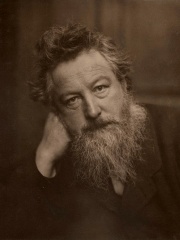
William Morris
1834 - 1896
HPI: 73.28
Rank: 9
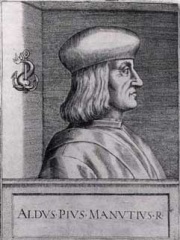
Aldus Manutius
1449 - 1515
HPI: 72.76
Rank: 10

Paco Rabanne
1934 - 2023
HPI: 71.90
Rank: 11
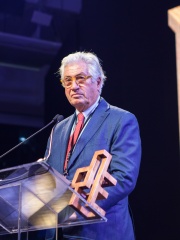
Giorgetto Giugiaro
1938 - Present
HPI: 71.78
Rank: 12

Contemporaries
Among people born in 1934, 乔治·阿玛尼 ranks 13. Before him are David J. Thouless, Henrik, Prince Consort of Denmark, Albert II of Belgium, Gene Cernan, Maggie Smith, and Richard Chamberlain. After him are Carl Sagan, Leonid Kravchuk, Norman Schwarzkopf Jr., Giovanni Battista Re, Nana Mouskouri, and Judi Dench. Among people deceased in 2025, 乔治·阿玛尼 ranks 14. Before him are Mario Vargas Llosa, Marianne Faithfull, Jean-Marie Le Pen, Boris Spassky, Robert Redford, and Richard Chamberlain. After him are Diane Keaton, Ozzy Osbourne, Val Kilmer, Brian Wilson, Jane Goodall, and Sebastião Salgado.
Others Born in 1934
Go to all Rankings
David J. Thouless
PHYSICIST
1934 - 2019
HPI: 79.67
Rank: 7
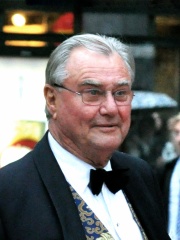
Henrik, Prince Consort of Denmark
NOBLEMAN
1934 - 2018
HPI: 78.58
Rank: 8
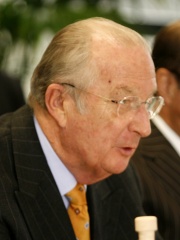
Albert II of Belgium
POLITICIAN
1934 - Present
HPI: 78.10
Rank: 9

Gene Cernan
ASTRONAUT
1934 - 2017
HPI: 78.05
Rank: 10

Maggie Smith
ACTOR
1934 - 2024
HPI: 77.94
Rank: 11

Richard Chamberlain
ACTOR
1934 - 2025
HPI: 77.12
Rank: 12
Giorgio Armani
DESIGNER
1934 - 2025
HPI: 77.04
Rank: 13

Carl Sagan
ASTRONOMER
1934 - 1996
HPI: 76.23
Rank: 14
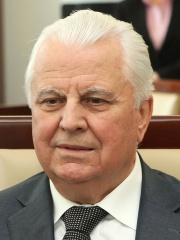
Leonid Kravchuk
POLITICIAN
1934 - 2022
HPI: 76.23
Rank: 15

Norman Schwarzkopf Jr.
MILITARY PERSONNEL
1934 - 2012
HPI: 76.12
Rank: 16

Giovanni Battista Re
RELIGIOUS FIGURE
1934 - Present
HPI: 75.89
Rank: 17

Nana Mouskouri
SINGER
1934 - Present
HPI: 75.87
Rank: 18
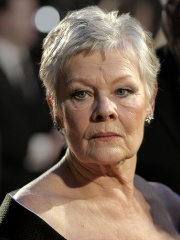
Judi Dench
ACTOR
1934 - Present
HPI: 75.79
Rank: 19
Others Deceased in 2025
Go to all Rankings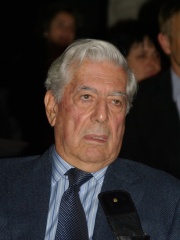
Mario Vargas Llosa
WRITER
1936 - 2025
HPI: 80.93
Rank: 8

Marianne Faithfull
SINGER
1946 - 2025
HPI: 79.01
Rank: 9
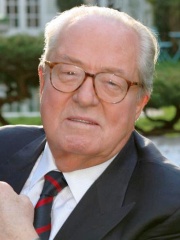
Jean-Marie Le Pen
POLITICIAN
1928 - 2025
HPI: 78.64
Rank: 10

Boris Spassky
CHESS PLAYER
1937 - 2025
HPI: 78.00
Rank: 11
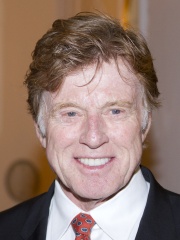
Robert Redford
ACTOR
1936 - 2025
HPI: 77.89
Rank: 12
Richard Chamberlain
ACTOR
1934 - 2025
HPI: 77.12
Rank: 13
Giorgio Armani
DESIGNER
1934 - 2025
HPI: 77.04
Rank: 14

Diane Keaton
ACTOR
1946 - 2025
HPI: 76.49
Rank: 15
Ozzy Osbourne
SINGER
1948 - 2025
HPI: 76.29
Rank: 16

Val Kilmer
ACTOR
1959 - 2025
HPI: 76.19
Rank: 17

Brian Wilson
MUSICIAN
1942 - 2025
HPI: 75.80
Rank: 18

Jane Goodall
ANTHROPOLOGIST
1934 - 2025
HPI: 75.73
Rank: 19

Sebastião Salgado
JOURNALIST
1944 - 2025
HPI: 75.59
Rank: 20
In 意大利
Among people born in 意大利, 乔治·阿玛尼 ranks 350 out of NaN. Before him are Pope Alexander IV (1200), Pope Gregory IV (790), Marsilio Ficino (1433), Gordian III (225), Juvenal (50), and Paolo Uccello (1475). After him are Vittore Carpaccio (1465), Pope Benedict III (810), Benvenuto Cellini (1500), Pope Nicholas III (1215), Aldo Moro (1916), and Pope Gregory VI (1000).
Others born in 意大利
Go to all Rankings
Pope Alexander IV
RELIGIOUS FIGURE
1200 - 1261
HPI: 77.18
Rank: 344
Pope Gregory IV
RELIGIOUS FIGURE
790 - 844
HPI: 77.17
Rank: 345
Marsilio Ficino
PHILOSOPHER
1433 - 1499
HPI: 77.16
Rank: 346
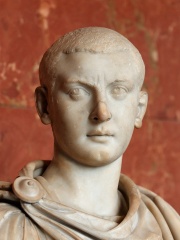
Gordian III
POLITICIAN
225 - 244
HPI: 77.14
Rank: 347

Juvenal
WRITER
50 - 200
HPI: 77.14
Rank: 348
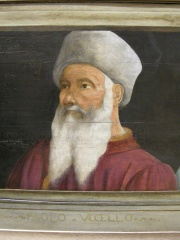
Paolo Uccello
PAINTER
1475 - 1475
HPI: 77.05
Rank: 349
Giorgio Armani
DESIGNER
1934 - 2025
HPI: 77.04
Rank: 350
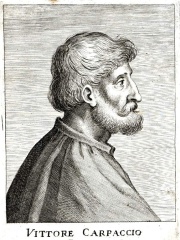
Vittore Carpaccio
PAINTER
1465 - 1526
HPI: 77.02
Rank: 351
Pope Benedict III
RELIGIOUS FIGURE
810 - 858
HPI: 77.02
Rank: 352
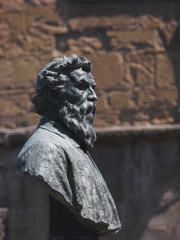
Benvenuto Cellini
SCULPTOR
1500 - 1571
HPI: 76.99
Rank: 353
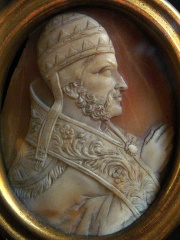
Pope Nicholas III
RELIGIOUS FIGURE
1215 - 1280
HPI: 76.99
Rank: 354
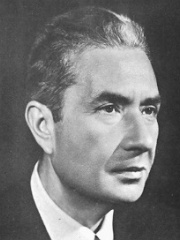
Aldo Moro
POLITICIAN
1916 - 1978
HPI: 76.98
Rank: 355
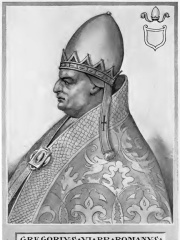
Pope Gregory VI
RELIGIOUS FIGURE
1000 - 1048
HPI: 76.95
Rank: 356
Among 设计师 In 意大利
Among 设计师 born in 意大利, 乔治·阿玛尼 ranks 2. Before him are Antonio Stradivari (1644). After him are Gianni Versace (1946), Aldus Manutius (1449), Giorgetto Giugiaro (1938), Valentino (1932), Miuccia Prada (1949), Nina Ricci (1883), Battista Farina (1893), Salvatore Ferragamo (1898), Giambattista Bodoni (1740), and Milena Canonero (1946).
Antonio Stradivari
1644 - 1737
HPI: 81.39
Rank: 1
Giorgio Armani
1934 - 2025
HPI: 77.04
Rank: 2
Gianni Versace
1946 - 1997
HPI: 76.76
Rank: 3
Aldus Manutius
1449 - 1515
HPI: 72.76
Rank: 4
Giorgetto Giugiaro
1938 - Present
HPI: 71.78
Rank: 5
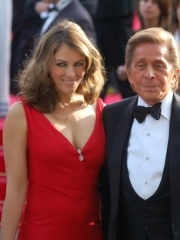
Valentino
1932 - 2026
HPI: 70.11
Rank: 6

Miuccia Prada
1949 - Present
HPI: 68.88
Rank: 7

Nina Ricci
1883 - 1970
HPI: 68.82
Rank: 8
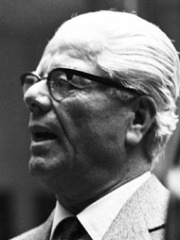
Battista Farina
1893 - 1966
HPI: 67.17
Rank: 9

Salvatore Ferragamo
1898 - 1960
HPI: 63.54
Rank: 10
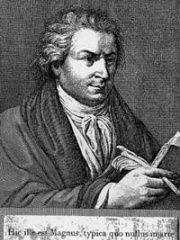
Giambattista Bodoni
1740 - 1813
HPI: 63.29
Rank: 11

Milena Canonero
1946 - Present
HPI: 59.91
Rank: 12




