Политик
Martina
598 - 641
RU.WIKIPEDIA PAGE VIEWS (PV)
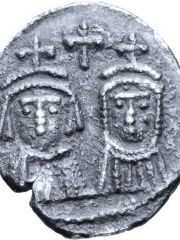
 Martina
Её биография доступна на 26 различных языках в Википедии (рост с 25 в 2024 году). Martina занимает 6286-е место среди самых популярных политик (рост с 6699-е места в 2024 году), занимает 565-е место среди самых популярных биографий из Турции (рост с 607-е места в 2019 году) и занимает 288-е место среди политик Турция.
Memorability Metrics
28k
Page Views
Past 12 months
64.97
HPI
Historical Popularity Index
Page views of Martina by language
Among Политик
Among политик, Martina ranks 6,284 out of 19,576. Before her are Joaquín Balaguer, Porcius Festus, Lestek, Gerardo Machado, Diane de France, and Glafcos Clerides. After her are Salome I, Kurt Schumacher, Gülbahar Hatun, Al-Said Barakah, James FitzJames, 1st Duke of Berwick, and Ferenc Deák.
Most Popular Политик in Wikipedia
Go to all Rankings

Joaquín Balaguer
1906 - 2002
HPI: 64.98
Rank: 6,280

Porcius Festus
HPI: 64.98
Rank: 6,281
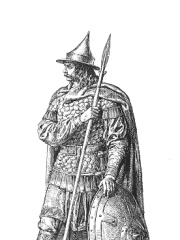
Lestek
870 - 930
HPI: 64.97
Rank: 6,282
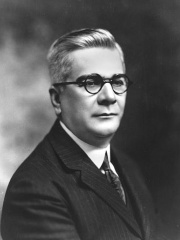
Gerardo Machado
1871 - 1939
HPI: 64.97
Rank: 6,283

Diane de France
1538 - 1619
HPI: 64.97
Rank: 6,284
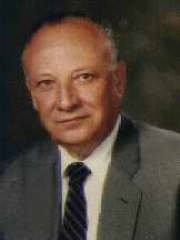
Glafcos Clerides
1919 - 2013
HPI: 64.97
Rank: 6,285
Martina
598 - 641
HPI: 64.97
Rank: 6,286

Salome I
65 BC - 10
HPI: 64.97
Rank: 6,287

Kurt Schumacher
1895 - 1952
HPI: 64.97
Rank: 6,288
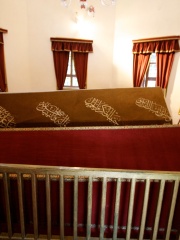
Gülbahar Hatun
1429 - 1492
HPI: 64.97
Rank: 6,289
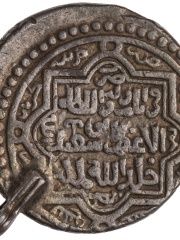
Al-Said Barakah
1260 - 1280
HPI: 64.97
Rank: 6,290
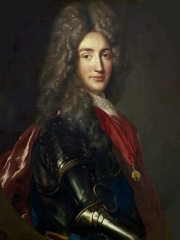
James FitzJames, 1st Duke of Berwick
1670 - 1734
HPI: 64.97
Rank: 6,291

Ferenc Deák
1803 - 1876
HPI: 64.97
Rank: 6,292

Contemporaries
Among people born in 598, Martina ranks 6. Before her are Brahmagupta, Emperor Taizong of Tang, Ruqayyah bint Muhammad, Qasim ibn Muhammad, and Ikrima ibn Abi Jahl. After her is Princess Pingyang. Among people deceased in 641, Martina ranks 7. Before her are Heraclius, Constantine III, Heraklonas, Abu Sufyan ibn Harb, Zaynab bint Jahsh, and Arnulf of Metz. After her are Emperor Jomei, Ouyang Xun, and Arechis I of Benevento.
Others Born in 598
Go to all Rankings
Brahmagupta
MATHEMATICIAN
598 - 670
HPI: 78.74
Rank: 1
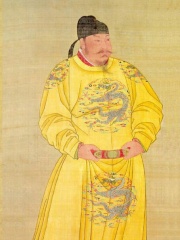
Emperor Taizong of Tang
POLITICIAN
598 - 649
HPI: 78.06
Rank: 2

Ruqayyah bint Muhammad
RELIGIOUS FIGURE
598 - 624
HPI: 75.14
Rank: 3

Qasim ibn Muhammad
RELIGIOUS FIGURE
598 - 600
HPI: 70.99
Rank: 4

Ikrima ibn Abi Jahl
MILITARY PERSONNEL
598 - 636
HPI: 65.74
Rank: 5
Martina
POLITICIAN
598 - 641
HPI: 64.97
Rank: 6
Princess Pingyang
MILITARY PERSONNEL
598 - 623
HPI: 62.65
Rank: 7
Others Deceased in 641
Go to all Rankings
Heraclius
POLITICIAN
575 - 641
HPI: 82.13
Rank: 1
Constantine III
POLITICIAN
612 - 641
HPI: 80.08
Rank: 2
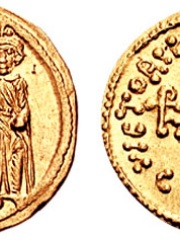
Heraklonas
POLITICIAN
618 - 641
HPI: 78.77
Rank: 3

Abu Sufyan ibn Harb
POLITICIAN
580 - 641
HPI: 76.78
Rank: 4

Zaynab bint Jahsh
RELIGIOUS FIGURE
592 - 641
HPI: 76.60
Rank: 5
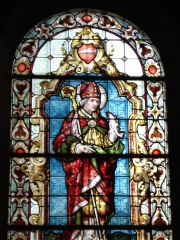
Arnulf of Metz
RELIGIOUS FIGURE
582 - 641
HPI: 66.74
Rank: 6
Martina
POLITICIAN
598 - 641
HPI: 64.97
Rank: 7

Emperor Jomei
POLITICIAN
593 - 641
HPI: 64.88
Rank: 8

Ouyang Xun
POLITICIAN
557 - 641
HPI: 62.96
Rank: 9

Arechis I of Benevento
POLITICIAN
600 - 641
HPI: 56.68
Rank: 10
In Турция
Among people born in Турция, Martina ranks 565 out of NaN. Before her are Sultan Kösen (1982), George Hamartolos (900), Leo the Deacon (950), Leo II, King of Armenia (1236), Jacob Baradaeus (505), and Nectarius of Constantinople (null). After her are Gülbahar Hatun (1429), Dorotheus of Gaza (510), Fevzi Çakmak (1876), Atticus of Constantinople (370), Scylax of Caryanda (-600), and Henri Verneuil (1920).
Others born in Турция
Go to all Rankings
Sultan Kösen
CELEBRITY
1982 - Present
HPI: 65.05
Rank: 559

George Hamartolos
RELIGIOUS FIGURE
900 - 867
HPI: 65.04
Rank: 560

Leo the Deacon
HISTORIAN
950 - 992
HPI: 65.02
Rank: 561
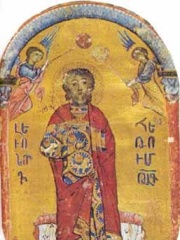
Leo II, King of Armenia
POLITICIAN
1236 - 1289
HPI: 65.02
Rank: 562

Jacob Baradaeus
RELIGIOUS FIGURE
505 - 578
HPI: 65.01
Rank: 563

Nectarius of Constantinople
RELIGIOUS FIGURE
HPI: 64.98
Rank: 564
Martina
POLITICIAN
598 - 641
HPI: 64.97
Rank: 565
Gülbahar Hatun
POLITICIAN
1429 - 1492
HPI: 64.97
Rank: 566

Dorotheus of Gaza
RELIGIOUS FIGURE
510 - 620
HPI: 64.93
Rank: 567

Fevzi Çakmak
POLITICIAN
1876 - 1950
HPI: 64.92
Rank: 568

Atticus of Constantinople
POLITICIAN
370 - 425
HPI: 64.92
Rank: 569

Scylax of Caryanda
EXPLORER
600 BC - 500 BC
HPI: 64.91
Rank: 570
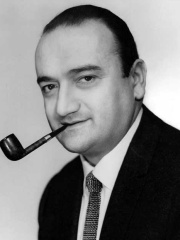
Henri Verneuil
FILM DIRECTOR
1920 - 2002
HPI: 64.90
Rank: 571
Among Политик In Турция
Among политик born in Турция, Martina ranks 288. Before her are Manuel I of Trebizond (1218), Köprülüzade Fazıl Mustafa Pasha (1637), Emine Hatun (1398), Publius Servilius Vatia Isauricus (-120), Pharnaces I of Pontus (-300), and Leo II, King of Armenia (1236). After her are Gülbahar Hatun (1429), Fevzi Çakmak (1876), Atticus of Constantinople (370), Şahin Giray (1745), İsa Çelebi (1380), and Theodora Komnene (1096).
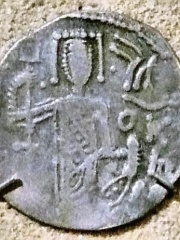
Manuel I of Trebizond
1218 - 1263
HPI: 65.32
Rank: 282
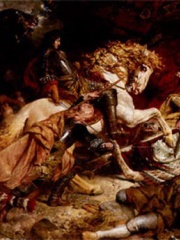
Köprülüzade Fazıl Mustafa Pasha
1637 - 1691
HPI: 65.31
Rank: 283

Emine Hatun
1398 - 1449
HPI: 65.30
Rank: 284

Publius Servilius Vatia Isauricus
120 BC - 44 BC
HPI: 65.09
Rank: 285
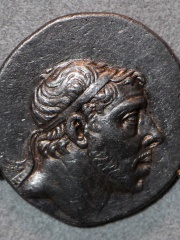
Pharnaces I of Pontus
300 BC - 159 BC
HPI: 65.05
Rank: 286
Leo II, King of Armenia
1236 - 1289
HPI: 65.02
Rank: 287
Martina
598 - 641
HPI: 64.97
Rank: 288
Gülbahar Hatun
1429 - 1492
HPI: 64.97
Rank: 289
Fevzi Çakmak
1876 - 1950
HPI: 64.92
Rank: 290
Atticus of Constantinople
370 - 425
HPI: 64.92
Rank: 291
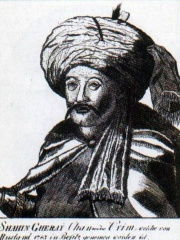
Şahin Giray
1745 - 1787
HPI: 64.87
Rank: 292
İsa Çelebi
1380 - 1407
HPI: 64.87
Rank: 293

Theodora Komnene
1096 - 1200
HPI: 64.85
Rank: 294




