Mathematician
David Mumford
American mathematician
1937 - today
EN.WIKIPEDIA PAGE VIEWS (PV)

 David Mumford
His biography is available in 37 different languages on Wikipedia (up from 36 in 2024). David Mumford is the 528th most popular mathematician (down from 485th in 2024), the 2,535th most popular biography from United Kingdom (down from 2,260th in 2019) and the 57th most popular British Mathematician.
Memorability Metrics
32k
Page Views
Past 12 months
60.12
HPI
Historical Popularity Index
Page views of David Mumford by language
Among Mathematicians
Among mathematicians, David Mumford ranks 528 out of 1,004. Before him are Ernest William Brown, Guðbrandur Þorláksson, Henri Brocard, Aleksandr Danilovich Aleksandrov, Dennis Sullivan, and Nicolaus I Bernoulli. After him are Luis Caffarelli, George David Birkhoff, Julia Robinson, Arnaud Denjoy, Harold Jeffreys, and Richard E. Bellman.
Most Popular Mathematicians in Wikipedia
Go to all Rankings
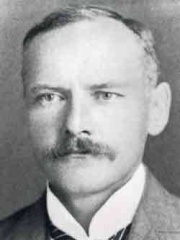
Ernest William Brown
1866 - 1938
HPI: 60.22
Rank: 522
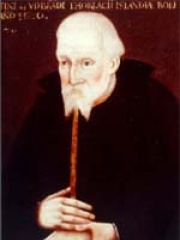
Guðbrandur Þorláksson
1542 - 1627
HPI: 60.22
Rank: 523
Henri Brocard
1845 - 1922
HPI: 60.20
Rank: 524
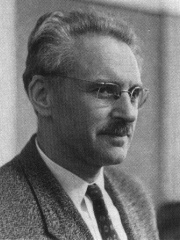
Aleksandr Danilovich Aleksandrov
1912 - 1999
HPI: 60.16
Rank: 525

Dennis Sullivan
1941 - Present
HPI: 60.16
Rank: 526

Nicolaus I Bernoulli
1687 - 1759
HPI: 60.14
Rank: 527
David Mumford
1937 - Present
HPI: 60.12
Rank: 528

Luis Caffarelli
1948 - Present
HPI: 60.12
Rank: 529
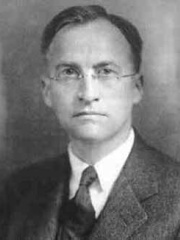
George David Birkhoff
1884 - 1944
HPI: 60.12
Rank: 530

Julia Robinson
1919 - 1985
HPI: 60.11
Rank: 531

Arnaud Denjoy
1884 - 1974
HPI: 60.09
Rank: 532
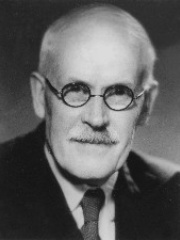
Harold Jeffreys
1891 - 1989
HPI: 60.08
Rank: 533
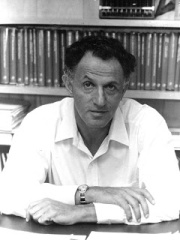
Richard E. Bellman
1920 - 1984
HPI: 60.06
Rank: 534

Contemporaries
Among people born in 1937, David Mumford ranks 221. Before him are Judy Tegart-Dalton, Michael Sata, Barbara Babcock, Hiroshi Ninomiya, Ron Carter, and Nur Hassan Hussein. After him are Eduard Artemyev, George Zweig, Barbara Steele, Loretta Swit, Robert Ressler, and Joe Viterelli.
Others Born in 1937
Go to all Rankings
Judy Tegart-Dalton
TENNIS PLAYER
1937 - Present
HPI: 60.37
Rank: 215
Michael Sata
POLITICIAN
1937 - 2014
HPI: 60.33
Rank: 216

Barbara Babcock
ACTOR
1937 - Present
HPI: 60.32
Rank: 217

Hiroshi Ninomiya
SOCCER PLAYER
1937 - Present
HPI: 60.28
Rank: 218

Ron Carter
MUSICIAN
1937 - Present
HPI: 60.27
Rank: 219

Nur Hassan Hussein
POLITICIAN
1937 - 2020
HPI: 60.14
Rank: 220
David Mumford
MATHEMATICIAN
1937 - Present
HPI: 60.12
Rank: 221

Eduard Artemyev
COMPOSER
1937 - 2022
HPI: 60.03
Rank: 222

George Zweig
PHYSICIST
1937 - Present
HPI: 60.03
Rank: 223

Barbara Steele
ACTOR
1937 - Present
HPI: 60.02
Rank: 224
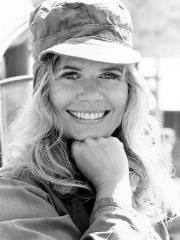
Loretta Swit
ACTOR
1937 - 2025
HPI: 60.02
Rank: 225
Robert Ressler
WRITER
1937 - 2013
HPI: 60.02
Rank: 226

Joe Viterelli
ACTOR
1937 - 2004
HPI: 59.93
Rank: 227
In United Kingdom
Among people born in United Kingdom, David Mumford ranks 2,535 out of NaN. Before him are Sylvia Pankhurst (1882), Samuel Smiles (1812), Jamie Dornan (1982), Dodie Smith (1896), Frederick Guthrie (1833), and Nigel Hawthorne (1929). After him are Brian Naylor (1923), John William Draper (1811), Joseph Lancaster (1778), Marie-Chantal, Crown Princess of Greece (1968), Henry Maudslay (1771), and John Badham (1939).
Others born in United Kingdom
Go to all Rankings
Sylvia Pankhurst
SOCIAL ACTIVIST
1882 - 1960
HPI: 60.13
Rank: 2,529
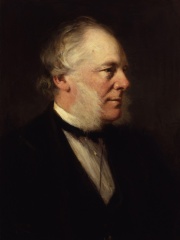
Samuel Smiles
WRITER
1812 - 1904
HPI: 60.13
Rank: 2,530

Jamie Dornan
ACTOR
1982 - Present
HPI: 60.13
Rank: 2,531

Dodie Smith
WRITER
1896 - 1990
HPI: 60.13
Rank: 2,532
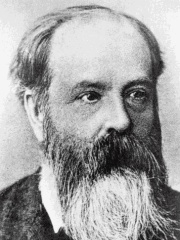
Frederick Guthrie
PHYSICIST
1833 - 1886
HPI: 60.13
Rank: 2,533
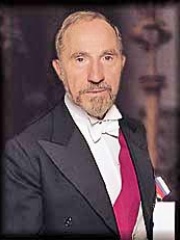
Nigel Hawthorne
ACTOR
1929 - 2001
HPI: 60.13
Rank: 2,534
David Mumford
MATHEMATICIAN
1937 - Present
HPI: 60.12
Rank: 2,535

Brian Naylor
RACING DRIVER
1923 - 1989
HPI: 60.12
Rank: 2,536
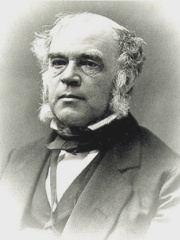
John William Draper
CHEMIST
1811 - 1882
HPI: 60.12
Rank: 2,537
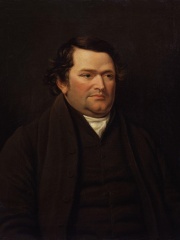
Joseph Lancaster
POLITICIAN
1778 - 1838
HPI: 60.11
Rank: 2,538

Marie-Chantal, Crown Princess of Greece
COMPANION
1968 - Present
HPI: 60.10
Rank: 2,539
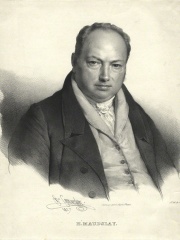
Henry Maudslay
INVENTOR
1771 - 1831
HPI: 60.10
Rank: 2,540

John Badham
FILM DIRECTOR
1939 - Present
HPI: 60.10
Rank: 2,541
Among Mathematicians In United Kingdom
Among mathematicians born in United Kingdom, David Mumford ranks 57. Before him are W. V. D. Hodge (1903), James Stirling (1692), Ian Stewart (1945), William Kingdon Clifford (1845), Thomas Bradwardine (1300), and Ernest William Brown (1866). After him are Harold Jeffreys (1891), Edward Arthur Milne (1896), William Whiston (1667), Joseph Raphson (1648), Thomas Wright (1711), and Henry Dudeney (1857).

W. V. D. Hodge
1903 - 1975
HPI: 60.94
Rank: 51

James Stirling
1692 - 1770
HPI: 60.80
Rank: 52

Ian Stewart
1945 - Present
HPI: 60.55
Rank: 53
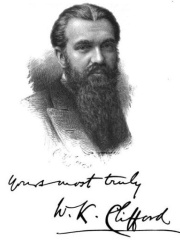
William Kingdon Clifford
1845 - 1879
HPI: 60.54
Rank: 54

Thomas Bradwardine
1300 - 1349
HPI: 60.51
Rank: 55
Ernest William Brown
1866 - 1938
HPI: 60.22
Rank: 56
David Mumford
1937 - Present
HPI: 60.12
Rank: 57
Harold Jeffreys
1891 - 1989
HPI: 60.08
Rank: 58

Edward Arthur Milne
1896 - 1950
HPI: 59.78
Rank: 59
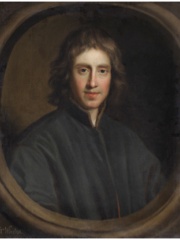
William Whiston
1667 - 1752
HPI: 59.74
Rank: 60

Joseph Raphson
1648 - 1715
HPI: 59.29
Rank: 61
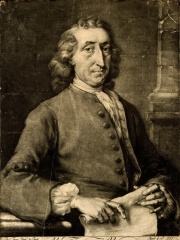
Thomas Wright
1711 - 1786
HPI: 59.19
Rank: 62
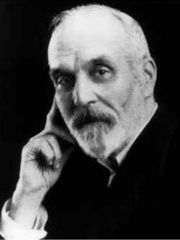
Henry Dudeney
1857 - 1930
HPI: 58.99
Rank: 63




