Religieuze figuur
Paus Gregorius III
700 - 741
NL.WIKIPEDIA-PAGINAWEERGAVEN (PV)
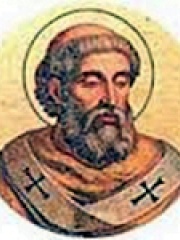
 Paus Gregorius III
Zijn biografie is beschikbaar in 79 verschillende talen op Wikipedia (toegenomen van 77 in 2024). Paus Gregorius III staat op plaats 193 onder de meest populaire religieuze figuur (gestegen van plaats 299 in 2024), plaats 4 onder de meest populaire biografieën uit Syrië (gestegen van plaats 7 in 2019) en op de eerste plaats onder de populairste religieuze figuur uit Syrië.
Bekendheidsstatistieken
260k
Paginaweergaven
Afgelopen 12 maanden
79.99
HPI
Historische populariteitsindex
Data-inzichten
#1
Van de 25 Religieuze figuur geboren in Syrië staat Paus Gregorius III op de eerste plaats.
41
Ondanks een leven van slechts 41 jaar staat Paus Gregorius III op plaats 193 van alle Religieuze figuur in de geschiedenis.
#1,388
Meer dan 12 eeuwen na de dood staat Paus Gregorius III nog altijd op plaats 1,388 van alle personen in Pantheon.
79
De biografie van Paus Gregorius III verschijnt in 79 taalversies van Wikipedia — meer dan bij 97% van alle Religieuze figuur.
Paginaweergaven van Paus Gregorius III per taal
Onder Religieuze figuur
Onder Religieuze figuur staat Paus Gregorius III op plaats 193 van 3,187. Vóór hem staan Pope Damasus II, Pope Siricius, Pope Benedict XI, Lazarus of Bethany, John Bosco, en Padre Pio. Na hem komen Rita of Cascia, Pope John XII, Pope Callixtus II, Pope Urban IV, Pope Leo III, en Abdullah ibn Abd al-Muttalib.
Populairste Religieuze figuur op Wikipedia
Naar alle ranglijsten
Pope Damasus II
1000 - 1048
HPI: 80.13
Plaats: 187
Pope Siricius
334 - 399
HPI: 80.07
Plaats: 188
Pope Benedict XI
1240 - 1304
HPI: 80.07
Plaats: 189
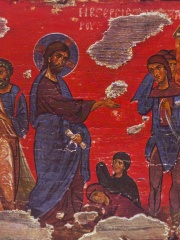
Lazarus of Bethany
100 BC - heden
HPI: 80.00
Plaats: 190
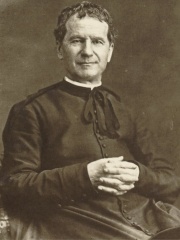
John Bosco
1815 - 1888
HPI: 80.00
Plaats: 191
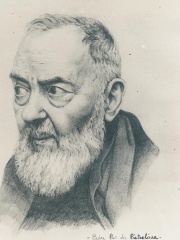
Padre Pio
1887 - 1968
HPI: 79.99
Plaats: 192
Pope Gregory III
700 - 741
HPI: 79.99
Plaats: 193
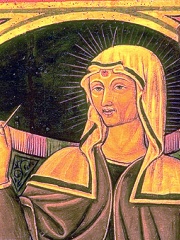
Rita of Cascia
1381 - 1457
HPI: 79.94
Plaats: 194
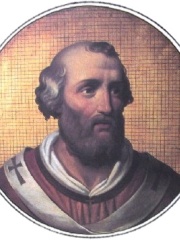
Pope John XII
937 - 964
HPI: 79.92
Plaats: 195
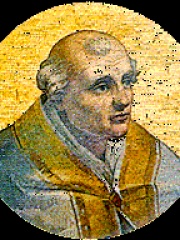
Pope Callixtus II
1065 - 1124
HPI: 79.92
Plaats: 196
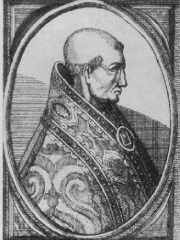
Pope Urban IV
1185 - 1264
HPI: 79.90
Plaats: 197
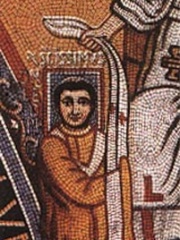
Pope Leo III
750 - 816
HPI: 79.88
Plaats: 198
Abdullah ibn Abd al-Muttalib
548 - 570
HPI: 79.87
Plaats: 199

Tijdgenoten
Onder de mensen geboren in 700 staat Paus Gregorius III op plaats 3. Vóór hem staan Pope-elect Stephen, en Pope Adrian I. Na hem komen Anastasios II, Theodosius III, Philippikos Bardanes, Pope Paul I, Tiberius III, Dihya, Wahshi ibn Harb, Antipope Paschal, en Plectrude. Onder de mensen overleden in 741 staat Paus Gregorius III op plaats 2. Vóór hem staat Charles Martel. Na hem komen Leo III the Isaurian, en Theudoald.
Anderen geboren in 700
Naar alle ranglijsten
Pope-elect Stephen
RELIGIOUS FIGURE
700 - 752
HPI: 81.28
Plaats: 1
Pope Adrian I
RELIGIOUS FIGURE
700 - 795
HPI: 80.57
Plaats: 2
Pope Gregory III
RELIGIOUS FIGURE
700 - 741
HPI: 79.99
Plaats: 3
Anastasios II
POLITICIAN
700 - 719
HPI: 77.83
Plaats: 4
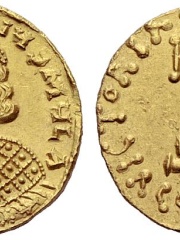
Theodosius III
POLITICIAN
700 - 722
HPI: 77.53
Plaats: 5
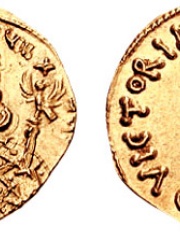
Philippikos Bardanes
POLITICIAN
700 - 713
HPI: 77.33
Plaats: 6
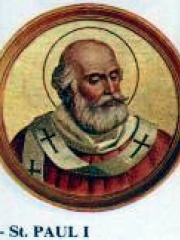
Pope Paul I
RELIGIOUS FIGURE
700 - 767
HPI: 77.23
Plaats: 7
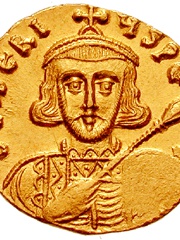
Tiberius III
POLITICIAN
700 - 705
HPI: 75.92
Plaats: 8
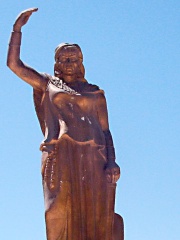
Dihya
POLITICIAN
700 - 601
HPI: 70.78
Plaats: 9

Wahshi ibn Harb
COMPANION
700 - 660
HPI: 70.64
Plaats: 10

Antipope Paschal
RELIGIOUS FIGURE
700 - 692
HPI: 68.23
Plaats: 11
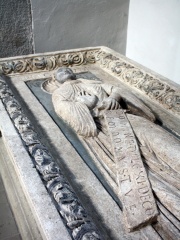
Plectrude
POLITICIAN
700 - 717
HPI: 67.09
Plaats: 12
Anderen overleden in 741
Naar alle ranglijsten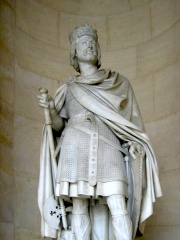
Charles Martel
MILITARY PERSONNEL
688 - 741
HPI: 82.26
Plaats: 1
Pope Gregory III
RELIGIOUS FIGURE
700 - 741
HPI: 79.99
Plaats: 2
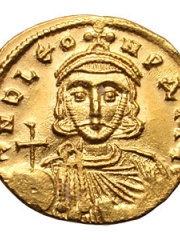
Leo III the Isaurian
POLITICIAN
675 - 741
HPI: 77.19
Plaats: 3

Theudoald
POLITICIAN
708 - 741
HPI: 64.98
Plaats: 4
In Syrië
Onder de mensen geboren in Syrië staat Paus Gregorius III op plaats 4 van 210. Vóór hem staan Hafez al-Assad (1930), Bashar al-Assad (1965), en Elagabalus (203). Na hem komen John of Damascus (676), Zenobia (240), Yazid I (647), Pope Anicetus (70), Philip the Arab (204), Imad ad-Din Zengi (1087), Apollodorus of Damascus (50), en Julia Domna (160).
Anderen geboren in Syrië
Naar alle ranglijsten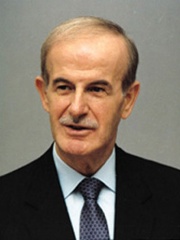
Hafez al-Assad
POLITICIAN
1930 - 2000
HPI: 87.19
Plaats: 1
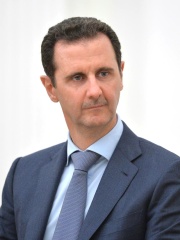
Bashar al-Assad
POLITICIAN
1965 - heden
HPI: 82.22
Plaats: 2
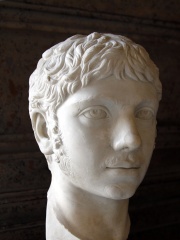
Elagabalus
POLITICIAN
203 - 222
HPI: 81.84
Plaats: 3
Pope Gregory III
RELIGIOUS FIGURE
700 - 741
HPI: 79.99
Plaats: 4
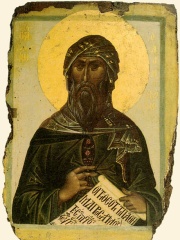
John of Damascus
PHILOSOPHER
676 - 749
HPI: 79.22
Plaats: 5
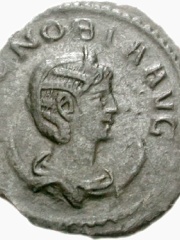
Zenobia
POLITICIAN
240 - 275
HPI: 78.70
Plaats: 6
Yazid I
POLITICIAN
647 - 683
HPI: 78.57
Plaats: 7
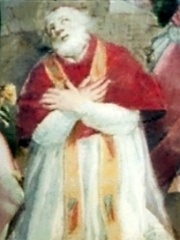
Pope Anicetus
RELIGIOUS FIGURE
70 - 168
HPI: 77.69
Plaats: 8
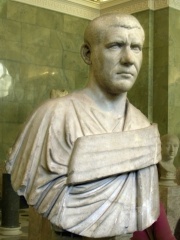
Philip the Arab
POLITICIAN
204 - 249
HPI: 77.17
Plaats: 9
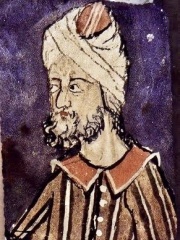
Imad ad-Din Zengi
POLITICIAN
1087 - 1146
HPI: 76.37
Plaats: 10
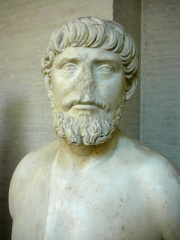
Apollodorus of Damascus
ARCHITECT
50 - 130
HPI: 76.33
Plaats: 11
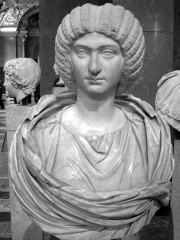
Julia Domna
COMPANION
160 - 217
HPI: 75.35
Plaats: 12
Onder Religieuze figuur in Syrië
Onder Religieuze figuur geboren in Syrië staat Paus Gregorius III op plaats 1. Na hem komen Pope Anicetus (70), John Climacus (579), Ibn Qayyim al-Jawziyya (1292), Romanos the Melodist (490), Émile Benveniste (1902), Ananias of Damascus (100), Maron (301), Apollinaris of Laodicea (310), Sophronius of Jerusalem (560), Youssef Absi (1946), en Gregory Peter XX Ghabroyan (1934).
Pope Gregory III
700 - 741
HPI: 79.99
Plaats: 1
Pope Anicetus
70 - 168
HPI: 77.69
Plaats: 2
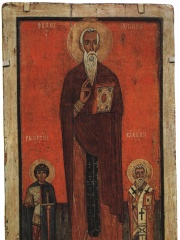
John Climacus
579 - 649
HPI: 73.89
Plaats: 3
Ibn Qayyim al-Jawziyya
1292 - 1350
HPI: 70.56
Plaats: 4
Romanos the Melodist
490 - 556
HPI: 69.91
Plaats: 5

Émile Benveniste
1902 - 1976
HPI: 69.73
Plaats: 6
Ananias of Damascus
100 - 100
HPI: 69.72
Plaats: 7
Maron
301 - 410
HPI: 68.60
Plaats: 8

Apollinaris of Laodicea
310 - 390
HPI: 67.99
Plaats: 9
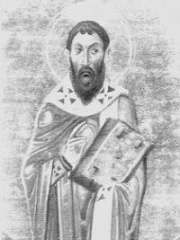
Sophronius of Jerusalem
560 - 638
HPI: 66.98
Plaats: 10
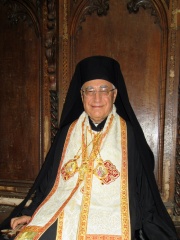
Youssef Absi
1946 - heden
HPI: 65.92
Plaats: 11

Gregory Peter XX Ghabroyan
1934 - 2021
HPI: 64.25
Plaats: 12




