Écrivain
Arator
500 - 543
PAGES VUES SUR FR.WIKIPEDIA (PV)

 Arator
Sa biographie est disponible en 15 langues sur Wikipédia. Arator est le 3,751st écrivain le plus populaire (en baisse du 3,520th en 2024), la 3,135th biographie la plus populaire d'Italie (en baisse du 2,993rd en 2019), ainsi que le 213th écrivain d'Italie le plus populaire.
Indicateurs de mémorabilité
4.8k
Pages vues
12 derniers mois
58.63
HPI
Indice de popularité historique
Faits marquants
Pages vues de Arator par langue
Parmi les Écrivain
Parmi les Écrivain, Arator occupe le rang 3,751 sur 7,302. Avant lui viennent Abbasgulu Bakikhanov, Helen Churchill Candee, Elin Pelin, Robert W. Chambers, Iwan Bloch, et Abd al-Rahman al-Kawakibi. Après lui viennent Mercedes de Acosta, Teresa de Lauretis, Antonio Beccadelli, Maurice Paléologue, Barbara Ward, Baroness Jackson of Lodsworth, et Cotton Mather.
Écrivain les plus populaires sur Wikipédia
Voir tous les classements
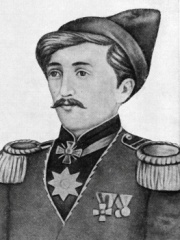
Abbasgulu Bakikhanov
1794 - 1847
HPI : 58.64
Rang : 3,745
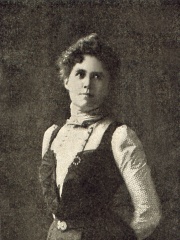
Helen Churchill Candee
1858 - 1949
HPI : 58.64
Rang : 3,746
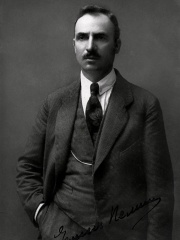
Elin Pelin
1877 - 1949
HPI : 58.63
Rang : 3,747
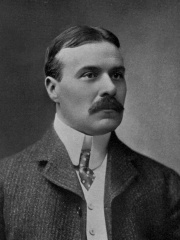
Robert W. Chambers
1865 - 1933
HPI : 58.63
Rang : 3,748
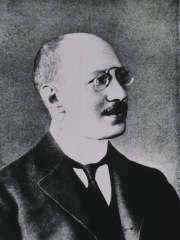
Iwan Bloch
1872 - 1922
HPI : 58.63
Rang : 3,749
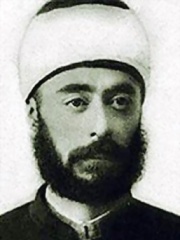
Abd al-Rahman al-Kawakibi
1855 - 1902
HPI : 58.63
Rang : 3,750
Arator
500 - 543
HPI : 58.63
Rang : 3,751
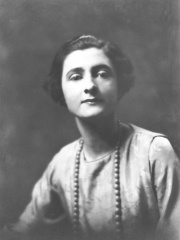
Mercedes de Acosta
1892 - 1968
HPI : 58.62
Rang : 3,752
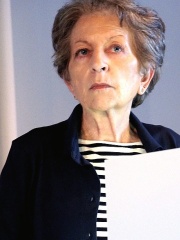
Teresa de Lauretis
1938 - 2026
HPI : 58.62
Rang : 3,753
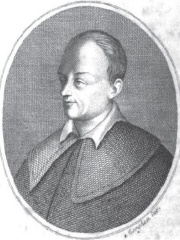
Antonio Beccadelli
1394 - 1471
HPI : 58.62
Rang : 3,754
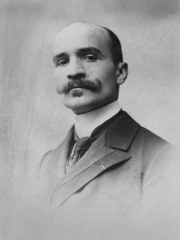
Maurice Paléologue
1859 - 1944
HPI : 58.61
Rang : 3,755

Barbara Ward, Baroness Jackson of Lodsworth
1914 - 1981
HPI : 58.61
Rang : 3,756
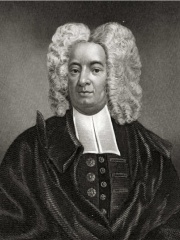
Cotton Mather
1663 - 1728
HPI : 58.61
Rang : 3,757

Contemporains
Parmi les personnes nées en 500, Arator occupe le rang 56. Avant lui viennent Skandagupta, Shudraka, Oisc of Kent, Peter the Patrician, Marcia Euphemia, et Sittas. Après lui viennent Illus, Iakob Tsurtaveli, Octa of Kent, Borzuya, John of Cappadocia, et Arnobius the Younger. Parmi les personnes décédées en 543, Arator occupe le rang 2. Avant lui vient Benedict of Nursia. Après lui vient Octa of Kent.
Autres personnes nées en 500
Voir tous les classements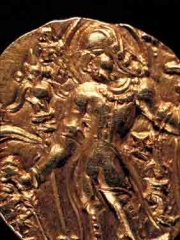
Skandagupta
POLITICIAN
500 - 467
HPI : 59.17
Rang : 50

Shudraka
WRITER
500 - 500
HPI : 59.12
Rang : 51

Oisc of Kent
POLITICIAN
500 - 512
HPI : 59.10
Rang : 52
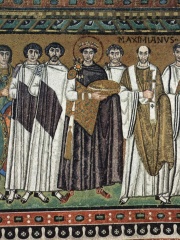
Peter the Patrician
POLITICIAN
500 - 565
HPI : 59.10
Rang : 53
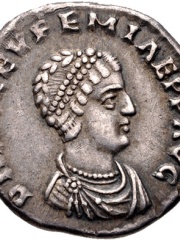
Marcia Euphemia
COMPANION
500 - 401
HPI : 58.90
Rang : 54

Sittas
MILITARY PERSONNEL
500 - 538
HPI : 58.89
Rang : 55
Arator
WRITER
500 - 543
HPI : 58.63
Rang : 56

Illus
MILITARY PERSONNEL
500 - 488
HPI : 58.18
Rang : 57

Iakob Tsurtaveli
WRITER
500 - présent
HPI : 56.68
Rang : 58

Octa of Kent
POLITICIAN
500 - 543
HPI : 56.65
Rang : 59
Borzuya
PHYSICIAN
500 - 600
HPI : 56.54
Rang : 60

John of Cappadocia
POLITICIAN
500 - 520
HPI : 56.03
Rang : 61

Arnobius the Younger
RELIGIOUS FIGURE
500 - 455
HPI : 55.96
Rang : 62
Autres personnes décédées en 543
Voir tous les classements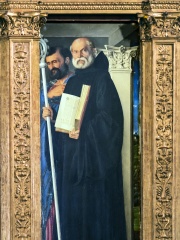
Benedict of Nursia
RELIGIOUS FIGURE
480 - 543
HPI : 82.79
Rang : 1
Arator
WRITER
500 - 543
HPI : 58.63
Rang : 2
Octa of Kent
POLITICIAN
500 - 543
HPI : 56.65
Rang : 3
En Italie
Parmi les personnes nées en Italie, Arator occupe le rang 3,135 sur 5,161. Avant lui viennent Gaius Fabricius Luscinus (-250), Anna Rita Del Piano (1966), Mario Zanin (1940), Francesco Marchisano (1929), Mario Salieri (1957), et Domenico Bartolucci (1917). Après lui viennent Giuseppe Prinzi (1825), Achille Lauro (1887), Giuseppe Taddei (1916), Piero Cappuccilli (1929), Teresa de Lauretis (1938), et Orio Mastropiero (1150).
Autres personnes nées en Italie
Voir tous les classements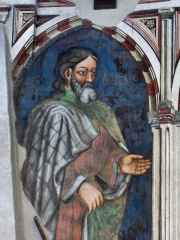
Gaius Fabricius Luscinus
POLITICIAN
250 BC - présent
HPI : 58.66
Rang : 3,129

Anna Rita Del Piano
ACTOR
1966 - présent
HPI : 58.66
Rang : 3,130
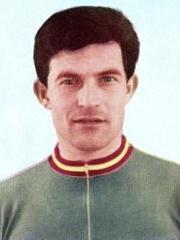
Mario Zanin
CYCLIST
1940 - présent
HPI : 58.66
Rang : 3,131
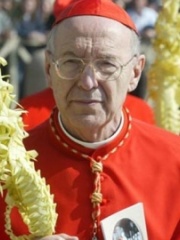
Francesco Marchisano
RELIGIOUS FIGURE
1929 - 2014
HPI : 58.64
Rang : 3,132
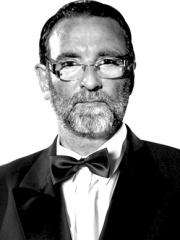
Mario Salieri
FILM DIRECTOR
1957 - présent
HPI : 58.63
Rang : 3,133
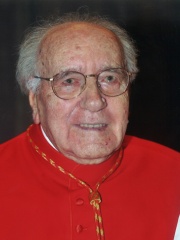
Domenico Bartolucci
RELIGIOUS FIGURE
1917 - 2013
HPI : 58.63
Rang : 3,134
Arator
WRITER
500 - 543
HPI : 58.63
Rang : 3,135
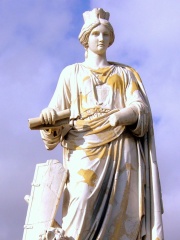
Giuseppe Prinzi
SCULPTOR
1825 - 1895
HPI : 58.63
Rang : 3,136
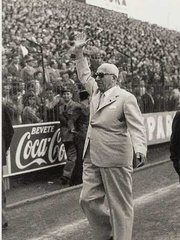
Achille Lauro
POLITICIAN
1887 - 1982
HPI : 58.63
Rang : 3,137

Giuseppe Taddei
SINGER
1916 - 2010
HPI : 58.63
Rang : 3,138
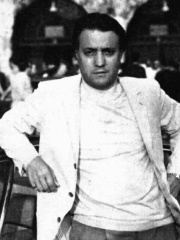
Piero Cappuccilli
SINGER
1929 - 2005
HPI : 58.62
Rang : 3,139
Teresa de Lauretis
WRITER
1938 - 2026
HPI : 58.62
Rang : 3,140
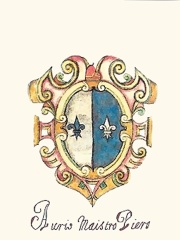
Orio Mastropiero
POLITICIAN
1150 - 1192
HPI : 58.62
Rang : 3,141
Parmi les Écrivain en Italie
Parmi les Écrivain nés en Italie, Arator occupe le rang 213. Avant lui viennent Carlo Rosselli (1899), Ennio Flaiano (1910), Cristina Trivulzio Belgiojoso (1808), Teofilo Folengo (1491), Julius Obsequens (400), et Giuseppe Gioachino Belli (1791). Après lui viennent Teresa de Lauretis (1938), Antonio Beccadelli (1394), Ranieri de' Calzabigi (1714), Luigi Capuana (1839), Francesco de Sanctis (1817), et Titus Calpurnius Siculus (290).
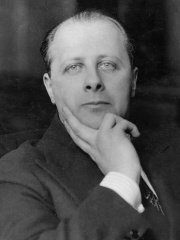
Carlo Rosselli
1899 - 1937
HPI : 59.08
Rang : 207
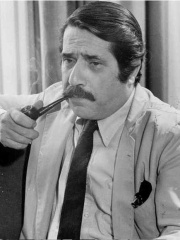
Ennio Flaiano
1910 - 1972
HPI : 59.03
Rang : 208
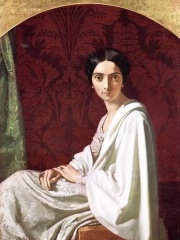
Cristina Trivulzio Belgiojoso
1808 - 1871
HPI : 58.99
Rang : 209
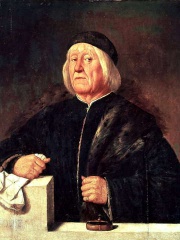
Teofilo Folengo
1491 - 1544
HPI : 58.97
Rang : 210

Julius Obsequens
400 - 301
HPI : 58.82
Rang : 211
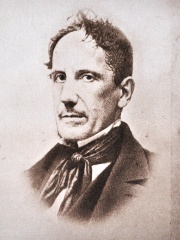
Giuseppe Gioachino Belli
1791 - 1863
HPI : 58.77
Rang : 212
Arator
500 - 543
HPI : 58.63
Rang : 213
Teresa de Lauretis
1938 - 2026
HPI : 58.62
Rang : 214
Antonio Beccadelli
1394 - 1471
HPI : 58.62
Rang : 215

Ranieri de' Calzabigi
1714 - 1795
HPI : 58.53
Rang : 216
Luigi Capuana
1839 - 1915
HPI : 58.50
Rang : 217
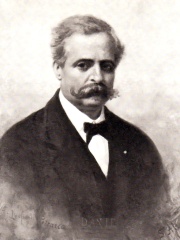
Francesco de Sanctis
1817 - 1883
HPI : 58.32
Rang : 218

Titus Calpurnius Siculus
290 - présent
HPI : 58.21
Rang : 219




