Religiöse Persönlichkeit
Malik al-Ashtar
585 - 658

 Malik al-Ashtar
Seine Biografie ist in 20 verschiedenen Sprachen auf Wikipedia verfügbar (gestiegen von 19 im Jahr 2024). Malik al-Ashtar ist der 1,047th beliebteste Religiöse Persönlichkeit (gesunken vom 810th im Jahr 2024), die 9th beliebteste Biografie aus Jemen (gesunken vom 6th im Jahr 2019) und der 3rd beliebteste aus Jemen Religiöse Persönlichkeit.
Memorability Metrics
230k
Page Views
Past 12 months
66.52
HPI
Historical Popularity Index
Page views of Malik al-Ashtar by language
Among Religiöse Persönlichkeits
Among religiöse persönlichkeits, Malik al-Ashtar ranks 1,047 out of 3,187. Before him are Lawrence of Brindisi, Medardus, Paul of the Cross, Frederick Fleet, Clemente Domínguez y Gómez, and Stanisław Ryłko. After him are Gerard of Csanád, Giovanni Benelli, Priscillian, Ngô Đình Thục, Fidelis of Sigmaringen, and Nirmala Joshi.
Most Popular Religiöse Persönlichkeits in Wikipedia
Go to all Rankings

Lawrence of Brindisi
1559 - 1619
HPI: 66.55
Rank: 1,041

Medardus
470 - 560
HPI: 66.55
Rank: 1,042

Paul of the Cross
1694 - 1775
HPI: 66.55
Rank: 1,043

Frederick Fleet
1887 - 1965
HPI: 66.53
Rank: 1,044

Clemente Domínguez y Gómez
1946 - 2005
HPI: 66.53
Rank: 1,045

Stanisław Ryłko
1945 - Present
HPI: 66.52
Rank: 1,046
Malik al-Ashtar
585 - 658
HPI: 66.52
Rank: 1,047
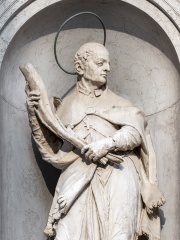
Gerard of Csanád
980 - 1046
HPI: 66.52
Rank: 1,048
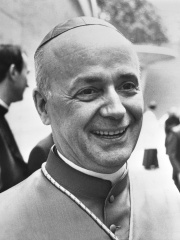
Giovanni Benelli
1921 - 1982
HPI: 66.50
Rank: 1,049

Priscillian
340 - 385
HPI: 66.49
Rank: 1,050

Ngô Đình Thục
1897 - 1984
HPI: 66.48
Rank: 1,051

Fidelis of Sigmaringen
1577 - 1622
HPI: 66.48
Rank: 1,052

Nirmala Joshi
1934 - 2015
HPI: 66.47
Rank: 1,053

Contemporaries
Among people born in 585, Malik al-Ashtar ranks 5. Before him are Umar, Pope Honorius I, Pepin of Landen, and Theudebert II. After him is Garibald II of Bavaria. Among people deceased in 658, Malik al-Ashtar ranks 2. Before him is Samo. After him are Muhammad ibn Abi Bakr, Khabbab ibn al-Aratt, Thonmi Sambhota, Erchinoald, and Chu Suiliang.
Others Born in 585
Go to all Rankings
Umar
POLITICIAN
585 - 644
HPI: 89.27
Rank: 1
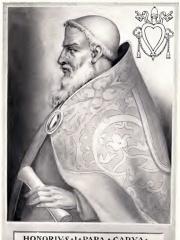
Pope Honorius I
RELIGIOUS FIGURE
585 - 638
HPI: 77.98
Rank: 2

Pepin of Landen
NOBLEMAN
585 - 640
HPI: 74.02
Rank: 3
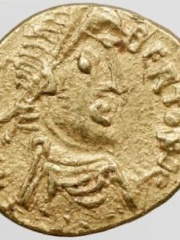
Theudebert II
POLITICIAN
585 - 612
HPI: 68.99
Rank: 4
Malik al-Ashtar
RELIGIOUS FIGURE
585 - 658
HPI: 66.52
Rank: 5

Garibald II of Bavaria
NOBLEMAN
585 - 640
HPI: 58.85
Rank: 6
Others Deceased in 658
Go to all Rankings
Samo
POLITICIAN
600 - 658
HPI: 74.04
Rank: 1
Malik al-Ashtar
RELIGIOUS FIGURE
585 - 658
HPI: 66.52
Rank: 2

Muhammad ibn Abi Bakr
COMPANION
631 - 658
HPI: 64.73
Rank: 3

Khabbab ibn al-Aratt
RELIGIOUS FIGURE
587 - 658
HPI: 63.65
Rank: 4

Thonmi Sambhota
INVENTOR
618 - 658
HPI: 60.59
Rank: 5

Erchinoald
POLITICIAN
700 - 658
HPI: 60.58
Rank: 6

Chu Suiliang
POLITICIAN
597 - 658
HPI: 59.92
Rank: 7
In Jemen
Among people born in Jemen, Malik al-Ashtar ranks 9 out of NaN. Before him are Uwais al-Qarani (594), Mohammed bin Awad bin Laden (1908), Mukesh Ambani (1957), Abu Musa al-Ash'ari (600), Abdullah ibn Saba' (700), and Miqdad ibn Aswad (589). After him are Rashad al-Alimi (1954), Tawakkol Karman (1979), Yahya Muhammad Hamid ed-Din (1869), Muhammad al-Badr (1926), Wahb ibn Munabbih (655), and Hussein al-Houthi (1960).
Others born in Jemen
Go to all Rankings
Uwais al-Qarani
RELIGIOUS FIGURE
594 - 657
HPI: 73.09
Rank: 3

Mohammed bin Awad bin Laden
BUSINESSPERSON
1908 - 1967
HPI: 72.35
Rank: 4

Mukesh Ambani
BUSINESSPERSON
1957 - Present
HPI: 69.68
Rank: 5

Abu Musa al-Ash'ari
POLITICIAN
600 - 666
HPI: 67.87
Rank: 6

Abdullah ibn Saba'
RELIGIOUS FIGURE
700 - 700
HPI: 66.74
Rank: 7
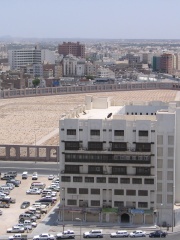
Miqdad ibn Aswad
COMPANION
589 - 653
HPI: 66.62
Rank: 8
Malik al-Ashtar
RELIGIOUS FIGURE
585 - 658
HPI: 66.52
Rank: 9

Rashad al-Alimi
POLITICIAN
1954 - Present
HPI: 65.28
Rank: 10

Tawakkol Karman
SOCIAL ACTIVIST
1979 - Present
HPI: 64.92
Rank: 11

Yahya Muhammad Hamid ed-Din
POLITICIAN
1869 - 1948
HPI: 64.81
Rank: 12
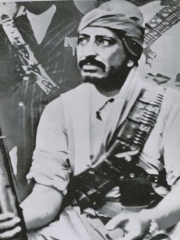
Muhammad al-Badr
POLITICIAN
1926 - 1996
HPI: 63.37
Rank: 13

Wahb ibn Munabbih
WRITER
655 - 738
HPI: 62.26
Rank: 14

Hussein al-Houthi
POLITICIAN
1960 - 2004
HPI: 62.05
Rank: 15
Among Religiöse Persönlichkeits In Jemen
Among religiöse persönlichkeits born in Jemen, Malik al-Ashtar ranks 3. Before him are Uwais al-Qarani (594), and Abdullah ibn Saba' (700).
Uwais al-Qarani
594 - 657
HPI: 73.09
Rank: 1
Abdullah ibn Saba'
700 - 700
HPI: 66.74
Rank: 2
Malik al-Ashtar
585 - 658
HPI: 66.52
Rank: 3




