Voetballer
Rafael García Torres
1974 - heden

 Rafael García Torres
Zijn biografie is beschikbaar in 21 verschillende talen op Wikipedia (toegenomen van 20 in 2024). Rafael García Torres staat op plaats 14.125 onder de meest populaire voetballer (gedaald van plaats 10.012 in 2024), plaats 689 onder de meest populaire biografieën uit Mexico (gedaald van plaats 588 in 2019) en op plaats 185 onder de populairste voetballer uit Mexico.
Memorability Metrics
13k
Page Views
Past 12 months
40.45
HPI
Historical Popularity Index
Page views of Rafael García Torres by language
Among Voetballers
Among voetballers, Rafael García Torres ranks 14,112 out of 21,273. Before him are Abdulaziz Al-Janoubi, Philipp Köhn, Daniel Moreira, Zizo, Sergei Zenjov, and Veton Berisha. After him are Michele Pazienza, Ibrahim Mater, Frank McGarvey, Choi Sung-kuk, Pasquale Padalino, and Ben Sigmund.
Most Popular Voetballers in Wikipedia
Go to all Rankings

Abdulaziz Al-Janoubi
1974 - Present
HPI: 40.46
Rank: 14,119
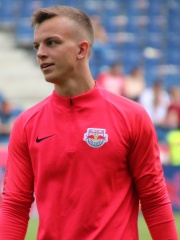
Philipp Köhn
1998 - Present
HPI: 40.45
Rank: 14,120
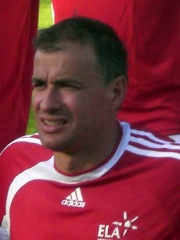
Daniel Moreira
1977 - Present
HPI: 40.45
Rank: 14,121

Zizo
1996 - Present
HPI: 40.45
Rank: 14,122
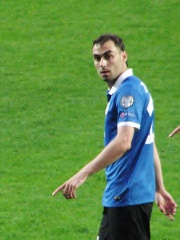
Sergei Zenjov
1989 - Present
HPI: 40.45
Rank: 14,123
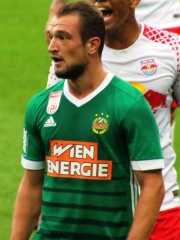
Veton Berisha
1994 - Present
HPI: 40.45
Rank: 14,124
Rafael García Torres
1974 - Present
HPI: 40.45
Rank: 14,125
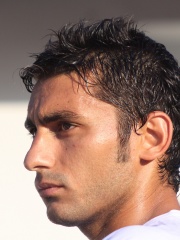
Michele Pazienza
1982 - Present
HPI: 40.45
Rank: 14,126

Ibrahim Mater
1975 - Present
HPI: 40.45
Rank: 14,127

Frank McGarvey
1956 - 2023
HPI: 40.44
Rank: 14,128
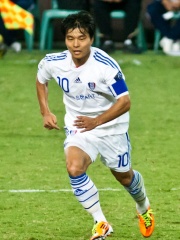
Choi Sung-kuk
1983 - Present
HPI: 40.44
Rank: 14,129

Pasquale Padalino
1972 - Present
HPI: 40.44
Rank: 14,130

Ben Sigmund
1981 - Present
HPI: 40.44
Rank: 14,131

Contemporaries
Among people born in 1974, Rafael García Torres ranks 1,154. Before him are Nnedi Okorafor, Fernando Jubero, Raimkul Malakhbekov, Carolyn Murphy, Sara Algotsson Ostholt, and Abdulaziz Al-Janoubi. After him are Lisa Brenner, Marco Jakobs, Amy Webb, Nassim Akrour, Luis Pérez Rodríguez, and Masanobu Matsunami.
Others Born in 1974
Go to all Rankings
Nnedi Okorafor
WRITER
1974 - Present
HPI: 40.49
Rank: 1,148

Fernando Jubero
COACH
1974 - Present
HPI: 40.49
Rank: 1,149

Raimkul Malakhbekov
ATHLETE
1974 - Present
HPI: 40.48
Rank: 1,150

Carolyn Murphy
MODEL
1974 - Present
HPI: 40.47
Rank: 1,151

Sara Algotsson Ostholt
ATHLETE
1974 - Present
HPI: 40.46
Rank: 1,152
Abdulaziz Al-Janoubi
SOCCER PLAYER
1974 - Present
HPI: 40.46
Rank: 1,153
Rafael García Torres
SOCCER PLAYER
1974 - Present
HPI: 40.45
Rank: 1,154

Lisa Brenner
ACTOR
1974 - Present
HPI: 40.45
Rank: 1,155

Marco Jakobs
ATHLETE
1974 - Present
HPI: 40.44
Rank: 1,156

Amy Webb
WRITER
1974 - Present
HPI: 40.42
Rank: 1,157
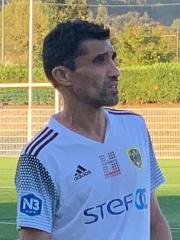
Nassim Akrour
SOCCER PLAYER
1974 - Present
HPI: 40.41
Rank: 1,158

Luis Pérez Rodríguez
CYCLIST
1974 - Present
HPI: 40.40
Rank: 1,159

Masanobu Matsunami
SOCCER PLAYER
1974 - Present
HPI: 40.39
Rank: 1,160
In Mexico
Among people born in Mexico, Rafael García Torres ranks 689 out of NaN. Before him are Luis Chávez (1996), Gabriela Schloesser (1994), Luis Ernesto Pérez (1981), Laura Mendez (1853), Isaac Terrazas (1973), and Alejandro Rejon Huchin (1997). After him are Johan Vásquez (1998), Natalia Cordova-Buckley (1982), Xiye Bastida (2002), Jesús Mena (1968), Iñaki Godoy (2003), and Aída Román (1988).
Others born in Mexico
Go to all Rankings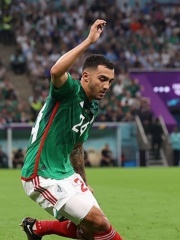
Luis Chávez
SOCCER PLAYER
1996 - Present
HPI: 40.61
Rank: 683

Gabriela Schloesser
ATHLETE
1994 - Present
HPI: 40.59
Rank: 684
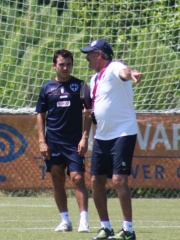
Luis Ernesto Pérez
SOCCER PLAYER
1981 - Present
HPI: 40.59
Rank: 685

Laura Mendez
WRITER
1853 - 1928
HPI: 40.53
Rank: 686

Isaac Terrazas
SOCCER PLAYER
1973 - Present
HPI: 40.51
Rank: 687

Alejandro Rejon Huchin
WRITER
1997 - Present
HPI: 40.50
Rank: 688
Rafael García Torres
SOCCER PLAYER
1974 - Present
HPI: 40.45
Rank: 689
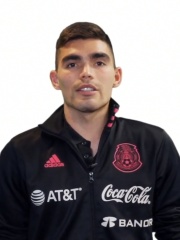
Johan Vásquez
SOCCER PLAYER
1998 - Present
HPI: 40.40
Rank: 690

Natalia Cordova-Buckley
ACTOR
1982 - Present
HPI: 40.40
Rank: 691

Xiye Bastida
SOCIAL ACTIVIST
2002 - Present
HPI: 40.38
Rank: 692

Jesús Mena
ATHLETE
1968 - Present
HPI: 40.37
Rank: 693

Iñaki Godoy
ACTOR
2003 - Present
HPI: 40.37
Rank: 694
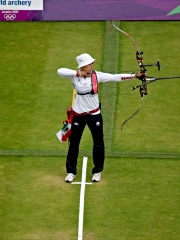
Aída Román
ATHLETE
1988 - Present
HPI: 40.31
Rank: 695
Among Voetballers In Mexico
Among voetballers born in Mexico, Rafael García Torres ranks 185. Before him are Alberto Medina (1983), Rodolfo Cota (1987), Joel Sánchez (1974), Luis Chávez (1996), Luis Ernesto Pérez (1981), and Isaac Terrazas (1973). After him are Johan Vásquez (1998), Orbelín Pineda (1996), Félix Fernández (1967), Moisés Muñoz (1980), Rodolfo Pizarro (1994), and Francisco Gabriel de Anda (1971).
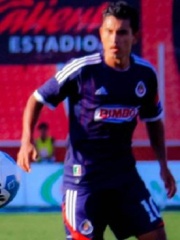
Alberto Medina
1983 - Present
HPI: 41.01
Rank: 179
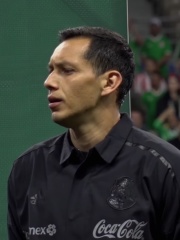
Rodolfo Cota
1987 - Present
HPI: 40.82
Rank: 180

Joel Sánchez
1974 - Present
HPI: 40.63
Rank: 181
Luis Chávez
1996 - Present
HPI: 40.61
Rank: 182
Luis Ernesto Pérez
1981 - Present
HPI: 40.59
Rank: 183
Isaac Terrazas
1973 - Present
HPI: 40.51
Rank: 184
Rafael García Torres
1974 - Present
HPI: 40.45
Rank: 185
Johan Vásquez
1998 - Present
HPI: 40.40
Rank: 186

Orbelín Pineda
1996 - Present
HPI: 40.29
Rank: 187

Félix Fernández
1967 - Present
HPI: 40.20
Rank: 188
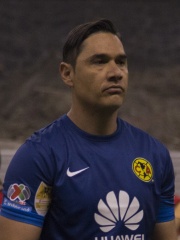
Moisés Muñoz
1980 - Present
HPI: 40.19
Rank: 189

Rodolfo Pizarro
1994 - Present
HPI: 40.12
Rank: 190

Francisco Gabriel de Anda
1971 - Present
HPI: 40.02
Rank: 191




