Atleta
Prisilla Rivera
1984 - presente
VISUALIZZAZIONI SU IT.WIKIPEDIA (PV)

 Prisilla Rivera
La sua biografia è disponibile in 9 lingue su Wikipedia. Prisilla Rivera è la 7721ª atleta più popolare (in calo dal 6879ª nel 2024), la 72ª biografia più popolare della Repubblica Dominicana (in calo dal 66ª nel 2019) e la 10ª atleta più popolare della Repubblica Dominicana.
Metriche di memorabilità
3.7k
Visualizzazioni
Ultimi 12 mesi
33.38
HPI
Indice di popolarità storica
Dati in evidenza
9
La biografia di Prisilla Rivera copre 9 edizioni linguistiche di Wikipedia e ottiene un Indice di Popolarità Storica di 33.38.
Visualizzazioni della pagina di Prisilla Rivera per lingua
Tra Atleta
Tra Atleta, Prisilla Rivera occupa la posizione 7,721 su 13,875. Prima di lei ci sono Sytske de Groot, Olusoji Fasuba, Marcus Walz, Yang Qian, Bartłomiej Pawełczak, e Javon Francis. Dopo di lei ci sono Wayne Pinnock, Alessia Trost, Alejandra Orozco, Tejaswini Sawant, Steven Muller, e Michael Bates.
Atleta più popolari su Wikipedia
Vai a tutte le classifiche
Sytske de Groot
1986 - presente
HPI: 33.40
Posizione: 7,715
Olusoji Fasuba
1984 - presente
HPI: 33.40
Posizione: 7,716
Marcus Walz
1994 - presente
HPI: 33.40
Posizione: 7,717
Yang Qian
2000 - presente
HPI: 33.40
Posizione: 7,718

Bartłomiej Pawełczak
1982 - presente
HPI: 33.39
Posizione: 7,719
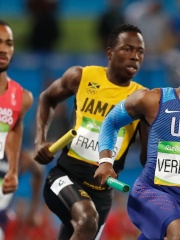
Javon Francis
1994 - presente
HPI: 33.39
Posizione: 7,720
Prisilla Rivera
1984 - presente
HPI: 33.38
Posizione: 7,721

Wayne Pinnock
2000 - presente
HPI: 33.38
Posizione: 7,722

Alessia Trost
1993 - presente
HPI: 33.37
Posizione: 7,723

Alejandra Orozco
1997 - presente
HPI: 33.37
Posizione: 7,724

Tejaswini Sawant
1980 - presente
HPI: 33.37
Posizione: 7,725

Steven Muller
1927 - 2013
HPI: 33.37
Posizione: 7,726

Michael Bates
1969 - presente
HPI: 33.37
Posizione: 7,727

Contemporanei
Tra le persone nate nel 1984, Prisilla Rivera occupa la posizione 1,743. Prima di lei ci sono Jair Céspedes, Michael Parkhurst, Hernán Pellerano, Luke McShane, Olusoji Fasuba, e Vladimir Denisov. Dopo di lei ci sono Bharti Singh, Yannic Seidenberg, Osvaldo González, TotalBiscuit, Toshiya Tanaka, e Hannah Macleod.
Altre persone nate nel 1984
Vai a tutte le classifiche
Jair Céspedes
SOCCER PLAYER
1984 - presente
HPI: 33.46
Posizione: 1,737

Michael Parkhurst
SOCCER PLAYER
1984 - presente
HPI: 33.46
Posizione: 1,738
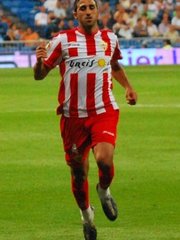
Hernán Pellerano
SOCCER PLAYER
1984 - presente
HPI: 33.46
Posizione: 1,739
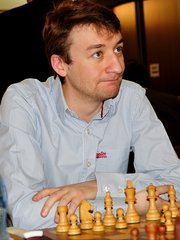
Luke McShane
CHESS PLAYER
1984 - presente
HPI: 33.45
Posizione: 1,740
Olusoji Fasuba
ATHLETE
1984 - presente
HPI: 33.40
Posizione: 1,741

Vladimir Denisov
HOCKEY PLAYER
1984 - presente
HPI: 33.40
Posizione: 1,742
Prisilla Rivera
ATHLETE
1984 - presente
HPI: 33.38
Posizione: 1,743

Bharti Singh
ACTOR
1984 - presente
HPI: 33.36
Posizione: 1,744

Yannic Seidenberg
HOCKEY PLAYER
1984 - presente
HPI: 33.35
Posizione: 1,745

Osvaldo González
SOCCER PLAYER
1984 - presente
HPI: 33.30
Posizione: 1,746
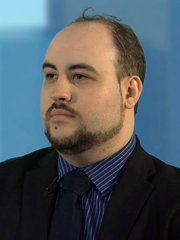
TotalBiscuit
YOUTUBER
1984 - 2018
HPI: 33.29
Posizione: 1,747

Toshiya Tanaka
SOCCER PLAYER
1984 - presente
HPI: 33.25
Posizione: 1,748
Hannah Macleod
HOCKEY PLAYER
1984 - presente
HPI: 33.22
Posizione: 1,749
In Repubblica Dominicana
Tra le persone nate in Repubblica Dominicana, Prisilla Rivera occupa la posizione 72 su 117. Prima di lei ci sono Melky Cabrera (1984), Bethania de la Cruz (1987), Hanley Ramírez (1983), Ray Zapata (1993), Jairo Asencio (1983), e Emilio Bonifácio (1985). Dopo di lei ci sono Julio Rodríguez (2000), Crismery Santana (1995), Lidio Andrés Feliz (1997), Gaila González (1997), Twin Shadow (1983), e Edison Azcona (2003).
Altre persone nate in Repubblica Dominicana
Vai a tutte le classifiche
Melky Cabrera
BASEBALL PLAYER
1984 - presente
HPI: 36.33
Posizione: 66

Bethania de la Cruz
VOLLEYBALL PLAYER
1987 - presente
HPI: 36.10
Posizione: 67
Hanley Ramírez
BASEBALL PLAYER
1983 - presente
HPI: 35.77
Posizione: 68

Ray Zapata
GYMNAST
1993 - presente
HPI: 35.41
Posizione: 69

Jairo Asencio
ATHLETE
1983 - presente
HPI: 34.86
Posizione: 70

Emilio Bonifácio
ATHLETE
1985 - presente
HPI: 33.71
Posizione: 71
Prisilla Rivera
ATHLETE
1984 - presente
HPI: 33.38
Posizione: 72

Julio Rodríguez
ATHLETE
2000 - presente
HPI: 32.63
Posizione: 73

Crismery Santana
ATHLETE
1995 - presente
HPI: 32.56
Posizione: 74
Lidio Andrés Feliz
ATHLETE
1997 - presente
HPI: 31.96
Posizione: 75

Gaila González
ATHLETE
1997 - presente
HPI: 31.67
Posizione: 76

Twin Shadow
SINGER
1983 - presente
HPI: 31.17
Posizione: 77

Edison Azcona
SOCCER PLAYER
2003 - presente
HPI: 30.68
Posizione: 78
Tra Atleta in Repubblica Dominicana
Tra Atleta nati in Repubblica Dominicana, Prisilla Rivera occupa la posizione 10. Prima di lei ci sono Kim Won-jin (null), Annerys Vargas (1981), Gabriel Mercedes (1979), Juan Francisco (1987), Jairo Asencio (1983), e Emilio Bonifácio (1985). Dopo di lei ci sono Julio Rodríguez (2000), Crismery Santana (1995), Lidio Andrés Feliz (1997), Gaila González (1997), Luisito Pié (1994), e Alexander Ogando (2000).

Kim Won-jin
HPI: 38.43
Posizione: 4

Annerys Vargas
1981 - presente
HPI: 38.15
Posizione: 5

Gabriel Mercedes
1979 - presente
HPI: 37.60
Posizione: 6

Juan Francisco
1987 - presente
HPI: 36.75
Posizione: 7
Jairo Asencio
1983 - presente
HPI: 34.86
Posizione: 8
Emilio Bonifácio
1985 - presente
HPI: 33.71
Posizione: 9
Prisilla Rivera
1984 - presente
HPI: 33.38
Posizione: 10
Julio Rodríguez
2000 - presente
HPI: 32.63
Posizione: 11
Crismery Santana
1995 - presente
HPI: 32.56
Posizione: 12
Lidio Andrés Feliz
1997 - presente
HPI: 31.96
Posizione: 13
Gaila González
1997 - presente
HPI: 31.67
Posizione: 14

Luisito Pié
1994 - presente
HPI: 30.54
Posizione: 15

Alexander Ogando
2000 - presente
HPI: 30.43
Posizione: 16




