Singer
María Becerra
Argentine singer (born 2000)
2000 - today
EN.WIKIPEDIA PAGE VIEWS (PV)


 María Becerra
Her biography is available in 17 different languages on Wikipedia. María Becerra is the 4,514th most popular singer, the 1,178th most popular biography from Argentina and the 21st most popular Argentinean Singer.
María Becerra is an Argentine singer known for her contributions to the Latin pop and urban music genres. She gained widespread recognition for her hit songs and collaborations, becoming a prominent figure in the Latin music scene.
Memorability Metrics
290k
Page Views
Past 12 months
37.49
HPI
Historical Popularity Index
Page views of María Becerra by language
Among Singers
Among singers, María Becerra ranks 4,514 out of 4,381. Before her are Mario Winans, Sogdiana Fedorinskaya, Ari Koivunen, Vladimir Arzumanyan, Seinabo Sey, and Malik Harris. After her are Reiley, Mira Aroyo, Kanika Kapoor, Jesse Leach, Laura Marling, and Mariette Hansson.
Most Popular Singers in Wikipedia
Go to all Rankings
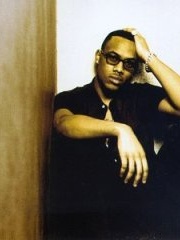
Mario Winans
1974 - Present
HPI: 37.55
Rank: 4,508

Sogdiana Fedorinskaya
1984 - Present
HPI: 37.53
Rank: 4,509
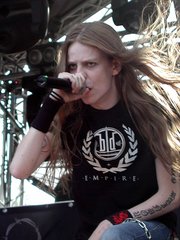
Ari Koivunen
1984 - Present
HPI: 37.53
Rank: 4,510
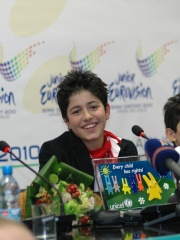
Vladimir Arzumanyan
1998 - Present
HPI: 37.53
Rank: 4,511
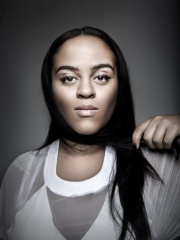
Seinabo Sey
1990 - Present
HPI: 37.51
Rank: 4,512
Malik Harris
1997 - Present
HPI: 37.50
Rank: 4,513
María Becerra
2000 - Present
HPI: 37.49
Rank: 4,514

Reiley
1997 - Present
HPI: 37.49
Rank: 4,515
Mira Aroyo
1977 - Present
HPI: 37.47
Rank: 4,516

Kanika Kapoor
1978 - Present
HPI: 37.47
Rank: 4,517

Jesse Leach
1978 - Present
HPI: 37.47
Rank: 4,518

Laura Marling
1990 - Present
HPI: 37.47
Rank: 4,519

Mariette Hansson
1983 - Present
HPI: 37.45
Rank: 4,520

Contemporaries
Among people born in 2000, María Becerra ranks 330. Before her are Faris Moumbagna, Enzo Le Fée, Alycia Parks, Luis Palma, Tariq Lamptey, and Kim Min-jong. After her are Brian Rodríguez, Jenson Brooksby, Darius Garland, David Zima, Darko Churlinov, and Yara Shahidi.
Others Born in 2000
Go to all Rankings
Faris Moumbagna
SOCCER PLAYER
2000 - Present
HPI: 37.63
Rank: 324

Enzo Le Fée
SOCCER PLAYER
2000 - Present
HPI: 37.62
Rank: 325
Alycia Parks
TENNIS PLAYER
2000 - Present
HPI: 37.58
Rank: 326

Luis Palma
SOCCER PLAYER
2000 - Present
HPI: 37.52
Rank: 327

Tariq Lamptey
SOCCER PLAYER
2000 - Present
HPI: 37.50
Rank: 328

Kim Min-jong
WRESTLER
2000 - Present
HPI: 37.50
Rank: 329
María Becerra
SINGER
2000 - Present
HPI: 37.49
Rank: 330

Brian Rodríguez
SOCCER PLAYER
2000 - Present
HPI: 37.41
Rank: 331
Jenson Brooksby
TENNIS PLAYER
2000 - Present
HPI: 37.40
Rank: 332

Darius Garland
BASKETBALL PLAYER
2000 - Present
HPI: 37.27
Rank: 333

David Zima
SOCCER PLAYER
2000 - Present
HPI: 37.26
Rank: 334

Darko Churlinov
SOCCER PLAYER
2000 - Present
HPI: 37.25
Rank: 335

Yara Shahidi
ACTOR
2000 - Present
HPI: 37.25
Rank: 336
In Argentina
Among people born in Argentina, María Becerra ranks 1,178 out of NaN. Before her are Vanina Correa (1983), Neri Cardozo (1986), Eduardo Sepúlveda (1991), Pablo Chavarría (1988), Facundo Buonanotte (2004), and Javier García (1987). After her are Josefina Sruoga (1990), Denis Stracqualursi (1987), Gonzalo Escalante (1993), Brian Dabul (1984), Gianluca Prestianni (2006), and Matías Paredes (1982).
Others born in Argentina
Go to all Rankings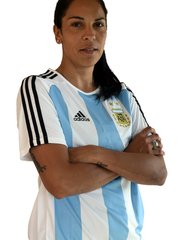
Vanina Correa
SOCCER PLAYER
1983 - Present
HPI: 37.72
Rank: 1,172

Neri Cardozo
SOCCER PLAYER
1986 - Present
HPI: 37.69
Rank: 1,173

Eduardo Sepúlveda
CYCLIST
1991 - Present
HPI: 37.68
Rank: 1,174
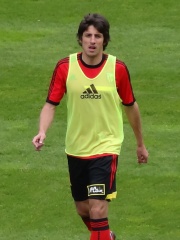
Pablo Chavarría
SOCCER PLAYER
1988 - Present
HPI: 37.66
Rank: 1,175

Facundo Buonanotte
SOCCER PLAYER
2004 - Present
HPI: 37.60
Rank: 1,176

Javier García
SOCCER PLAYER
1987 - Present
HPI: 37.55
Rank: 1,177
María Becerra
SINGER
2000 - Present
HPI: 37.49
Rank: 1,178

Josefina Sruoga
ATHLETE
1990 - Present
HPI: 37.43
Rank: 1,179
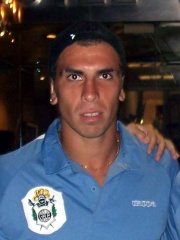
Denis Stracqualursi
SOCCER PLAYER
1987 - Present
HPI: 37.43
Rank: 1,180

Gonzalo Escalante
SOCCER PLAYER
1993 - Present
HPI: 37.40
Rank: 1,181
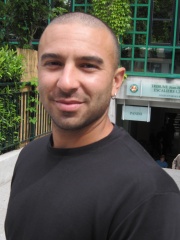
Brian Dabul
TENNIS PLAYER
1984 - Present
HPI: 37.39
Rank: 1,182

Gianluca Prestianni
SOCCER PLAYER
2006 - Present
HPI: 37.36
Rank: 1,183
Matías Paredes
HOCKEY PLAYER
1982 - Present
HPI: 37.35
Rank: 1,184
Among Singers In Argentina
Among singers born in Argentina, María Becerra ranks 21. Before her are Lola Ponce (1977), Diego Torres (1971), Pablo Ruiz (1975), Nathy Peluso (1995), Duki (1996), and Paulo Londra (1998). After her are Khea (2000), and Wos (1998).
Lola Ponce
1977 - Present
HPI: 45.51
Rank: 15

Diego Torres
1971 - Present
HPI: 44.98
Rank: 16

Pablo Ruiz
1975 - Present
HPI: 43.88
Rank: 17

Nathy Peluso
1995 - Present
HPI: 42.35
Rank: 18

Duki
1996 - Present
HPI: 41.83
Rank: 19

Paulo Londra
1998 - Present
HPI: 38.70
Rank: 20
María Becerra
2000 - Present
HPI: 37.49
Rank: 21

Khea
2000 - Present
HPI: 37.04
Rank: 22

Wos
1998 - Present
HPI: 33.94
Rank: 23




