Futbolista
Everton Soares
1996 - presente
VISITAS EN ES.WIKIPEDIA (PV)
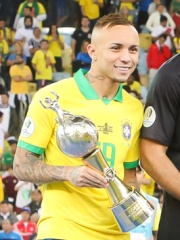
 Everton Soares
Su biografía está disponible en 34 idiomas en Wikipedia. Everton Soares ocupa el puesto 9213 entre los futbolista más populares (bajó del puesto 7687 en 2024), el puesto 1220 entre las biografías más populares de Brasil (bajó del puesto 1069 en 2019) y el puesto 686 entre los futbolista de brasil más populares.
Métricas de memorabilidad
240k
Visitas
Últimos 12 meses
46.10
HPI
Índice de Popularidad Histórica
Datos destacados
3.3×
La página de Wikipedia de Everton Soares recibió 240k visitas durante el último año: 3.3 veces la media de los Futbolista.
Visitas a la página de Everton Soares por idioma
Entre Futbolista
Entre Futbolista, Everton Soares ocupa el puesto 9,207 de 24,321. Antes de él están Vangelis Moras, Luis Amaranto Perea, Ian Crook, Diego Buonanotte, Javier Zeoli, y Hugo Alcântara. Después de él están Yuichiro Nagai, Ao Tanaka, Federico Giunti, Jackson Irvine, Hiroki Waki, y Hans Sarpei.
Futbolista más populares en Wikipedia
Ver todas las clasificaciones
Vangelis Moras
1981 - presente
HPI: 46.11
Puesto: 9,207
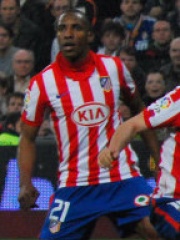
Luis Amaranto Perea
1979 - presente
HPI: 46.11
Puesto: 9,208

Ian Crook
1963 - presente
HPI: 46.11
Puesto: 9,209

Diego Buonanotte
1988 - presente
HPI: 46.10
Puesto: 9,210

Javier Zeoli
1962 - presente
HPI: 46.10
Puesto: 9,211

Hugo Alcântara
1979 - presente
HPI: 46.10
Puesto: 9,212
Everton Soares
1996 - presente
HPI: 46.10
Puesto: 9,213

Yuichiro Nagai
1979 - presente
HPI: 46.10
Puesto: 9,214

Ao Tanaka
1998 - presente
HPI: 46.10
Puesto: 9,215

Federico Giunti
1971 - presente
HPI: 46.09
Puesto: 9,216

Jackson Irvine
1993 - presente
HPI: 46.08
Puesto: 9,217

Hiroki Waki
1993 - presente
HPI: 46.08
Puesto: 9,218
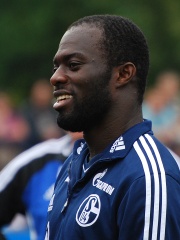
Hans Sarpei
1976 - presente
HPI: 46.08
Puesto: 9,219

Contemporáneos
Entre las personas nacidas en 1996, Everton Soares ocupa el puesto 192. Antes de él están Pablo Fornals, Princess Maria-Olympia of Greece and Denmark, Beatriz Haddad Maia, Ivo Grbić, Yuki Onishi, y Soufiane Rahimi. Después de él están Eleanor Patterson, Krystsina Tsimanouskaya, Gabe Vincent, Ingrid Landmark Tandrevold, Choi Young-jae, y Antonio Sanabria.
Otras personas nacidas en 1996
Ver todas las clasificaciones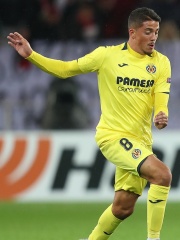
Pablo Fornals
SOCCER PLAYER
1996 - presente
HPI: 46.18
Puesto: 186

Princess Maria-Olympia of Greece and Denmark
CELEBRITY
1996 - presente
HPI: 46.17
Puesto: 187

Beatriz Haddad Maia
TENNIS PLAYER
1996 - presente
HPI: 46.15
Puesto: 188
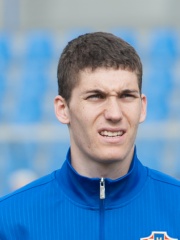
Ivo Grbić
SOCCER PLAYER
1996 - presente
HPI: 46.14
Puesto: 189

Yuki Onishi
SOCCER PLAYER
1996 - presente
HPI: 46.13
Puesto: 190

Soufiane Rahimi
SOCCER PLAYER
1996 - presente
HPI: 46.12
Puesto: 191
Everton Soares
SOCCER PLAYER
1996 - presente
HPI: 46.10
Puesto: 192

Eleanor Patterson
ATHLETE
1996 - presente
HPI: 46.07
Puesto: 193

Krystsina Tsimanouskaya
ATHLETE
1996 - presente
HPI: 46.06
Puesto: 194

Gabe Vincent
BASKETBALL PLAYER
1996 - presente
HPI: 46.04
Puesto: 195
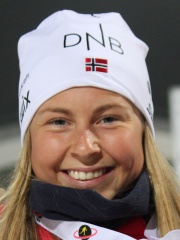
Ingrid Landmark Tandrevold
ATHLETE
1996 - presente
HPI: 46.02
Puesto: 196

Choi Young-jae
SINGER
1996 - presente
HPI: 45.92
Puesto: 197
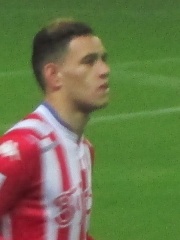
Antonio Sanabria
SOCCER PLAYER
1996 - presente
HPI: 45.92
Puesto: 198
En Brasil
Entre las personas nacidas en Brasil, Everton Soares ocupa el puesto 1,220 de 2,779. Antes de él están Marcos Alberto Skavinski (1975), José Clayton (1974), Beatriz Haddad Maia (1996), Maria Rita (1977), José Luíz Barbosa (1961), y Hugo Alcântara (1979). Después de él están Jackie Silva (1962), Edu (1979), Tetê (2000), Túlio de Melo (1985), Rogério Sampaio (1967), y Matheus Leite Nascimento (1983).
Otras personas nacidas en Brasil
Ver todas las clasificaciones
Marcos Alberto Skavinski
SOCCER PLAYER
1975 - presente
HPI: 46.16
Puesto: 1,214

José Clayton
SOCCER PLAYER
1974 - presente
HPI: 46.15
Puesto: 1,215
Beatriz Haddad Maia
TENNIS PLAYER
1996 - presente
HPI: 46.15
Puesto: 1,216

Maria Rita
SINGER
1977 - presente
HPI: 46.12
Puesto: 1,217

José Luíz Barbosa
ATHLETE
1961 - presente
HPI: 46.10
Puesto: 1,218
Hugo Alcântara
SOCCER PLAYER
1979 - presente
HPI: 46.10
Puesto: 1,219
Everton Soares
SOCCER PLAYER
1996 - presente
HPI: 46.10
Puesto: 1,220

Jackie Silva
VOLLEYBALL PLAYER
1962 - presente
HPI: 46.08
Puesto: 1,221

Edu
SOCCER PLAYER
1979 - presente
HPI: 46.08
Puesto: 1,222

Tetê
SOCCER PLAYER
2000 - presente
HPI: 46.02
Puesto: 1,223
Túlio de Melo
SOCCER PLAYER
1985 - presente
HPI: 45.99
Puesto: 1,224
Rogério Sampaio
WRESTLER
1967 - presente
HPI: 45.98
Puesto: 1,225
Matheus Leite Nascimento
SOCCER PLAYER
1983 - presente
HPI: 45.98
Puesto: 1,226
Entre Futbolista en Brasil
Entre Futbolista nacidos en Brasil, Everton Soares ocupa el puesto 686. Antes de él están Leandro Castán (1986), Lucas Beraldo (2003), Jefferson (1983), Marcos Alberto Skavinski (1975), José Clayton (1974), y Hugo Alcântara (1979). Después de él están Edu (1979), Tetê (2000), Túlio de Melo (1985), Matheus Leite Nascimento (1983), Deivid (1979), y Jajá (1986).
Leandro Castán
1986 - presente
HPI: 46.28
Puesto: 680

Lucas Beraldo
2003 - presente
HPI: 46.28
Puesto: 681
Jefferson
1983 - presente
HPI: 46.24
Puesto: 682
Marcos Alberto Skavinski
1975 - presente
HPI: 46.16
Puesto: 683
José Clayton
1974 - presente
HPI: 46.15
Puesto: 684
Hugo Alcântara
1979 - presente
HPI: 46.10
Puesto: 685
Everton Soares
1996 - presente
HPI: 46.10
Puesto: 686
Edu
1979 - presente
HPI: 46.08
Puesto: 687
Tetê
2000 - presente
HPI: 46.02
Puesto: 688
Túlio de Melo
1985 - presente
HPI: 45.99
Puesto: 689
Matheus Leite Nascimento
1983 - presente
HPI: 45.98
Puesto: 690
Deivid
1979 - presente
HPI: 45.96
Puesto: 691
Jajá
1986 - presente
HPI: 45.95
Puesto: 692




