Politician
Emperor Kōshō
Emperor of Japan
505 BC - 392 BC
EN.WIKIPEDIA PAGE VIEWS (PV)
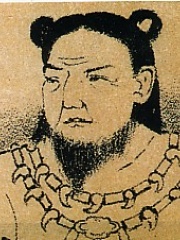
 Emperor Kōshō
His biography is available in 40 different languages on Wikipedia. Emperor Kōshō is the 2,829th most popular politician (down from 2,485th in 2024), the 123rd most popular biography from Japan (down from 110th in 2019) and the 41st most popular Japanese Politician.
Emperor Kōshō is most famous for his suppression of the Mononobe clan. The Mononobe clan was a powerful clan that opposed the introduction of Buddhism to Japan.
Memorability Metrics
85k
Page Views
Past 12 months
70.11
HPI
Historical Popularity Index
Data Insights
#123 / 6,943
Emperor Kōshō ranks #123 among 6,943 people in Pantheon born in Japan, inside the top 2% of that group.
Page views of Emperor Kōshō by language
Among Politicians
Among politicians, Emperor Kōshō ranks 2,828 out of 20,022. Before him are Sigismund of Burgundy, Emperor Nintoku, Jehoash of Israel, Baldwin II, Margrave of Flanders, John Ernest IV, Duke of Saxe-Coburg-Saalfeld, and Aulus Plautius. After him are Haakon Magnusson of Norway, Eudokia Makrembolitissa, Norman Angell, Muhammad Azam Shah, John of Brienne, and Gnaeus Domitius Corbulo.
Most Popular Politicians in Wikipedia
Go to all Rankings
Sigismund of Burgundy
500 - 524
HPI: 70.12
Rank: 2,823
Emperor Nintoku
290 - 399
HPI: 70.12
Rank: 2,824
Jehoash of Israel
900 BC - 786 BC
HPI: 70.12
Rank: 2,825
Baldwin II, Margrave of Flanders
863 - 918
HPI: 70.11
Rank: 2,826
John Ernest IV, Duke of Saxe-Coburg-Saalfeld
1658 - 1729
HPI: 70.11
Rank: 2,827
Aulus Plautius
100 BC - 57
HPI: 70.11
Rank: 2,828
Emperor Kōshō
505 BC - 392 BC
HPI: 70.11
Rank: 2,829

Haakon Magnusson of Norway
1068 - 1095
HPI: 70.11
Rank: 2,830
Eudokia Makrembolitissa
1021 - 1096
HPI: 70.11
Rank: 2,831
Norman Angell
1872 - 1967
HPI: 70.11
Rank: 2,832
Muhammad Azam Shah
1653 - 1707
HPI: 70.10
Rank: 2,833
John of Brienne
1158 - 1237
HPI: 70.10
Rank: 2,834
Gnaeus Domitius Corbulo
5 - 67
HPI: 70.10
Rank: 2,835

Contemporaries
Among people born in 505 BC, Emperor Kōshō ranks 1. Among people deceased in 392 BC, Emperor Kōshō ranks 1.
Others Born in 505 BC
Go to all RankingsOthers Deceased in 392 BC
Go to all RankingsIn Japan
Among people born in Japan, Emperor Kōshō ranks 123 out of 6,943. Before him are Ōkubo Toshimichi (1830), Benkei (1155), Prince Shōtoku (574), Eisaku Satō (1901), Emperor Nintoku (290), and Joe Hisaishi (1950). After him are Kakuichi Mimura (1931), Emperor Go-Daigo (1288), Tōgō Heihachirō (1848), Jiro Horikoshi (1903), Emperor Kōan (-427), and Ko Yong-hui (1952).
Others born in Japan
Go to all Rankings
Ōkubo Toshimichi
POLITICIAN
1830 - 1878
HPI: 70.21
Rank: 117
Benkei
RELIGIOUS FIGURE
1155 - 1189
HPI: 70.14
Rank: 118
Prince Shōtoku
POLITICIAN
574 - 622
HPI: 70.14
Rank: 119

Eisaku Satō
POLITICIAN
1901 - 1975
HPI: 70.13
Rank: 120
Emperor Nintoku
POLITICIAN
290 - 399
HPI: 70.12
Rank: 121
Joe Hisaishi
MUSICIAN
1950 - Present
HPI: 70.11
Rank: 122
Emperor Kōshō
POLITICIAN
505 BC - 392 BC
HPI: 70.11
Rank: 123

Kakuichi Mimura
SOCCER PLAYER
1931 - 2022
HPI: 70.08
Rank: 124
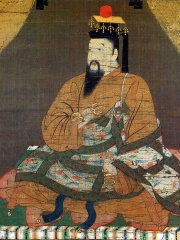
Emperor Go-Daigo
POLITICIAN
1288 - 1339
HPI: 70.04
Rank: 125
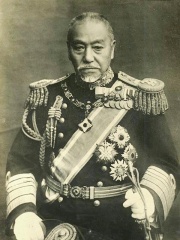
Tōgō Heihachirō
MILITARY PERSONNEL
1848 - 1934
HPI: 69.95
Rank: 126
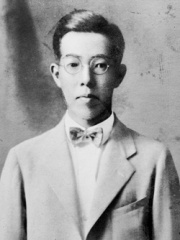
Jiro Horikoshi
ENGINEER
1903 - 1982
HPI: 69.88
Rank: 127
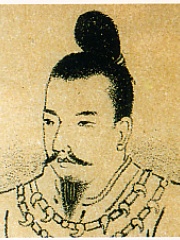
Emperor Kōan
POLITICIAN
427 BC - 291 BC
HPI: 69.88
Rank: 128
Ko Yong-hui
POLITICIAN
1952 - 2004
HPI: 69.88
Rank: 129
Among Politicians In Japan
Among politicians born in Japan, Emperor Kōshō ranks 41. Before him are Emperor Higashiyama (1675), Yasuo Fukuda (1936), Ōkubo Toshimichi (1830), Prince Shōtoku (574), Eisaku Satō (1901), and Emperor Nintoku (290). After him are Emperor Go-Daigo (1288), Emperor Kōan (-427), Ko Yong-hui (1952), Emperor Reigen (1654), Emperor Go-Kōmyō (1633), and Tokugawa Iemitsu (1604).
Emperor Higashiyama
1675 - 1710
HPI: 70.42
Rank: 35
Yasuo Fukuda
1936 - Present
HPI: 70.25
Rank: 36
Ōkubo Toshimichi
1830 - 1878
HPI: 70.21
Rank: 37
Prince Shōtoku
574 - 622
HPI: 70.14
Rank: 38
Eisaku Satō
1901 - 1975
HPI: 70.13
Rank: 39
Emperor Nintoku
290 - 399
HPI: 70.12
Rank: 40
Emperor Kōshō
505 BC - 392 BC
HPI: 70.11
Rank: 41
Emperor Go-Daigo
1288 - 1339
HPI: 70.04
Rank: 42
Emperor Kōan
427 BC - 291 BC
HPI: 69.88
Rank: 43
Ko Yong-hui
1952 - 2004
HPI: 69.88
Rank: 44
Emperor Reigen
1654 - 1732
HPI: 69.73
Rank: 45
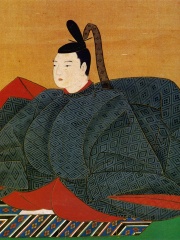
Emperor Go-Kōmyō
1633 - 1654
HPI: 69.45
Rank: 46
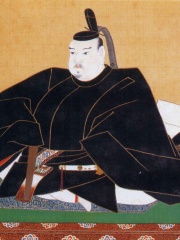
Tokugawa Iemitsu
1604 - 1651
HPI: 69.38
Rank: 47




