Politikus
Abdul Hafiz Ghoga
1957 - napjainkig
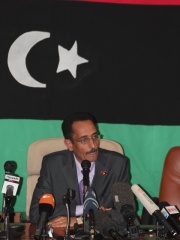
 Abdul Hafiz Ghoga
Életrajza 19 különböző nyelven érhető el a Wikipédián (növekedés 18-ről 2024-ben). Abdul Hafiz Ghoga a 17,019th legnépszerűbb politikus (csökkenés a 15,054th-ről 2024-ben), a 68th legnépszerűbb életrajz Líbia országából (csökkenés a 57th-ről 2019-ben) és a 40th legnépszerűbb Líbiaból politikus.
Memorability Metrics
3.8k
Page Views
Past 12 months
52.09
HPI
Historical Popularity Index
Page views of Abdul Hafiz Ghoga by language
Among Politikuses
Among politikuses, Abdul Hafiz Ghoga ranks 17,012 out of 19,576. Before him are Sherrod Brown, Camilla Ravera, Élie Doté, Carter Braxton, Álvaro García Linera, and Ra'ana Liaquat Ali Khan. After him are Viktor Rossi, Merav Michaeli, Ben Cardin, Rodolfo Nin Novoa, Sanjaagiin Bayar, and Uri Rosenthal.
Most Popular Politikuses in Wikipedia
Go to all Rankings
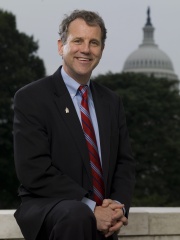
Sherrod Brown
1952 - Present
HPI: 52.11
Rank: 17,013
Camilla Ravera
1889 - 1988
HPI: 52.11
Rank: 17,014
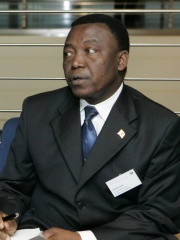
Élie Doté
1948 - Present
HPI: 52.11
Rank: 17,015
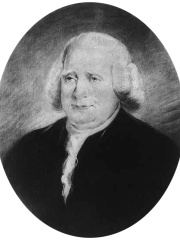
Carter Braxton
1736 - 1797
HPI: 52.10
Rank: 17,016
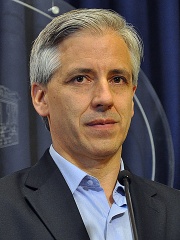
Álvaro García Linera
1962 - Present
HPI: 52.10
Rank: 17,017
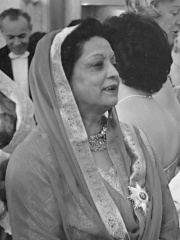
Ra'ana Liaquat Ali Khan
1905 - 1990
HPI: 52.10
Rank: 17,018
Abdul Hafiz Ghoga
1957 - Present
HPI: 52.09
Rank: 17,019
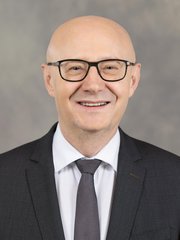
Viktor Rossi
1968 - Present
HPI: 52.09
Rank: 17,020
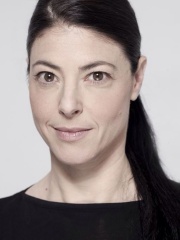
Merav Michaeli
1966 - Present
HPI: 52.09
Rank: 17,021

Ben Cardin
1943 - Present
HPI: 52.09
Rank: 17,022
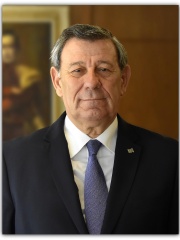
Rodolfo Nin Novoa
1948 - Present
HPI: 52.09
Rank: 17,023
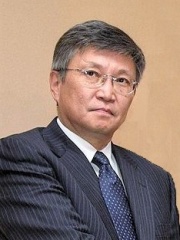
Sanjaagiin Bayar
1956 - Present
HPI: 52.08
Rank: 17,024
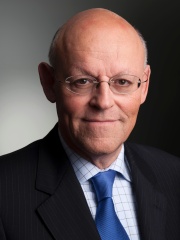
Uri Rosenthal
1945 - Present
HPI: 52.08
Rank: 17,025

Contemporaries
Among people born in 1957, Abdul Hafiz Ghoga ranks 473. Before him are Anna Fotyga, Arnoldo Iguarán, Othmar Karas, Klaus Lindenberger, Mark Mancina, and Peter Müller. After him are Alex Jennings, Jean-François Domergue, Javier Lambán, Jacques Gamblin, Jon-Erik Hexum, and Joel Goldsmith.
Others Born in 1957
Go to all Rankings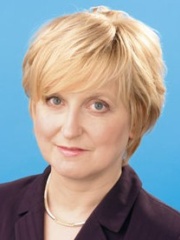
Anna Fotyga
POLITICIAN
1957 - Present
HPI: 52.14
Rank: 467

Arnoldo Iguarán
SOCCER PLAYER
1957 - Present
HPI: 52.14
Rank: 468
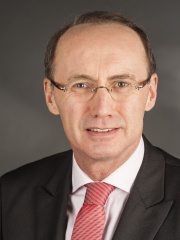
Othmar Karas
POLITICIAN
1957 - Present
HPI: 52.13
Rank: 469
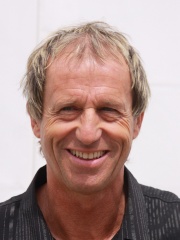
Klaus Lindenberger
SOCCER PLAYER
1957 - Present
HPI: 52.12
Rank: 470

Mark Mancina
COMPOSER
1957 - Present
HPI: 52.10
Rank: 471
Peter Müller
SKIER
1957 - Present
HPI: 52.10
Rank: 472
Abdul Hafiz Ghoga
POLITICIAN
1957 - Present
HPI: 52.09
Rank: 473

Alex Jennings
ACTOR
1957 - Present
HPI: 52.09
Rank: 474
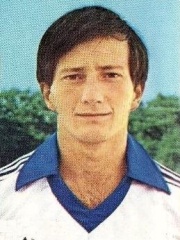
Jean-François Domergue
SOCCER PLAYER
1957 - Present
HPI: 52.08
Rank: 475
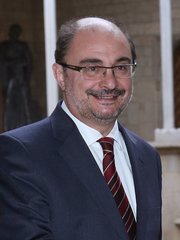
Javier Lambán
POLITICIAN
1957 - 2025
HPI: 52.08
Rank: 476
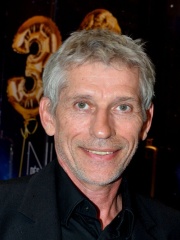
Jacques Gamblin
ACTOR
1957 - Present
HPI: 52.08
Rank: 477
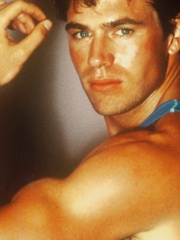
Jon-Erik Hexum
ACTOR
1957 - 1984
HPI: 52.06
Rank: 478

Joel Goldsmith
COMPOSER
1957 - 2012
HPI: 52.05
Rank: 479
In Líbia
Among people born in Líbia, Abdul Hafiz Ghoga ranks 68 out of NaN. Before him are Abdul Qadir al-Badri (1921), Mustafa A. G. Abushagur (1951), Arcesilaus II of Cyrene (-700), Muhammad Sakizli (1892), Ibrahim Kuni (1948), and Muhammad Osman Said (1924). After him are Abu Anas al-Libi (1964), Abdelbaset al-Megrahi (1952), Fathi Bashagha (1962), Don Coscarelli (1954), Khamis Gaddafi (1983), and Abdelhakim Belhaj (1966).
Others born in Líbia
Go to all Rankings
Abdul Qadir al-Badri
POLITICIAN
1921 - 2003
HPI: 55.08
Rank: 62
Mustafa A. G. Abushagur
POLITICIAN
1951 - Present
HPI: 54.47
Rank: 63
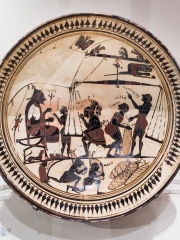
Arcesilaus II of Cyrene
NOBLEMAN
700 BC - 600 BC
HPI: 54.28
Rank: 64
Muhammad Sakizli
POLITICIAN
1892 - 1976
HPI: 54.15
Rank: 65

Ibrahim Kuni
WRITER
1948 - Present
HPI: 53.90
Rank: 66
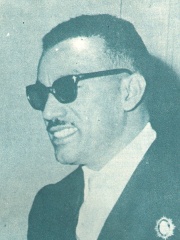
Muhammad Osman Said
POLITICIAN
1924 - 2007
HPI: 53.30
Rank: 67
Abdul Hafiz Ghoga
POLITICIAN
1957 - Present
HPI: 52.09
Rank: 68

Abu Anas al-Libi
MILITARY PERSONNEL
1964 - 2015
HPI: 51.99
Rank: 69
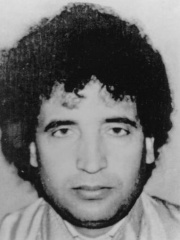
Abdelbaset al-Megrahi
POLITICIAN
1952 - 2012
HPI: 51.97
Rank: 70
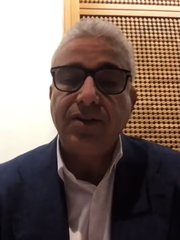
Fathi Bashagha
POLITICIAN
1962 - Present
HPI: 51.58
Rank: 71

Don Coscarelli
FILM DIRECTOR
1954 - Present
HPI: 50.90
Rank: 72

Khamis Gaddafi
POLITICIAN
1983 - 2011
HPI: 49.53
Rank: 73

Abdelhakim Belhaj
MILITARY PERSONNEL
1966 - Present
HPI: 46.68
Rank: 74
Among Politikuses In Líbia
Among politikuses born in Líbia, Abdul Hafiz Ghoga ranks 40. Before him are Hannibal Muammar Gaddafi (1975), Ali Tarhouni (1951), Abdul Qadir al-Badri (1921), Mustafa A. G. Abushagur (1951), Muhammad Sakizli (1892), and Muhammad Osman Said (1924). After him are Abdelbaset al-Megrahi (1952), Fathi Bashagha (1962), Khamis Gaddafi (1983), Saif al-Arab Gaddafi (1982), Ahmed Maiteeq (1972), and Moussa Ibrahim (1974).

Hannibal Muammar Gaddafi
1975 - Present
HPI: 56.25
Rank: 34
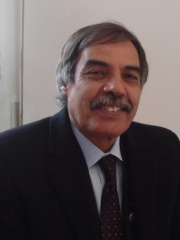
Ali Tarhouni
1951 - Present
HPI: 55.55
Rank: 35
Abdul Qadir al-Badri
1921 - 2003
HPI: 55.08
Rank: 36
Mustafa A. G. Abushagur
1951 - Present
HPI: 54.47
Rank: 37
Muhammad Sakizli
1892 - 1976
HPI: 54.15
Rank: 38
Muhammad Osman Said
1924 - 2007
HPI: 53.30
Rank: 39
Abdul Hafiz Ghoga
1957 - Present
HPI: 52.09
Rank: 40
Abdelbaset al-Megrahi
1952 - 2012
HPI: 51.97
Rank: 41
Fathi Bashagha
1962 - Present
HPI: 51.58
Rank: 42
Khamis Gaddafi
1983 - 2011
HPI: 49.53
Rank: 43
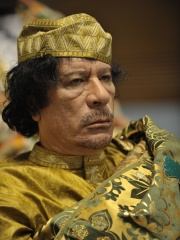
Saif al-Arab Gaddafi
1982 - 2011
HPI: 44.89
Rank: 44
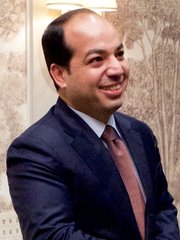
Ahmed Maiteeq
1972 - Present
HPI: 42.56
Rank: 45

Moussa Ibrahim
1974 - Present
HPI: 37.83
Rank: 46




