
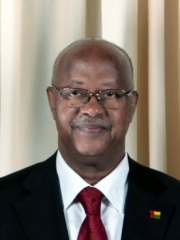

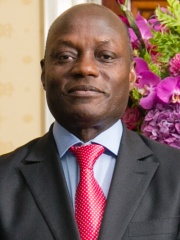
The Most Famous
POLITICIANS from Guinea-Bissau

This page contains a list of the greatest Guinea-Bissauan Politicians. The pantheon dataset contains 19,576 Politicians, 20 of which were born in Guinea-Bissau. This makes Guinea-Bissau the birth place of the 108th most number of Politicians behind Democratic Republic of the Congo, and Sri Lanka.
Top 10
The following people are considered by Pantheon to be the top 10 most legendary Guinea-Bissauan Politicians of all time. This list of famous Guinea-Bissauan Politicians is sorted by HPI (Historical Popularity Index), a metric that aggregates information on a biography's online popularity. Visit the rankings page to view the entire list of Guinea-Bissauan Politicians.
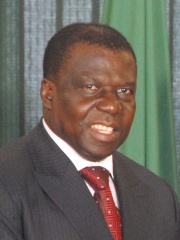
1. João Bernardo Vieira (1939 - 2009)
With an HPI of 69.49, João Bernardo Vieira is the most famous Guinea-Bissauan Politician. His biography has been translated into 55 different languages on wikipedia.
João Bernardo "Nino" Vieira (Portuguese pronunciation: [ʒuˈɐ̃w bɨɾˈnaɾðu ˈninu viˈɐjɾɐ, ˈʒwɐ̃w -]; 27 April 1939 – 2 March 2009) was a Bissau-Guinean politician and military officer who served as President of Guinea-Bissau from 1980 to 1999, except for a three-day period in May 1984, and from 2005 until his assassination in 2009. After seizing power from President Luís Cabral in a military coup in 1980, Vieira ruled as part of the Military Council of the Revolution until 1984, when civilian rule was returned. Opposition parties were allowed in 1991, and Vieira won a multiparty presidential election in 1994. He was ousted at the end of the 1998–1999 civil war and went into exile. He made a political comeback in 2005, winning that year's presidential election. Vieira was shot dead by soldiers on 2 March 2009, apparently in retaliation for a bomb blast at army headquarters that killed Guinea-Bissau's military chief General Batista Tagme Na Waie hours before. The military officially denied these allegations after unidentified Army officials claimed responsibility of Vieira for Na-Waie's death. Vieira described himself as "God's gift" to Guinea-Bissau during his tenure in office.
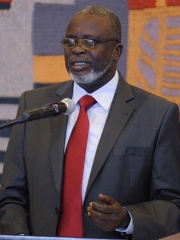
2. Malam Bacai Sanhá (1947 - 2012)
With an HPI of 66.92, Malam Bacai Sanhá is the 2nd most famous Guinea-Bissauan Politician. His biography has been translated into 42 different languages.
Malam Bacai Sanhá (Portuguese pronunciation: [ˈmalɐ̃ bɐˈkaj sɐˈɲa]) (5 May 1947 – 9 January 2012) was a Bissau-Guinean politician who was President of Guinea-Bissau from 8 September 2009 until his death on 9 January 2012. A member of the African Party for the Independence of Guinea and Cape Verde (PAIGC), Sanhá was President of the National People's Assembly from 1994 to 1999 and then served as acting President of Guinea-Bissau from 14 May 1999, to 17 February 2000, following the ouster of President João Bernardo Vieira. Standing as the PAIGC candidate, he placed second in the 1999–2000 presidential election as well as the 2005 presidential election before winning the June–July 2009 presidential election.
3. Luís Cabral (1931 - 2009)
With an HPI of 64.80, Luís Cabral is the 3rd most famous Guinea-Bissauan Politician. His biography has been translated into 37 different languages.
Luís Severino de Almeida Cabral (11 April 1931 – 30 May 2009) was a Bissau-Guinean politician who was the first President of Guinea-Bissau. He served from 1974 to 1980, when a military coup d'état led by João Bernardo Vieira deposed him. Luís Cabral was a half-brother of Amílcar Cabral, with whom he co-founded the African Party for the Independence of Guinea and Cape Verde (PAIGC) in 1956.
4. Carmen Pereira (1937 - 2016)
With an HPI of 64.32, Carmen Pereira is the 4th most famous Guinea-Bissauan Politician. Her biography has been translated into 33 different languages.
Carmen Maria de Araújo Pereira (22 September 1936 – 4 June 2016) was a Bissau-Guinean politician. She served three days as Acting President in 1984, becoming the first woman in this role in Africa and the only one in Guinea-Bissau's history. She had the shortest term as the Acting President, serving only three days in office. She died in Bissau on 4 June 2016.
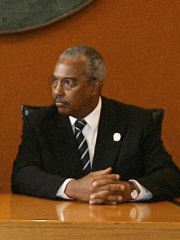
5. Henrique Rosa (1946 - 2013)
With an HPI of 61.76, Henrique Rosa is the 5th most famous Guinea-Bissauan Politician. His biography has been translated into 30 different languages.
Henrique Pereira Rosa (18 January 1946 – 15 May 2013) was a Bissau-Guinean politician who served as interim President of Guinea-Bissau from 2003 to 2005. He was born in 1946 in Bafatá.
6. Kumba Ialá (1953 - 2014)
With an HPI of 61.25, Kumba Ialá is the 6th most famous Guinea-Bissauan Politician. His biography has been translated into 36 different languages.
Kumba Yalá Embaló, also spelled Ialá (15 March 1953 – 4 April 2014), was a Bissau-Guinean politician who was president from 17 February 2000 until he was deposed in a bloodless military coup on 14 September 2003. He belonged to the Balanta ethnic group and was President of the Social Renewal Party (PRS). In 2008 he converted to Islam and took the name Mohamed Yalá Embaló. He was the founder of the Party for Social Renewal.
7. Carlos Gomes Júnior (b. 1949)
With an HPI of 59.92, Carlos Gomes Júnior is the 7th most famous Guinea-Bissauan Politician. His biography has been translated into 26 different languages.
Carlos Domingos Gomes Júnior (born December 19, 1949) is a Bissau-Guinean politician who was Prime Minister of Guinea-Bissau from 10 May 2004 to 2 November 2005, and again from 25 December 2008 to 10 February 2012. He has been the President of the African Party for the Independence of Guinea and Cape Verde (PAIGC) since 2002 and is widely known as "Cadogo". He resigned as prime minister on 10 February 2012 to run in the presidential election triggered by President Malam Bacai Sanhá's death on 9 January.
8. Carlos Correia (1933 - 2021)
With an HPI of 59.71, Carlos Correia is the 8th most famous Guinea-Bissauan Politician. His biography has been translated into 22 different languages.
Carlos Correia (6 November 1933 – 14 August 2021) was a Bissau-Guinean politician who was Prime Minister of Guinea-Bissau from 17 September 2015 to 12 May 2016. Previously he was Prime Minister from 27 December 1991 to 26 October 1994, from 6 June 1997 to 3 December 1998, and from 5 August 2008 to 25 December 2008.
9. José Mário Vaz (b. 1957)
With an HPI of 59.64, José Mário Vaz is the 9th most famous Guinea-Bissauan Politician. His biography has been translated into 35 different languages.
José Mário Vaz (born 10 December 1957) is a Bissau-Guinean politician who served as president of Guinea-Bissau from 23 June 2014 to 27 February 2020.
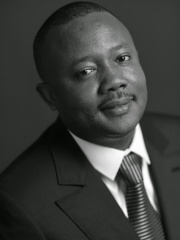
10. Umaro Sissoco Embaló (b. 1972)
With an HPI of 59.02, Umaro Sissoco Embaló is the 10th most famous Guinea-Bissauan Politician. His biography has been translated into 42 different languages.
Umaro Mokhtar Sissoco Embaló (born 23 September 1972) is a Bissau-Guinean politician and former military officer who served as the sixth president of Guinea-Bissau from 2020 until he was deposed in a coup d'état in 2025. A member of the Madem G15 party, Embaló served as the 18th prime minister under President José Mário Vaz from 2016 to 2018. Born to a Muslim Fulani family in Bissau, Embaló was educated at the Technical University of Lisbon in Portugal and the Complutense University of Madrid in Spain, graduating from both universities with a bachelor's degree in political science and a doctorate in international relations from the Complutense University. Embaló then joined the Bissau-Guinean Army and underwent training in Belgium, Israel, South Africa, Japan, and France. Before his political career, Embaló taught in African and Middle-Eastern affairs and in matters of defence, international co-operation and development. In 2016, Embaló entered politics and joined the African Party for the Independence of Guinea and Cape Verde (PAIGC), the then ruling party. Later in that year he was appointed prime minister by President Vaz. During this time, a dispute between Embaló and the PAIGV grew to the point that two years later in 2018, he left the party and formed the Madem G15 party and also resigned as prime minister. In the November 2019 presidential election, Embaló ran for president and won the election. He was sworn in as president in February of the following year. During his presidency, Guinea-Bissau saw the retreat of Economic Community of West African States (ECOWAS) troops stationed in the country after the 2012 coup and attempted to arrange official visits from foreign heads of government, including the first visit from the Portuguese government in three decades, and international organisations such as the International Monetary Fund. In 2022, Embaló survived a coup attempt, labelling the attempt as a "threat to democracy". Despite this however, opposition figures criticised Embaló's rule as increasingly authoritarian, as Embaló dissolved parliaments which were dominated by the opposition twice during his presidency; one in 2022, and another in 2023 following an another coup attempt in which the opposition criticised Embaló for attempting to carry a constitutional coup and consolidate power. In September 2024, Embaló said that he will not run for re-election. However, two months later in November, Embaló said that he would remain president beyond 2030 after calls from supporters to remain in office. In March 2025, Embaló stated that he would run for re-election. However, the opposition criticised the expiration of his term as it was originally set to end on 27 February 2025; however, the Constitutional Court set it to 4 September, in which Embaló remained in office way beyond that date. Elections were held in November 2025, around one year after the original date, with both Embaló and the opposition Independent candidate Fernando Dias da Costa declaring victory. On 26 November 2025, hours before the official results of the general election were announced, a coup occurred with officers from the Revolutionary Armed Forces of the People seizing power and subsequently detaining Embaló. He thus became the fourth president to be deposed in a coup, after Luís Cabral, João Bernardo Vieira, and Kumba Yala, and was also the second president to not come from the PAIGC party, after Kumba Yala. Throughout his presidency, Embaló stated that his governing style is that of "Embaloism", which he defines as "order, discipline, and development", asserting that "there is neither small state nor small president" and has compared himself to leaders like Lee Kuan Yew and Rodrigo Duterte.
People
Pantheon has 20 people classified as Guinea-Bissauan politicians born between 1931 and 1973. Of these 20, 11 (55.00%) of them are still alive today. The most famous living Guinea-Bissauan politicians include Carlos Gomes Júnior, José Mário Vaz, and Umaro Sissoco Embaló. The most famous deceased Guinea-Bissauan politicians include João Bernardo Vieira, Malam Bacai Sanhá, and Luís Cabral.
Living Guinea-Bissauan Politicians
Go to all Rankings
Carlos Gomes Júnior
1949 - Present
HPI: 59.92
José Mário Vaz
1957 - Present
HPI: 59.64
Umaro Sissoco Embaló
1972 - Present
HPI: 59.02
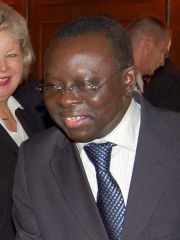
Raimundo Pereira
1956 - Present
HPI: 55.91
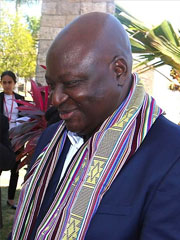
Aristides Gomes
1954 - Present
HPI: 55.54
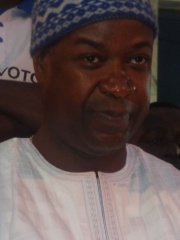
Nuno Gomes Nabiam
1966 - Present
HPI: 53.42

Rui Duarte de Barros
1960 - Present
HPI: 53.08

Martinho Ndafa Kabi
1957 - Present
HPI: 51.27
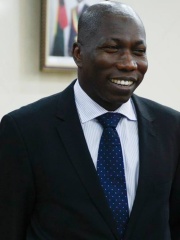
Domingos Simões Pereira
1963 - Present
HPI: 49.76

Adiato Djaló Nandigna
1958 - Present
HPI: 47.36
Baciro Djá
1973 - Present
HPI: 44.55

Deceased Guinea-Bissauan Politicians
Go to all RankingsJoão Bernardo Vieira
1939 - 2009
HPI: 69.49
Malam Bacai Sanhá
1947 - 2012
HPI: 66.92
Luís Cabral
1931 - 2009
HPI: 64.80
Carmen Pereira
1937 - 2016
HPI: 64.32
Henrique Rosa
1946 - 2013
HPI: 61.76
Kumba Ialá
1953 - 2014
HPI: 61.25
Carlos Correia
1933 - 2021
HPI: 59.71

Veríssimo Correia Seabra
1947 - 2004
HPI: 57.16
Manuel Serifo Nhamadjo
1958 - 2020
HPI: 54.23
Overlapping Lives
Which Politicians were alive at the same time? This visualization shows the lifespans of the 8 most globally memorable Politicians since 1700.




