Religieuze figuur
Piero Pioppo
1960 - heden
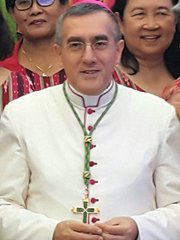
 Piero Pioppo
Zijn biografie is beschikbaar in 15 verschillende talen op Wikipedia. Piero Pioppo staat op plaats 2.950 onder de meest populaire religieuze figuur, plaats 3.965 onder de meest populaire biografieën uit Italië en op plaats 551 onder de populairste religieuze figuur uit Italië.
Bekendheidsstatistieken
30k
Paginaweergaven
Afgelopen 12 maanden
54.15
HPI
Historische populariteitsindex
Data-inzichten
29 sep
Piero Pioppo is jarig op dezelfde dag (29 september) als Miguel de Cervantes, Caravaggio en Silvio Berlusconi.
Paginaweergaven van Piero Pioppo per taal
Onder Religieuze figuur
Onder Religieuze figuur staat Piero Pioppo op plaats 2,950 van 3,187. Vóór hem staan Antonio José González Zumárraga, Fernando Cardenal, Achaicus of Corinth, Rosario Livatino, Pope Julian of Alexandria, en José Lai. Na hem komen David Beaton, Anthony Soter Fernandez, Sekhemrekhutawy Khabaw, Tadeusz Rydzyk, Henry of Blois, en Abu Muhammad al-Maqdisi.
Populairste Religieuze figuur op Wikipedia
Naar alle ranglijsten

Antonio José González Zumárraga
1925 - 2008
HPI: 54.25
Plaats: 2,944
Fernando Cardenal
1934 - 2016
HPI: 54.24
Plaats: 2,945

Achaicus of Corinth
HPI: 54.24
Plaats: 2,946
Rosario Livatino
1952 - 1990
HPI: 54.22
Plaats: 2,947

Pope Julian of Alexandria
200 - 188
HPI: 54.21
Plaats: 2,948
José Lai
1946 - heden
HPI: 54.17
Plaats: 2,949
Piero Pioppo
1960 - heden
HPI: 54.15
Plaats: 2,950
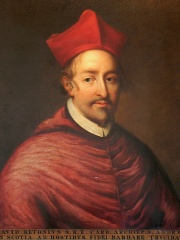
David Beaton
1494 - 1546
HPI: 54.15
Plaats: 2,951
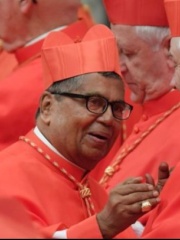
Anthony Soter Fernandez
1930 - 2020
HPI: 54.15
Plaats: 2,952
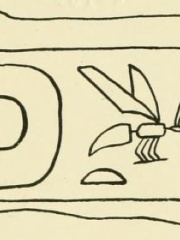
Sekhemrekhutawy Khabaw
1800 BC - 1800 BC
HPI: 54.15
Plaats: 2,953
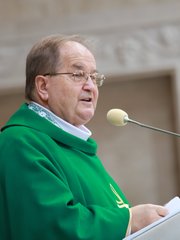
Tadeusz Rydzyk
1945 - heden
HPI: 54.15
Plaats: 2,954
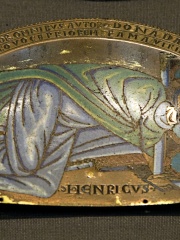
Henry of Blois
1096 - 1171
HPI: 54.14
Plaats: 2,955

Abu Muhammad al-Maqdisi
1959 - heden
HPI: 54.14
Plaats: 2,956

Tijdgenoten
Onder de mensen geboren in 1960 staat Piero Pioppo op plaats 364. Vóór hem staan Nils Petter Molvær, Kristin Hannah, Olga Bondarenko, Oleksandr Sydorenko, Serhiy Tihipko, en Raúl Vicente Amarilla. Na hem komen Venkatesh, Semir Osmanagić, Vladimir Salnikov, Moshe Kahlon, Elsa Cayat, en Romas Ubartas.
Anderen geboren in 1960
Naar alle ranglijsten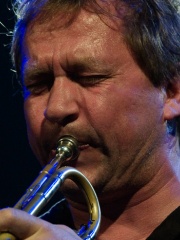
Nils Petter Molvær
MUSICIAN
1960 - heden
HPI: 54.32
Plaats: 358

Kristin Hannah
WRITER
1960 - heden
HPI: 54.32
Plaats: 359

Olga Bondarenko
ATHLETE
1960 - heden
HPI: 54.27
Plaats: 360
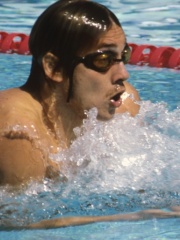
Oleksandr Sydorenko
SWIMMER
1960 - 2022
HPI: 54.22
Plaats: 361
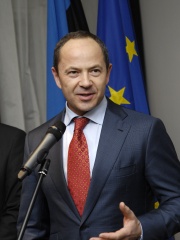
Serhiy Tihipko
POLITICIAN
1960 - heden
HPI: 54.21
Plaats: 362

Raúl Vicente Amarilla
SOCCER PLAYER
1960 - heden
HPI: 54.18
Plaats: 363
Piero Pioppo
RELIGIOUS FIGURE
1960 - heden
HPI: 54.15
Plaats: 364
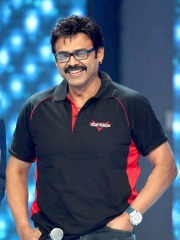
Venkatesh
ACTOR
1960 - heden
HPI: 54.11
Plaats: 365
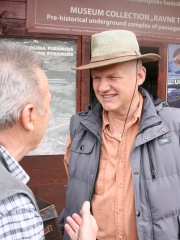
Semir Osmanagić
WRITER
1960 - heden
HPI: 54.09
Plaats: 366
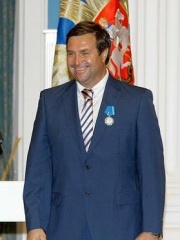
Vladimir Salnikov
SWIMMER
1960 - heden
HPI: 54.01
Plaats: 367
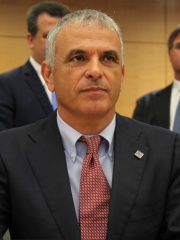
Moshe Kahlon
POLITICIAN
1960 - heden
HPI: 53.97
Plaats: 368

Elsa Cayat
PSYCHOLOGIST
1960 - 2015
HPI: 53.93
Plaats: 369
Romas Ubartas
ATHLETE
1960 - heden
HPI: 53.93
Plaats: 370
In Italië
Onder de mensen geboren in Italië staat Piero Pioppo op plaats 3,965 van 5,161. Vóór hem staan Enzo Robotti (1935), Franco Tancredi (1955), Giorgio Puia (1938), Gianfranco Leoncini (1939), Andrea Stella (1971), en Francesco Maselli (1930). Na hem komen Elvio Banchero (1904), Giampaolo Menichelli (1938), Pietro Speciale (1876), Paolo Bettini (1974), Baldassare Reina (1970), en Vitantonio Liuzzi (1980).
Anderen geboren in Italië
Naar alle ranglijsten
Enzo Robotti
SOCCER PLAYER
1935 - heden
HPI: 54.18
Plaats: 3,959

Franco Tancredi
SOCCER PLAYER
1955 - heden
HPI: 54.18
Plaats: 3,960
Giorgio Puia
SOCCER PLAYER
1938 - heden
HPI: 54.17
Plaats: 3,961
Gianfranco Leoncini
SOCCER PLAYER
1939 - 2019
HPI: 54.17
Plaats: 3,962
Andrea Stella
BUSINESSPERSON
1971 - heden
HPI: 54.17
Plaats: 3,963
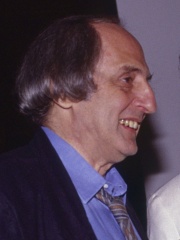
Francesco Maselli
FILM DIRECTOR
1930 - 2023
HPI: 54.16
Plaats: 3,964
Piero Pioppo
RELIGIOUS FIGURE
1960 - heden
HPI: 54.15
Plaats: 3,965

Elvio Banchero
SOCCER PLAYER
1904 - 1982
HPI: 54.15
Plaats: 3,966
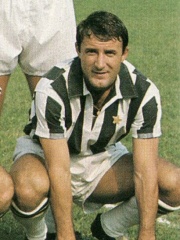
Giampaolo Menichelli
SOCCER PLAYER
1938 - heden
HPI: 54.14
Plaats: 3,967

Pietro Speciale
ATHLETE
1876 - 1945
HPI: 54.14
Plaats: 3,968
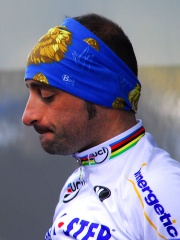
Paolo Bettini
CYCLIST
1974 - heden
HPI: 54.13
Plaats: 3,969
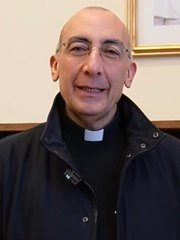
Baldassare Reina
RELIGIOUS FIGURE
1970 - heden
HPI: 54.13
Plaats: 3,970
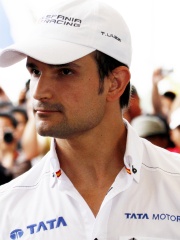
Vitantonio Liuzzi
RACING DRIVER
1980 - heden
HPI: 54.12
Plaats: 3,971
Onder Religieuze figuur in Italië
Onder Religieuze figuur geboren in Italië staat Piero Pioppo op plaats 551. Vóór hem staan Mario Francesco Pompedda (1929), Chiara Badano (1971), Luigi Padovese (1947), Maturino Blanchet (1892), Lorenzo Piretto (1942), en Augusto Paolo Lojudice (1964). Na hem komen Baldassare Reina (1970), Simona Brambilla (1965), Bruno Forte (1949), Fabio Baggio (1965), Michele Giordano (1930), en Egidio Miragoli (1955).
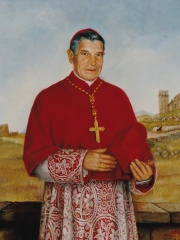
Mario Francesco Pompedda
1929 - 2006
HPI: 55.24
Plaats: 545
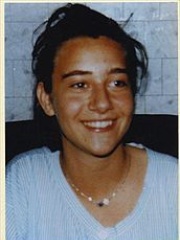
Chiara Badano
1971 - 1990
HPI: 55.07
Plaats: 546
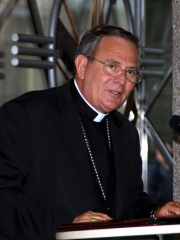
Luigi Padovese
1947 - 2010
HPI: 54.90
Plaats: 547

Maturino Blanchet
1892 - 1974
HPI: 54.89
Plaats: 548

Lorenzo Piretto
1942 - heden
HPI: 54.78
Plaats: 549
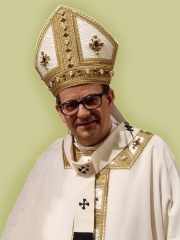
Augusto Paolo Lojudice
1964 - heden
HPI: 54.43
Plaats: 550
Piero Pioppo
1960 - heden
HPI: 54.15
Plaats: 551
Baldassare Reina
1970 - heden
HPI: 54.13
Plaats: 552
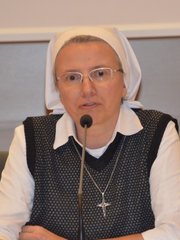
Simona Brambilla
1965 - heden
HPI: 54.07
Plaats: 553
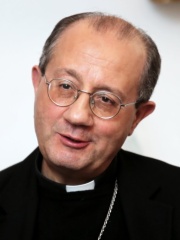
Bruno Forte
1949 - heden
HPI: 53.95
Plaats: 554

Fabio Baggio
1965 - heden
HPI: 53.94
Plaats: 555
Michele Giordano
1930 - 2010
HPI: 53.79
Plaats: 556
Egidio Miragoli
1955 - heden
HPI: 53.75
Plaats: 557




