Labdarúgó
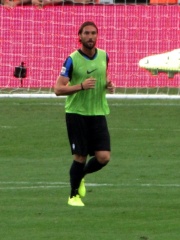
Mattia Destro
1991 - napjainkig
HU.WIKIPEDIA OLDALMEGTEKINTÉSEK (PV)


 Mattia Destro
Életrajza 32 különböző nyelven érhető el a Wikipédián. Mattia Destro a 11,148th legnépszerűbb labdarúgó (csökkenés a 8,409th-ről 2024-ben), a 4,893rd legnépszerűbb életrajz Olaszország országából (csökkenés a 4,526th-ről 2019-ben) és a 484th legnépszerűbb Olaszországból labdarúgó.
Ismertségi mutatók
110k
Oldalmegtekintések
Elmúlt 12 hónap
43.63
HPI
Történelmi népszerűségi index
Adatérdekességek
32
Mattia Destro életrajza a Wikipédia 32 nyelvi változatában érhető el, történelmi népszerűségi indexe 43.63.
Mattia Destro oldalmegtekintései nyelvenként
A(z) Labdarúgó között
A(z) Labdarúgó között Mattia Destro a(z) 11,135. helyen áll 24,321 közül. Előtte állnak: Besart Berisha, Alemão, Sebastián Driussi, Kenji Oba, Naoki Matsuyo, és Jorge López Montaña. Utána következnek: Ondřej Čelůstka, Wladimir Baýramow, Wardy Alfaro, Melanie Behringer, Nelson Rivas, és Stjepan Andrijašević.
A legnépszerűbb Labdarúgó a Wikipédián
Összes rangsor megtekintése

Besart Berisha
1985 - napjainkig
HPI: 43.64
Helyezés: 11,142

Alemão
1984 - 2007
HPI: 43.64
Helyezés: 11,143

Sebastián Driussi
1996 - napjainkig
HPI: 43.64
Helyezés: 11,144

Kenji Oba
1967 - napjainkig
HPI: 43.63
Helyezés: 11,145

Naoki Matsuyo
1974 - napjainkig
HPI: 43.63
Helyezés: 11,146
Jorge López Montaña
1978 - napjainkig
HPI: 43.63
Helyezés: 11,147
Mattia Destro
1991 - napjainkig
HPI: 43.63
Helyezés: 11,148

Ondřej Čelůstka
1989 - napjainkig
HPI: 43.63
Helyezés: 11,149

Wladimir Baýramow
1980 - napjainkig
HPI: 43.63
Helyezés: 11,150

Wardy Alfaro
1977 - napjainkig
HPI: 43.63
Helyezés: 11,151
Melanie Behringer
1985 - napjainkig
HPI: 43.63
Helyezés: 11,152
Nelson Rivas
1983 - napjainkig
HPI: 43.63
Helyezés: 11,153

Stjepan Andrijašević
1967 - napjainkig
HPI: 43.63
Helyezés: 11,154

Kortársak
A(z) 1991. évben születettek között Mattia Destro a(z) 403. helyen áll. Előtte állnak: Sofia Black-D'Elia, Brianna Rollins-McNeal, Paulina Gaitán, Ricardo Goulart, Robin Stjernberg, és Baiba Bendika. Utána következnek: Addison Timlin, Ragnhild Haga, Farrah Abraham, Shin Won-ho, Ahmed Hegazi, és Joel Obi.
További személyek, akik a(z) 1991. évben születtek
Összes rangsor megtekintése
Sofia Black-D'Elia
ACTOR
1991 - napjainkig
HPI: 43.72
Helyezés: 397

Brianna Rollins-McNeal
ATHLETE
1991 - napjainkig
HPI: 43.71
Helyezés: 398

Paulina Gaitán
ACTOR
1991 - napjainkig
HPI: 43.69
Helyezés: 399
Ricardo Goulart
SOCCER PLAYER
1991 - napjainkig
HPI: 43.66
Helyezés: 400

Robin Stjernberg
SINGER
1991 - napjainkig
HPI: 43.66
Helyezés: 401
Baiba Bendika
ATHLETE
1991 - napjainkig
HPI: 43.65
Helyezés: 402
Mattia Destro
SOCCER PLAYER
1991 - napjainkig
HPI: 43.63
Helyezés: 403

Addison Timlin
ACTOR
1991 - napjainkig
HPI: 43.62
Helyezés: 404

Ragnhild Haga
SKIER
1991 - napjainkig
HPI: 43.61
Helyezés: 405

Farrah Abraham
ACTOR
1991 - napjainkig
HPI: 43.61
Helyezés: 406

Shin Won-ho
SINGER
1991 - napjainkig
HPI: 43.61
Helyezés: 407
Ahmed Hegazi
SOCCER PLAYER
1991 - napjainkig
HPI: 43.61
Helyezés: 408

Joel Obi
SOCCER PLAYER
1991 - napjainkig
HPI: 43.59
Helyezés: 409
A(z) Olaszország rangsorában
A(z) Olaszország területén születettek között Mattia Destro a(z) 4,893. helyen áll 5,905 közül. Előtte állnak: Chiara Civello (1975), Rosella Sensi (1971), Benedetta Porcaroli (1998), Flavio Anastasia (1969), Karin Knapp (1987), és Stefano Okaka (1989). Utána következnek: Piero Poli (1960), Daniele Padelli (1985), Alessandro Borghi (1986), Li Tong (null), Cristiano Lupatelli (1978), és Giacomo Nizzolo (1989).
További személyek, akik Olaszország területén születtek
Összes rangsor megtekintése
Chiara Civello
SINGER
1975 - napjainkig
HPI: 43.70
Helyezés: 4,887
Rosella Sensi
BUSINESSPERSON
1971 - napjainkig
HPI: 43.70
Helyezés: 4,888

Benedetta Porcaroli
ACTOR
1998 - napjainkig
HPI: 43.69
Helyezés: 4,889

Flavio Anastasia
CYCLIST
1969 - napjainkig
HPI: 43.68
Helyezés: 4,890

Karin Knapp
TENNIS PLAYER
1987 - napjainkig
HPI: 43.67
Helyezés: 4,891
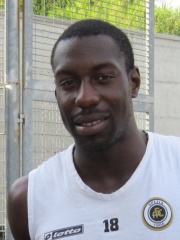
Stefano Okaka
SOCCER PLAYER
1989 - napjainkig
HPI: 43.66
Helyezés: 4,892
Mattia Destro
SOCCER PLAYER
1991 - napjainkig
HPI: 43.63
Helyezés: 4,893

Piero Poli
ATHLETE
1960 - napjainkig
HPI: 43.63
Helyezés: 4,894
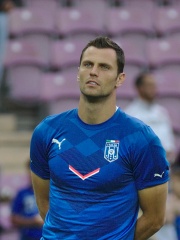
Daniele Padelli
SOCCER PLAYER
1985 - napjainkig
HPI: 43.61
Helyezés: 4,895

Alessandro Borghi
ACTOR
1986 - napjainkig
HPI: 43.60
Helyezés: 4,896

Li Tong
ATHLETE
HPI: 43.60
Helyezés: 4,897

Cristiano Lupatelli
SOCCER PLAYER
1978 - napjainkig
HPI: 43.59
Helyezés: 4,898

Giacomo Nizzolo
CYCLIST
1989 - napjainkig
HPI: 43.57
Helyezés: 4,899
A(z) Labdarúgó között – Olaszország
A(z) Olaszország területén született Labdarúgó között Mattia Destro a(z) 484. helyen áll. Előtte állnak: Roberto Baronio (1977), Stefano Sensi (1995), Riccardo Orsolini (1997), Carlo Pinsoglio (1990), Domenico Morfeo (1976), és Stefano Okaka (1989). Utána következnek: Daniele Padelli (1985), Cristiano Lupatelli (1978), Alessandro Bianchi (1966), Renato Buso (1969), Matteo Pessina (1997), és Rolando Bianchi (1983).
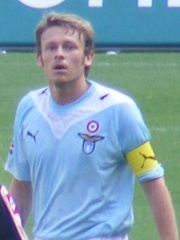
Roberto Baronio
1977 - napjainkig
HPI: 43.82
Helyezés: 478

Stefano Sensi
1995 - napjainkig
HPI: 43.82
Helyezés: 479

Riccardo Orsolini
1997 - napjainkig
HPI: 43.80
Helyezés: 480
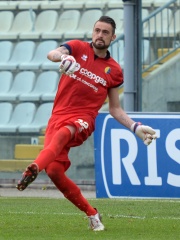
Carlo Pinsoglio
1990 - napjainkig
HPI: 43.80
Helyezés: 481

Domenico Morfeo
1976 - napjainkig
HPI: 43.76
Helyezés: 482
Stefano Okaka
1989 - napjainkig
HPI: 43.66
Helyezés: 483
Mattia Destro
1991 - napjainkig
HPI: 43.63
Helyezés: 484
Daniele Padelli
1985 - napjainkig
HPI: 43.61
Helyezés: 485
Cristiano Lupatelli
1978 - napjainkig
HPI: 43.59
Helyezés: 486

Alessandro Bianchi
1966 - napjainkig
HPI: 43.55
Helyezés: 487

Renato Buso
1969 - napjainkig
HPI: 43.51
Helyezés: 488

Matteo Pessina
1997 - napjainkig
HPI: 43.35
Helyezés: 489
Rolando Bianchi
1983 - napjainkig
HPI: 43.34
Helyezés: 490




