Footballeur
Matías Vecino
1991 - aujourd'hui
PAGES VUES SUR FR.WIKIPEDIA (PV)
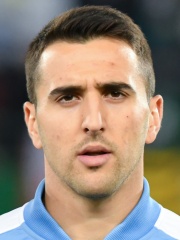
 Matías Vecino
Sa biographie est disponible en 41 langues sur Wikipédia. Matías Vecino est le 7,383rd footballeur le plus populaire (en baisse du 4,477th en 2024), la 297th biographie la plus populaire d'Uruguay (en baisse du 225th en 2019), ainsi que le 177th footballeur d'Uruguay le plus populaire.
Indicateurs de mémorabilité
110k
Pages vues
12 derniers mois
48.68
HPI
Indice de popularité historique
Faits marquants
41
La biographie de Matías Vecino figure dans 41 éditions linguistiques de Wikipédia, plus que 90 % de l'ensemble des Footballeur.
Pages vues de Matías Vecino par langue
Parmi les Footballeur
Parmi les Footballeur, Matías Vecino occupe le rang 7,377 sur 24,321. Avant lui viennent Masatoshi Mizutani, Stéphane Henchoz, Glen De Boeck, Stefano Eranio, Jean Makoun, et Lizardo Garrido. Après lui viennent Marco Caneira, Alfredo Tena, Aleksei Berezutski, Moussa Marega, Osamu Miura, et Georgi Kinkladze.
Footballeur les plus populaires sur Wikipédia
Voir tous les classements

Masatoshi Mizutani
1987 - présent
HPI : 48.69
Rang : 7,377

Stéphane Henchoz
1974 - présent
HPI : 48.69
Rang : 7,378

Glen De Boeck
1971 - 2025
HPI : 48.69
Rang : 7,379

Stefano Eranio
1966 - présent
HPI : 48.69
Rang : 7,380

Jean Makoun
1983 - présent
HPI : 48.68
Rang : 7,381
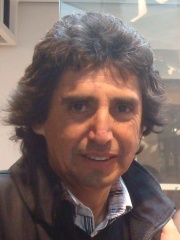
Lizardo Garrido
1957 - présent
HPI : 48.68
Rang : 7,382
Matías Vecino
1991 - présent
HPI : 48.68
Rang : 7,383

Marco Caneira
1979 - présent
HPI : 48.68
Rang : 7,384

Alfredo Tena
1956 - présent
HPI : 48.68
Rang : 7,385

Aleksei Berezutski
1982 - présent
HPI : 48.68
Rang : 7,386
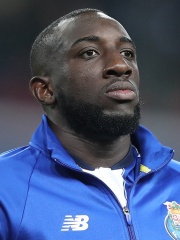
Moussa Marega
1991 - présent
HPI : 48.68
Rang : 7,387

Osamu Miura
1989 - présent
HPI : 48.67
Rang : 7,388

Georgi Kinkladze
1973 - présent
HPI : 48.67
Rang : 7,389

Contemporains
Parmi les personnes nées en 1991, Matías Vecino occupe le rang 176. Avant lui viennent Jann Mardenborough, Javier Fernández, Lay Zhang, Natsuki Hanae, Kenichiro Hirata, et Mário Rui. Après lui viennent Moussa Marega, Jung Jin-young, Fabio Borini, Kang Min-hyuk, Jo Hyeon-woo, et Max Holloway.
Autres personnes nées en 1991
Voir tous les classements
Jann Mardenborough
RACING DRIVER
1991 - présent
HPI : 48.82
Rang : 170

Javier Fernández
SKATER
1991 - présent
HPI : 48.80
Rang : 171

Lay Zhang
SINGER
1991 - présent
HPI : 48.79
Rang : 172

Natsuki Hanae
ACTOR
1991 - présent
HPI : 48.77
Rang : 173

Kenichiro Hirata
SOCCER PLAYER
1991 - présent
HPI : 48.77
Rang : 174
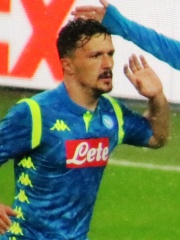
Mário Rui
SOCCER PLAYER
1991 - présent
HPI : 48.76
Rang : 175
Matías Vecino
SOCCER PLAYER
1991 - présent
HPI : 48.68
Rang : 176
Moussa Marega
SOCCER PLAYER
1991 - présent
HPI : 48.68
Rang : 177

Jung Jin-young
ACTOR
1991 - présent
HPI : 48.66
Rang : 178
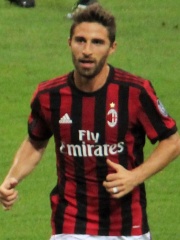
Fabio Borini
SOCCER PLAYER
1991 - présent
HPI : 48.62
Rang : 179

Kang Min-hyuk
MUSICIAN
1991 - présent
HPI : 48.56
Rang : 180

Jo Hyeon-woo
SOCCER PLAYER
1991 - présent
HPI : 48.51
Rang : 181

Max Holloway
MARTIAL ARTS
1991 - présent
HPI : 48.49
Rang : 182
En Uruguay
Parmi les personnes nées en Uruguay, Matías Vecino occupe le rang 297 sur 504. Avant lui viennent Jorge Da Silva (1961), Sebastián Eguren (1981), Abel Hernández (1990), José Zalazar (1963), Gonzalo García (1983), et José Oscar Herrera (1965). Après lui viennent Daniel Martínez (1957), Nicolás Lodeiro (1989), Ignacio María González (1982), Diego Laxalt (1993), Venancio Ramos (1959), et Fernando Clavijo (1956).
Autres personnes nées en Uruguay
Voir tous les classements
Jorge Da Silva
SOCCER PLAYER
1961 - présent
HPI : 49.36
Rang : 291

Sebastián Eguren
SOCCER PLAYER
1981 - présent
HPI : 49.11
Rang : 292

Abel Hernández
SOCCER PLAYER
1990 - présent
HPI : 49.06
Rang : 293

José Zalazar
SOCCER PLAYER
1963 - présent
HPI : 49.01
Rang : 294

Gonzalo García
SOCCER PLAYER
1983 - présent
HPI : 48.89
Rang : 295

José Oscar Herrera
SOCCER PLAYER
1965 - présent
HPI : 48.72
Rang : 296
Matías Vecino
SOCCER PLAYER
1991 - présent
HPI : 48.68
Rang : 297

Daniel Martínez
POLITICIAN
1957 - présent
HPI : 48.51
Rang : 298

Nicolás Lodeiro
SOCCER PLAYER
1989 - présent
HPI : 48.36
Rang : 299

Ignacio María González
SOCCER PLAYER
1982 - présent
HPI : 48.25
Rang : 300
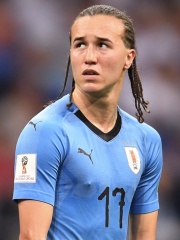
Diego Laxalt
SOCCER PLAYER
1993 - présent
HPI : 48.24
Rang : 301

Venancio Ramos
SOCCER PLAYER
1959 - présent
HPI : 48.21
Rang : 302

Fernando Clavijo
SOCCER PLAYER
1956 - 2019
HPI : 48.21
Rang : 303
Parmi les Footballeur en Uruguay
Parmi les Footballeur nés en Uruguay, Matías Vecino occupe le rang 177. Avant lui viennent Jorge Da Silva (1961), Sebastián Eguren (1981), Abel Hernández (1990), José Zalazar (1963), Gonzalo García (1983), et José Oscar Herrera (1965). Après lui viennent Nicolás Lodeiro (1989), Ignacio María González (1982), Diego Laxalt (1993), Venancio Ramos (1959), Fernando Clavijo (1956), et Darío Rodríguez (1974).
Jorge Da Silva
1961 - présent
HPI : 49.36
Rang : 171
Sebastián Eguren
1981 - présent
HPI : 49.11
Rang : 172
Abel Hernández
1990 - présent
HPI : 49.06
Rang : 173
José Zalazar
1963 - présent
HPI : 49.01
Rang : 174
Gonzalo García
1983 - présent
HPI : 48.89
Rang : 175
José Oscar Herrera
1965 - présent
HPI : 48.72
Rang : 176
Matías Vecino
1991 - présent
HPI : 48.68
Rang : 177
Nicolás Lodeiro
1989 - présent
HPI : 48.36
Rang : 178
Ignacio María González
1982 - présent
HPI : 48.25
Rang : 179
Diego Laxalt
1993 - présent
HPI : 48.24
Rang : 180
Venancio Ramos
1959 - présent
HPI : 48.21
Rang : 181
Fernando Clavijo
1956 - 2019
HPI : 48.21
Rang : 182

Darío Rodríguez
1974 - présent
HPI : 48.21
Rang : 183




