Religious Figure
Atika bint Zayd
companion of the Islamic prophet Muhammad
EN.WIKIPEDIA PAGE VIEWS (PV)

 Atika bint Zayd
Her biography is available in 14 different languages on Wikipedia. Atika bint Zayd is the 2,864th most popular religious figure, the 227th most popular biography from Saudi Arabia and the 90th most popular Saudi Arabian Religious Figure.
Atika bint Zayd is most famous for being a 7th-century Islamic scholar and poet who contributed to early Islamic literature and knowledge. A surprising lesser-known fact is that she was one of the few women of her time to engage in scholarly debates and poetic compositions in a male-dominated society. Her lasting legacy lies in inspiring subsequent generations of Muslim women to pursue education and creative expression in Islamic traditions.
Memorability Metrics
56k
Page Views
Past 12 months
55.40
HPI
Historical Popularity Index
Data Insights
14
Atika bint Zayd's biography spans 14 Wikipedia language editions and earns a Historical Popularity Index of 55.40.
Page views of Atika bint Zayd by language
Among Religious Figures
Among religious figures, Atika bint Zayd ranks 2,864 out of 3,189. Before her are Karolina Kózka, Seaxburh of Ely, Savio Hon, Claude Dagens, Walter Breuning, and Mother Angelica. After her are Pope Celadion of Alexandria, Giovanni Cheli, Nilus of Sora, Silvano Piovanelli, Davide Pagliarani, and Edgar Peña Parra.
Most Popular Religious Figures in Wikipedia
Go to all Rankings

Karolina Kózka
1898 - 1914
HPI: 55.44
Rank: 2,858
Seaxburh of Ely
640 - 699
HPI: 55.43
Rank: 2,859

Savio Hon
1950 - Present
HPI: 55.43
Rank: 2,860

Claude Dagens
1940 - Present
HPI: 55.42
Rank: 2,861

Walter Breuning
1896 - 2011
HPI: 55.41
Rank: 2,862

Mother Angelica
1923 - 2016
HPI: 55.41
Rank: 2,863
Atika bint Zayd
HPI: 55.40
Rank: 2,864

Pope Celadion of Alexandria
100 - 167
HPI: 55.40
Rank: 2,865

Giovanni Cheli
1918 - 2013
HPI: 55.40
Rank: 2,866

Nilus of Sora
1433 - 1508
HPI: 55.39
Rank: 2,867
Silvano Piovanelli
1924 - 2016
HPI: 55.38
Rank: 2,868

Davide Pagliarani
1970 - Present
HPI: 55.37
Rank: 2,869
Edgar Peña Parra
1960 - Present
HPI: 55.36
Rank: 2,870

In Saudi Arabia
Among people born in Saudi Arabia, Atika bint Zayd ranks 227 out of 419. Before her are Saud bin Abdulaziz Al Saud (1748), Abdullah ibn Hudhafah as-Sahmi (null), Mohamed Al-Deayea (1972), Al-Hakam ibn Abi al-As (null), Al-Shanfara (null), and Ali Al-Naimi (1935). After her are Khalid Al-Faisal (1940), Salem Al-Dawsari (1991), Adel al-Jubeir (1962), Lisa Eilbacher (1956), Abdulaziz al-Omari (1979), and Khalil Al Ghamdi (1970).
Others born in Saudi Arabia
Go to all Rankings
Saud bin Abdulaziz Al Saud
POLITICIAN
1748 - 1814
HPI: 56.38
Rank: 221

Abdullah ibn Hudhafah as-Sahmi
RELIGIOUS FIGURE
HPI: 56.33
Rank: 222

Mohamed Al-Deayea
SOCCER PLAYER
1972 - Present
HPI: 56.07
Rank: 223

Al-Hakam ibn Abi al-As
NOBLEMAN
HPI: 56.06
Rank: 224

Al-Shanfara
WRITER
HPI: 55.92
Rank: 225
Ali Al-Naimi
POLITICIAN
1935 - Present
HPI: 55.55
Rank: 226
Atika bint Zayd
RELIGIOUS FIGURE
HPI: 55.40
Rank: 227

Khalid Al-Faisal
POLITICIAN
1940 - Present
HPI: 54.95
Rank: 228

Salem Al-Dawsari
SOCCER PLAYER
1991 - Present
HPI: 54.31
Rank: 229
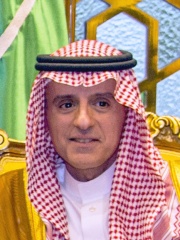
Adel al-Jubeir
POLITICIAN
1962 - Present
HPI: 54.05
Rank: 230

Lisa Eilbacher
ACTOR
1956 - Present
HPI: 53.56
Rank: 231

Abdulaziz al-Omari
DESIGNER
1979 - 2001
HPI: 53.09
Rank: 232

Khalil Al Ghamdi
REFEREE
1970 - Present
HPI: 52.70
Rank: 233
Among Religious Figures In Saudi Arabia
Among religious figures born in Saudi Arabia, Atika bint Zayd ranks 90. Before her are Sharif Ali (1450), Nafiʽ al-Madani (689), Utba ibn Ghazwan (581), Muhammad ibn Ibrahim Al ash-Sheikh (1893), Saud Al-Shuraim (1964), and Abdullah ibn Hudhafah as-Sahmi (null). After her are Maher Al-Mu'aiqly (1969), and Saad al Ghamdi (1967).

Sharif Ali
1450 - 1432
HPI: 58.85
Rank: 84

Nafiʽ al-Madani
689 - 785
HPI: 58.42
Rank: 85
Utba ibn Ghazwan
581 - 639
HPI: 57.79
Rank: 86

Muhammad ibn Ibrahim Al ash-Sheikh
1893 - 1969
HPI: 57.00
Rank: 87

Saud Al-Shuraim
1964 - Present
HPI: 56.93
Rank: 88
Abdullah ibn Hudhafah as-Sahmi
HPI: 56.33
Rank: 89
Atika bint Zayd
HPI: 55.40
Rank: 90

Maher Al-Mu'aiqly
1969 - Present
HPI: 52.69
Rank: 91

Saad al Ghamdi
1967 - Present
HPI: 47.93
Rank: 92




