Fußballspieler
Daniel Maldini
2001 - heute
DE.WIKIPEDIA-SEITENAUFRUFE (PV)

 Daniel Maldini
Seine Biografie ist in 32 verschiedenen Sprachen auf Wikipedia verfügbar (gestiegen von 29 im Jahr 2024). Daniel Maldini ist der 6,045th beliebteste Fußballspieler (gestiegen vom 6,926th im Jahr 2024), die 4,315th beliebteste Biografie aus Italien (gestiegen vom 4,357th im Jahr 2019) und der 330th beliebteste aus Italien Fußballspieler.
Bekanntheitsmetriken
690k
Seitenaufrufe
Letzte 12 Monate
50.88
HPI
Historischer Popularitätsindex
Daten-Einblicke
32
Die Biografie von Daniel Maldini erscheint in 32 Sprachversionen der Wikipedia – mehr als bei 82 % aller Fußballspieler.
11. Okt.
Daniel Maldini hat am selben Tag Geburtstag (11. Oktober) wie Eleanor Roosevelt, Amitabh Bachchan und Heinrich Wilhelm Matthias Olbers.
Seitenaufrufe von Daniel Maldini nach Sprache
Unter Fußballspieler
Unter Fußballspieler belegt Daniel Maldini Rang 6,039 von 21,273. Vor ihm stehen Andriy Husin, Keiji Kaimoto, Eljero Elia, Kōji Nakata, Domenico Berardi, und Ciprian Marica. Nach ihm folgen Fábio Aurélio, Archil Arveladze, Adriano Gerlin da Silva, Soma Ishigamori, Vicente Rodríguez, und Eraldo Pecci.
Die beliebtesten Fußballspieler auf Wikipedia
Zu allen Ranglisten
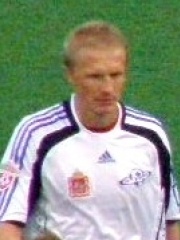
Andriy Husin
1972 - 2014
HPI: 50.90
Rang: 6,039

Keiji Kaimoto
1972 - heute
HPI: 50.90
Rang: 6,040
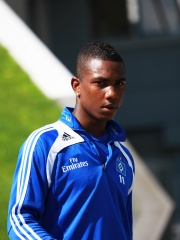
Eljero Elia
1987 - heute
HPI: 50.90
Rang: 6,041

Kōji Nakata
1979 - heute
HPI: 50.89
Rang: 6,042

Domenico Berardi
1994 - heute
HPI: 50.88
Rang: 6,043
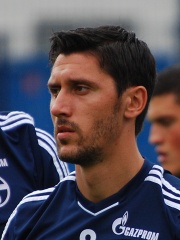
Ciprian Marica
1985 - heute
HPI: 50.88
Rang: 6,044
Daniel Maldini
2001 - heute
HPI: 50.88
Rang: 6,045

Fábio Aurélio
1979 - heute
HPI: 50.88
Rang: 6,046

Archil Arveladze
1973 - heute
HPI: 50.87
Rang: 6,047

Adriano Gerlin da Silva
1974 - heute
HPI: 50.87
Rang: 6,048

Soma Ishigamori
2001 - heute
HPI: 50.87
Rang: 6,049
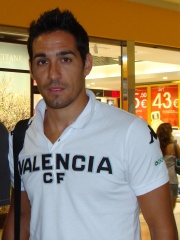
Vicente Rodríguez
1981 - heute
HPI: 50.87
Rang: 6,050

Eraldo Pecci
1955 - heute
HPI: 50.87
Rang: 6,051

Zeitgenossen
Unter den im Jahr 2001 Geborenen belegt Daniel Maldini Rang 24. Vor ihm stehen Rachel Zegler, Bukayo Saka, Yaroslava Mahuchikh, Santiago Giménez, Gabriel Martinelli, und William Saliba. Nach ihm folgen Soma Ishigamori, Gonçalo Ramos, Khéphren Thuram, Lee Kang-in, Charles De Ketelaere, und Thiago Almada.
Weitere im Jahr 2001 Geborene
Zu allen Ranglisten
Rachel Zegler
ACTOR
2001 - heute
HPI: 51.83
Rang: 18

Bukayo Saka
SOCCER PLAYER
2001 - heute
HPI: 51.79
Rang: 19

Yaroslava Mahuchikh
ATHLETE
2001 - heute
HPI: 51.73
Rang: 20

Santiago Giménez
SOCCER PLAYER
2001 - heute
HPI: 51.60
Rang: 21

Gabriel Martinelli
SOCCER PLAYER
2001 - heute
HPI: 51.42
Rang: 22

William Saliba
SOCCER PLAYER
2001 - heute
HPI: 50.93
Rang: 23
Daniel Maldini
SOCCER PLAYER
2001 - heute
HPI: 50.88
Rang: 24
Soma Ishigamori
SOCCER PLAYER
2001 - heute
HPI: 50.87
Rang: 25

Gonçalo Ramos
SOCCER PLAYER
2001 - heute
HPI: 50.65
Rang: 26

Khéphren Thuram
SOCCER PLAYER
2001 - heute
HPI: 50.54
Rang: 27

Lee Kang-in
SOCCER PLAYER
2001 - heute
HPI: 50.22
Rang: 28

Charles De Ketelaere
SOCCER PLAYER
2001 - heute
HPI: 50.09
Rang: 29

Thiago Almada
SOCCER PLAYER
2001 - heute
HPI: 49.50
Rang: 30
In Italien
Unter den in Italien Geborenen belegt Daniel Maldini Rang 4,315 von 5,161. Vor ihm stehen Manuel Locatelli (1998), Valerie Dore (1964), Alessandro Matri (1984), Fanny Cadeo (1970), Monty Banks (1897), und Domenico Berardi (1994). Nach ihm folgen Roberto Visentini (1957), Enrico Ruggeri (1957), Umberto Guidoni (1954), Francesco Rizzo (1943), Raffaele Palladino (1984), und Renzo Nostini (1914).
Weitere in Italien geborene Personen
Zu allen Ranglisten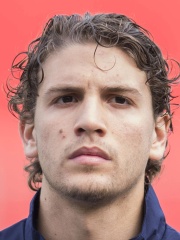
Manuel Locatelli
SOCCER PLAYER
1998 - heute
HPI: 50.98
Rang: 4,309

Valerie Dore
SINGER
1964 - heute
HPI: 50.97
Rang: 4,310
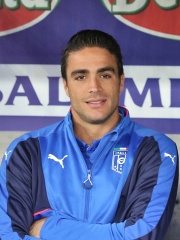
Alessandro Matri
SOCCER PLAYER
1984 - heute
HPI: 50.96
Rang: 4,311

Fanny Cadeo
ACTOR
1970 - heute
HPI: 50.93
Rang: 4,312
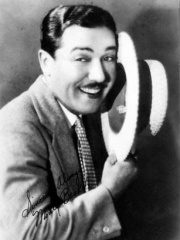
Monty Banks
ACTOR
1897 - 1950
HPI: 50.90
Rang: 4,313
Domenico Berardi
SOCCER PLAYER
1994 - heute
HPI: 50.88
Rang: 4,314
Daniel Maldini
SOCCER PLAYER
2001 - heute
HPI: 50.88
Rang: 4,315

Roberto Visentini
CYCLIST
1957 - heute
HPI: 50.88
Rang: 4,316

Enrico Ruggeri
SINGER
1957 - heute
HPI: 50.88
Rang: 4,317
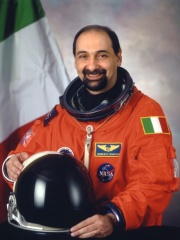
Umberto Guidoni
ASTRONAUT
1954 - heute
HPI: 50.85
Rang: 4,318
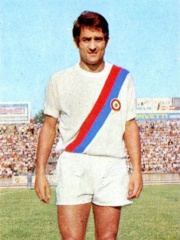
Francesco Rizzo
SOCCER PLAYER
1943 - 2022
HPI: 50.83
Rang: 4,319

Raffaele Palladino
SOCCER PLAYER
1984 - heute
HPI: 50.81
Rang: 4,320

Renzo Nostini
FENCER
1914 - 2005
HPI: 50.79
Rang: 4,321
Unter Fußballspieler in Italien
Unter den in Italien geborenen Fußballspieler belegt Daniel Maldini Rang 330. Vor ihm stehen Daniele Bonera (1981), Pietro Genovesi (1902), Mattia De Sciglio (1992), Manuel Locatelli (1998), Alessandro Matri (1984), und Domenico Berardi (1994). Nach ihm folgen Francesco Rizzo (1943), Raffaele Palladino (1984), Antonio Nocerino (1985), Antonio Di Gennaro (1958), Francesco Antonioli (1969), und Khéphren Thuram (2001).
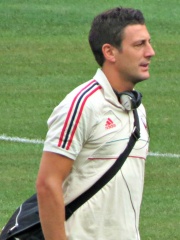
Daniele Bonera
1981 - heute
HPI: 51.28
Rang: 324

Pietro Genovesi
1902 - 1980
HPI: 51.26
Rang: 325

Mattia De Sciglio
1992 - heute
HPI: 51.08
Rang: 326
Manuel Locatelli
1998 - heute
HPI: 50.98
Rang: 327
Alessandro Matri
1984 - heute
HPI: 50.96
Rang: 328
Domenico Berardi
1994 - heute
HPI: 50.88
Rang: 329
Daniel Maldini
2001 - heute
HPI: 50.88
Rang: 330
Francesco Rizzo
1943 - 2022
HPI: 50.83
Rang: 331
Raffaele Palladino
1984 - heute
HPI: 50.81
Rang: 332
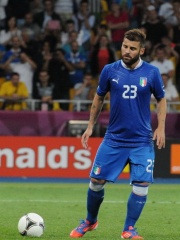
Antonio Nocerino
1985 - heute
HPI: 50.75
Rang: 333

Antonio Di Gennaro
1958 - heute
HPI: 50.61
Rang: 334
Francesco Antonioli
1969 - heute
HPI: 50.57
Rang: 335
Khéphren Thuram
2001 - heute
HPI: 50.54
Rang: 336




