Политик
Roberts Zīle
1958 - настоящее время
RU.WIKIPEDIA PAGE VIEWS (PV)
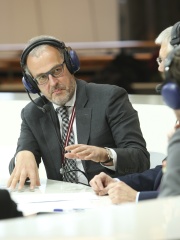

 Roberts Zīle
Его биография доступна на 18 различных языках в Википедии (рост с 15 в 2024 году). Roberts Zīle занимает 17252-е место среди самых популярных политик (снижение с 17072-е места в 2024 году), занимает 201-е место среди самых популярных биографий из Латвии (снижение с 197-е места в 2019 году) и занимает 48-е место среди политик Латвия.
Memorability Metrics
9.8k
Page Views
Past 12 months
51.48
HPI
Historical Popularity Index
Page views of Roberts Zīle by language
Among Политик
Among политик, Roberts Zīle ranks 17,245 out of 19,576. Before him are Henry McMaster, Tatyana Ledovskaya, Gombojavyn Zandanshatar, Sigmundur Davíð Gunnlaugsson, Jan Zahradil, and Maia Panjikidze. After him are Janusz Lewandowski, Enrique Peñalosa, Phumzile Mlambo-Ngcuka, Edward Law, 1st Earl of Ellenborough, Pablo Iglesias Turrión, and Charles Cotesworth Pinckney.
Most Popular Политик in Wikipedia
Go to all Rankings
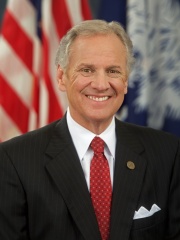
Henry McMaster
1947 - Present
HPI: 51.49
Rank: 17,246

Tatyana Ledovskaya
1966 - Present
HPI: 51.49
Rank: 17,247
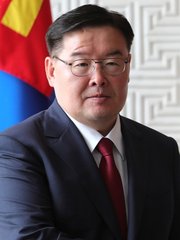
Gombojavyn Zandanshatar
1970 - Present
HPI: 51.49
Rank: 17,248
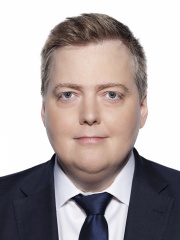
Sigmundur Davíð Gunnlaugsson
1975 - Present
HPI: 51.48
Rank: 17,249
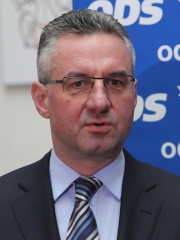
Jan Zahradil
1963 - Present
HPI: 51.48
Rank: 17,250
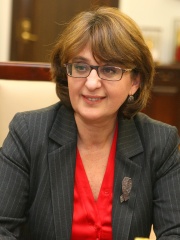
Maia Panjikidze
1960 - Present
HPI: 51.48
Rank: 17,251
Roberts Zīle
1958 - Present
HPI: 51.48
Rank: 17,252
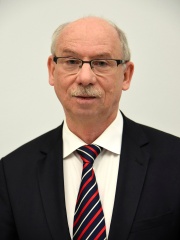
Janusz Lewandowski
1951 - Present
HPI: 51.47
Rank: 17,253
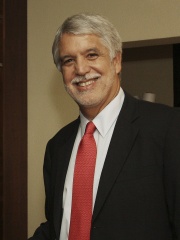
Enrique Peñalosa
1954 - Present
HPI: 51.46
Rank: 17,254
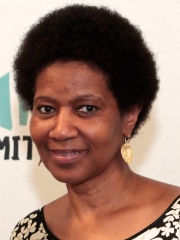
Phumzile Mlambo-Ngcuka
1955 - Present
HPI: 51.46
Rank: 17,255
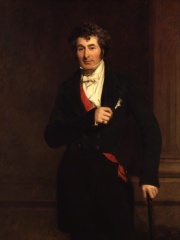
Edward Law, 1st Earl of Ellenborough
1790 - 1871
HPI: 51.45
Rank: 17,256
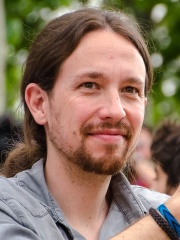
Pablo Iglesias Turrión
1978 - Present
HPI: 51.45
Rank: 17,257
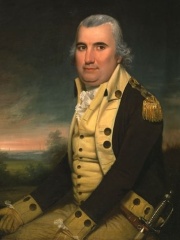
Charles Cotesworth Pinckney
1746 - 1825
HPI: 51.44
Rank: 17,258

Contemporaries
Among people born in 1958, Roberts Zīle ranks 499. Before him are Amrita Singh, Roddy Doyle, Anita Baker, Choguel Kokalla Maïga, Scott Rudin, and Siobhan Fahey. After him are Walter Junghans, Amy Pascal, Elena Horvat, Vicki Peterson, Tony Cox, and Michel Bibard.
Others Born in 1958
Go to all Rankings
Amrita Singh
ACTOR
1958 - Present
HPI: 51.56
Rank: 493
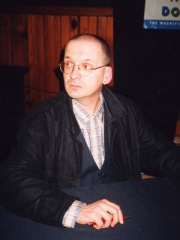
Roddy Doyle
WRITER
1958 - Present
HPI: 51.54
Rank: 494
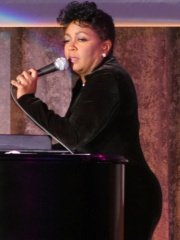
Anita Baker
SINGER
1958 - Present
HPI: 51.53
Rank: 495
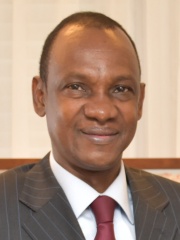
Choguel Kokalla Maïga
POLITICIAN
1958 - Present
HPI: 51.53
Rank: 496

Scott Rudin
PRODUCER
1958 - Present
HPI: 51.51
Rank: 497

Siobhan Fahey
SINGER
1958 - Present
HPI: 51.49
Rank: 498
Roberts Zīle
POLITICIAN
1958 - Present
HPI: 51.48
Rank: 499
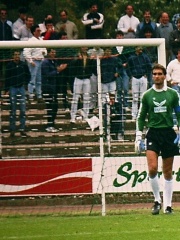
Walter Junghans
SOCCER PLAYER
1958 - Present
HPI: 51.44
Rank: 500

Amy Pascal
BUSINESSPERSON
1958 - Present
HPI: 51.43
Rank: 501
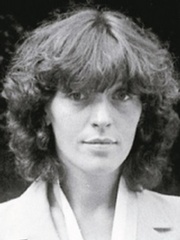
Elena Horvat
ATHLETE
1958 - Present
HPI: 51.43
Rank: 502
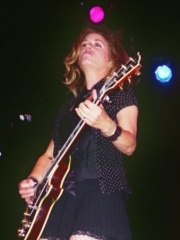
Vicki Peterson
MUSICIAN
1958 - Present
HPI: 51.39
Rank: 503

Tony Cox
ACTOR
1958 - Present
HPI: 51.39
Rank: 504

Michel Bibard
SOCCER PLAYER
1958 - Present
HPI: 51.34
Rank: 505
In Латвия
Among people born in Латвия, Roberts Zīle ranks 201 out of NaN. Before him are Valdis Valters (1957), Aleksandrs Starkovs (1955), Artūrs Irbe (1967), John Konrads (1942), Māris Gailis (1951), and Jānis Akuraters (1876). After him are Nikolai Ekk (1902), Andrejs Prohorenkovs (1977), Ivans Klementjevs (1960), Einars Repše (1961), Vera Zozulya (1956), and Alvis Hermanis (1965).
Others born in Латвия
Go to all Rankings
Valdis Valters
BASKETBALL PLAYER
1957 - Present
HPI: 51.85
Rank: 195
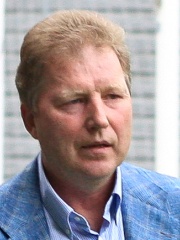
Aleksandrs Starkovs
SOCCER PLAYER
1955 - Present
HPI: 51.83
Rank: 196
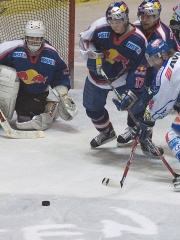
Artūrs Irbe
HOCKEY PLAYER
1967 - Present
HPI: 51.77
Rank: 197
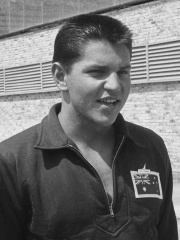
John Konrads
SWIMMER
1942 - 2021
HPI: 51.63
Rank: 198
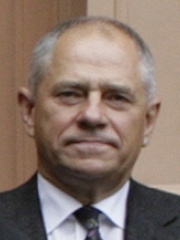
Māris Gailis
POLITICIAN
1951 - Present
HPI: 51.55
Rank: 199
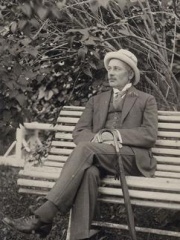
Jānis Akuraters
WRITER
1876 - 1937
HPI: 51.53
Rank: 200
Roberts Zīle
POLITICIAN
1958 - Present
HPI: 51.48
Rank: 201

Nikolai Ekk
FILM DIRECTOR
1902 - 1976
HPI: 50.95
Rank: 202
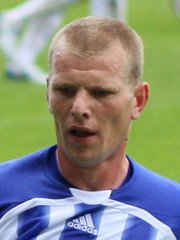
Andrejs Prohorenkovs
SOCCER PLAYER
1977 - 2025
HPI: 50.94
Rank: 203
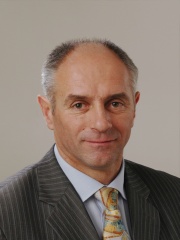
Ivans Klementjevs
POLITICIAN
1960 - Present
HPI: 50.81
Rank: 204

Einars Repše
POLITICIAN
1961 - Present
HPI: 50.75
Rank: 205

Vera Zozulya
ATHLETE
1956 - Present
HPI: 50.70
Rank: 206
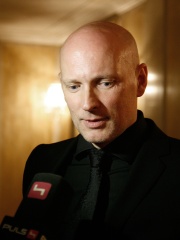
Alvis Hermanis
ACTOR
1965 - Present
HPI: 50.60
Rank: 207
Among Политик In Латвия
Among политик born in Латвия, Roberts Zīle ranks 48. Before him are Laila Freivalds (1942), Aigars Kalvītis (1966), Inese Vaidere (1952), Alexei Kudrin (1960), Solvita Āboltiņa (1963), and Māris Gailis (1951). After him are Ivans Klementjevs (1960), Einars Repše (1961), Guntars Krasts (1957), Andris Šķēle (1958), Artis Pabriks (1966), and Ināra Mūrniece (1970).
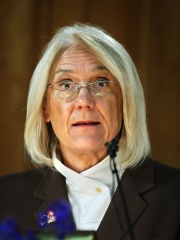
Laila Freivalds
1942 - Present
HPI: 54.23
Rank: 42
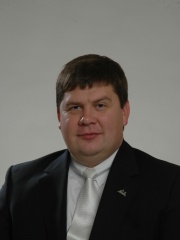
Aigars Kalvītis
1966 - Present
HPI: 54.11
Rank: 43
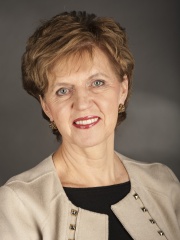
Inese Vaidere
1952 - Present
HPI: 53.72
Rank: 44

Alexei Kudrin
1960 - Present
HPI: 53.14
Rank: 45
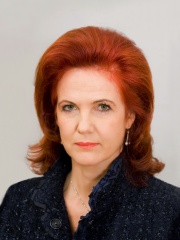
Solvita Āboltiņa
1963 - Present
HPI: 51.91
Rank: 46
Māris Gailis
1951 - Present
HPI: 51.55
Rank: 47
Roberts Zīle
1958 - Present
HPI: 51.48
Rank: 48
Ivans Klementjevs
1960 - Present
HPI: 50.81
Rank: 49
Einars Repše
1961 - Present
HPI: 50.75
Rank: 50
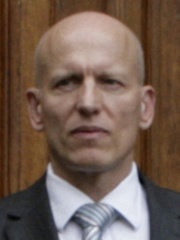
Guntars Krasts
1957 - Present
HPI: 50.40
Rank: 51
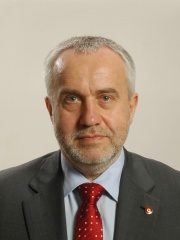
Andris Šķēle
1958 - Present
HPI: 50.38
Rank: 52
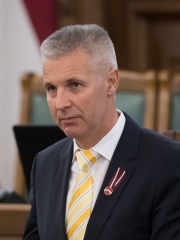
Artis Pabriks
1966 - Present
HPI: 48.75
Rank: 53
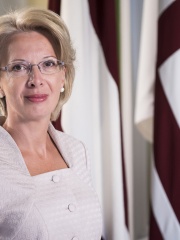
Ināra Mūrniece
1970 - Present
HPI: 47.73
Rank: 54




