足球运动员
Leonardo Pavoletti
1988 - 至今
ZH.WIKIPEDIA 页面浏览量 (PV)

 Leonardo Pavoletti
知名度指标
94k
页面浏览量
过去12个月
41.97
HPI
历史知名度指数
Leonardo Pavoletti的各语言页面浏览量
在足球运动员中
在足球运动员中,Leonardo Pavoletti排名第12,683位(共21,273人)。 排在他之前的有:Rômulo, Heorhiy Bushchan, Ricardo Souza Silva, Aslan Kerimov, Laurențiu Roșu, 和Theo Janssen. 排在他之后的有:Hikari Takagi, Yang Zhi, Tiago Prado, Tsutomu Takahata, Imre Szabics, 和Julie Foudy.
维基百科上最受欢迎的足球运动员
查看全部排名

Rômulo
1987 - 至今
HPI: 41.97
排名: 12,690
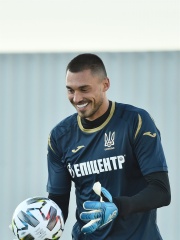
Heorhiy Bushchan
1994 - 至今
HPI: 41.97
排名: 12,691

Ricardo Souza Silva
1975 - 至今
HPI: 41.97
排名: 12,692

Aslan Kerimov
1973 - 至今
HPI: 41.97
排名: 12,693

Laurențiu Roșu
1975 - 至今
HPI: 41.97
排名: 12,694
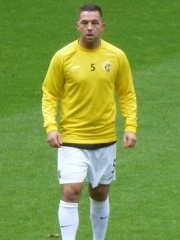
Theo Janssen
1981 - 至今
HPI: 41.97
排名: 12,695
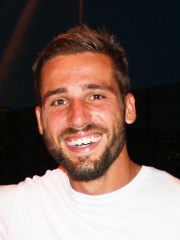
Leonardo Pavoletti
1988 - 至今
HPI: 41.97
排名: 12,696
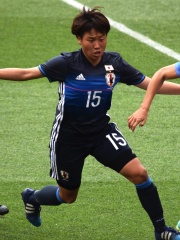
Hikari Takagi
1993 - 至今
HPI: 41.97
排名: 12,697

Yang Zhi
1983 - 至今
HPI: 41.96
排名: 12,698

Tiago Prado
1984 - 至今
HPI: 41.96
排名: 12,699

Tsutomu Takahata
1968 - 至今
HPI: 41.96
排名: 12,700

Imre Szabics
1981 - 至今
HPI: 41.96
排名: 12,701

Julie Foudy
1971 - 至今
HPI: 41.96
排名: 12,702

同时代人物
在1988年出生的人中,Leonardo Pavoletti排名第690位。 排在他之前的有:Erik Knudsen, Ivan Kelava, Kristina Asmus, Nicholas Braun, Ryan Brathwaite, 和Sunday Mba. 排在他之后的有:Kim Hye-seong, Pierre Bengtsson, Bibiane Schoofs, Kevin McHale, Yuki Muto, 和Bojana Živković.
其他1988年出生的人
查看全部排名
Erik Knudsen
ACTOR
1988 - 至今
HPI: 42.05
排名: 684
Ivan Kelava
SOCCER PLAYER
1988 - 至今
HPI: 42.04
排名: 685

Kristina Asmus
ACTOR
1988 - 至今
HPI: 42.03
排名: 686

Nicholas Braun
ACTOR
1988 - 至今
HPI: 42.02
排名: 687

Ryan Brathwaite
ATHLETE
1988 - 至今
HPI: 41.99
排名: 688

Sunday Mba
SOCCER PLAYER
1988 - 至今
HPI: 41.97
排名: 689
Leonardo Pavoletti
SOCCER PLAYER
1988 - 至今
HPI: 41.97
排名: 690

Kim Hye-seong
ACTOR
1988 - 至今
HPI: 41.95
排名: 691
Pierre Bengtsson
SOCCER PLAYER
1988 - 至今
HPI: 41.94
排名: 692

Bibiane Schoofs
TENNIS PLAYER
1988 - 至今
HPI: 41.93
排名: 693

Kevin McHale
ACTOR
1988 - 至今
HPI: 41.93
排名: 694

Yuki Muto
SOCCER PLAYER
1988 - 至今
HPI: 41.92
排名: 695

Bojana Živković
VOLLEYBALL PLAYER
1988 - 至今
HPI: 41.92
排名: 696
在意大利
在出生于意大利的人中,Leonardo Pavoletti排名第5,011位(共NaN人)。 排在他之前的有:Matteo Gabbia (1999), Peter Fill (1982), Paolo Tagliavento (1972), Matteo Arnaldi (2001), Paolo Milanoli (1969), 和Sarah Toscano (2006). 排在他之后的有:Matteo Tagliariol (1983), Tommaso Berni (1983), Fabio Firmani (1978), Matteo Bisiani (1978), Davide Lanzafame (1987), 和Andrea Raggi (1984).

Matteo Gabbia
SOCCER PLAYER
1999 - 至今
HPI: 42.02
排名: 5,005

Peter Fill
SKIER
1982 - 至今
HPI: 42.02
排名: 5,006
Paolo Tagliavento
REFEREE
1972 - 至今
HPI: 42.01
排名: 5,007
Matteo Arnaldi
TENNIS PLAYER
2001 - 至今
HPI: 42.00
排名: 5,008

Paolo Milanoli
ATHLETE
1969 - 至今
HPI: 41.98
排名: 5,009

Sarah Toscano
SINGER
2006 - 至今
HPI: 41.98
排名: 5,010
Leonardo Pavoletti
SOCCER PLAYER
1988 - 至今
HPI: 41.97
排名: 5,011

Matteo Tagliariol
FENCER
1983 - 至今
HPI: 41.97
排名: 5,012

Tommaso Berni
SOCCER PLAYER
1983 - 至今
HPI: 41.96
排名: 5,013
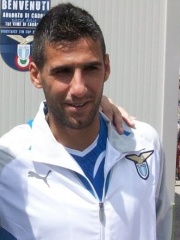
Fabio Firmani
SOCCER PLAYER
1978 - 至今
HPI: 41.94
排名: 5,014

Matteo Bisiani
ATHLETE
1978 - 至今
HPI: 41.92
排名: 5,015

Davide Lanzafame
SOCCER PLAYER
1987 - 至今
HPI: 41.87
排名: 5,016

Andrea Raggi
SOCCER PLAYER
1984 - 至今
HPI: 41.87
排名: 5,017
在意大利的足球运动员中
在出生于意大利的足球运动员中,Leonardo Pavoletti排名第528位。 排在他之前的有:Giampiero Pinzi (1981), Laura Giuliani (1993), Lorenzo Lucca (2000), Giandomenico Mesto (1982), Gaetano D'Agostino (1982), 和Matteo Gabbia (1999). 排在他之后的有:Tommaso Berni (1983), Fabio Firmani (1978), Davide Lanzafame (1987), Andrea Raggi (1984), Marco Ferrante (1971), 和Luciano Zauri (1978).
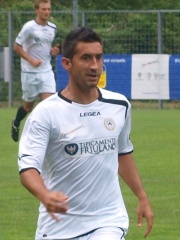
Giampiero Pinzi
1981 - 至今
HPI: 42.20
排名: 522

Laura Giuliani
1993 - 至今
HPI: 42.13
排名: 523

Lorenzo Lucca
2000 - 至今
HPI: 42.12
排名: 524

Giandomenico Mesto
1982 - 至今
HPI: 42.12
排名: 525

Gaetano D'Agostino
1982 - 至今
HPI: 42.08
排名: 526
Matteo Gabbia
1999 - 至今
HPI: 42.02
排名: 527
Leonardo Pavoletti
1988 - 至今
HPI: 41.97
排名: 528
Tommaso Berni
1983 - 至今
HPI: 41.96
排名: 529
Fabio Firmani
1978 - 至今
HPI: 41.94
排名: 530
Davide Lanzafame
1987 - 至今
HPI: 41.87
排名: 531
Andrea Raggi
1984 - 至今
HPI: 41.87
排名: 532
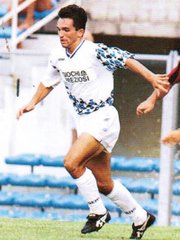
Marco Ferrante
1971 - 至今
HPI: 41.86
排名: 533

Luciano Zauri
1978 - 至今
HPI: 41.84
排名: 534




