Társadalmi aktivista
Laila Haidari


 Laila Haidari
Életrajza 15 különböző nyelven érhető el a Wikipédián. Laila Haidari a 926th legnépszerűbb társadalmi aktivista, a 223rd legnépszerűbb életrajz Pakisztán országából és a 12th legnépszerűbb Pakisztánból társadalmi aktivista.
Ismertségi mutatók
2.4k
Oldalmegtekintések
Elmúlt 12 hónap
33.97
HPI
Történelmi népszerűségi index
Adatérdekességek
15
Laila Haidari életrajza a Wikipédia 15 nyelvi változatában érhető el, történelmi népszerűségi indexe 33.97.
Laila Haidari oldalmegtekintései nyelvenként
A(z) Társadalmi aktivista között
A(z) Társadalmi aktivista között Laila Haidari a(z) 926. helyen áll 988 közül. Előtte állnak: Mikaela Loach, Michelle Suárez Bértora, Muzoon Almellehan, Rebecca Kabugho, Rebecca Masika Katsuva, és Nicole Becker. Utána következnek: Ayọ Tometi, Tess Asplund, Lucie Pinson, Paloma Costa, Shukria Asil, és Stella Young.
A legnépszerűbb Társadalmi aktivista a Wikipédián
Összes rangsor megtekintése

Mikaela Loach
1998 - napjainkig
HPI: 34.57
Helyezés: 920

Michelle Suárez Bértora
1984 - 2022
HPI: 34.47
Helyezés: 921

Muzoon Almellehan
1999 - napjainkig
HPI: 34.40
Helyezés: 922

Rebecca Kabugho
1994 - napjainkig
HPI: 34.25
Helyezés: 923

Rebecca Masika Katsuva
1966 - 2016
HPI: 34.14
Helyezés: 924

Nicole Becker
2001 - napjainkig
HPI: 34.09
Helyezés: 925
Laila Haidari
HPI: 33.97
Helyezés: 926

Ayọ Tometi
1984 - napjainkig
HPI: 33.96
Helyezés: 927

Tess Asplund
HPI: 33.85
Helyezés: 928

Lucie Pinson
1985 - napjainkig
HPI: 33.77
Helyezés: 929

Paloma Costa
1992 - napjainkig
HPI: 33.76
Helyezés: 930
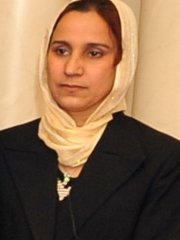
Shukria Asil
2000 - napjainkig
HPI: 33.71
Helyezés: 931
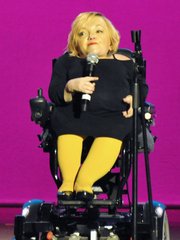
Stella Young
1982 - 2014
HPI: 33.61
Helyezés: 932

A(z) Pakisztán rangsorában
A(z) Pakisztán területén születettek között Laila Haidari a(z) 223. helyen áll 266 közül. Előtte állnak: Waqar Younis (1971), Arfa Karim (1995), Amjad Sabri (1970), Arshad Nadeem (1997), Babar Azam (1994), és Veena Malik (1984). Utána következnek: Priya Gill (1977), Ayesha Malik (1966), Misbah-ul-Haq (1974), Begum Jan (2000), Saba Qamar (1984), és Shoaib Malik (1982).
További személyek, akik Pakisztán területén születtek
Összes rangsor megtekintése
Waqar Younis
CRICKETER
1971 - napjainkig
HPI: 35.39
Helyezés: 217

Arfa Karim
COMPUTER SCIENTIST
1995 - 2012
HPI: 35.25
Helyezés: 218

Amjad Sabri
SINGER
1970 - 2016
HPI: 34.94
Helyezés: 219

Arshad Nadeem
ATHLETE
1997 - napjainkig
HPI: 34.66
Helyezés: 220

Babar Azam
CRICKETER
1994 - napjainkig
HPI: 34.13
Helyezés: 221

Veena Malik
ACTOR
1984 - napjainkig
HPI: 34.02
Helyezés: 222
Laila Haidari
SOCIAL ACTIVIST
HPI: 33.97
Helyezés: 223

Priya Gill
ACTOR
1977 - napjainkig
HPI: 33.81
Helyezés: 224

Ayesha Malik
JUDGE
1966 - napjainkig
HPI: 33.52
Helyezés: 225

Misbah-ul-Haq
CRICKETER
1974 - napjainkig
HPI: 33.35
Helyezés: 226

Begum Jan
SOCIAL ACTIVIST
2000 - napjainkig
HPI: 32.70
Helyezés: 227

Saba Qamar
ACTOR
1984 - napjainkig
HPI: 32.42
Helyezés: 228

Shoaib Malik
CRICKETER
1982 - napjainkig
HPI: 32.04
Helyezés: 229
A(z) Társadalmi aktivista között – Pakisztán
A(z) Pakisztán területén született Társadalmi aktivista között Laila Haidari a(z) 12. helyen áll. Előtte állnak: Iqbal Masih (1983), Mukhtar Mai (1972), Tabassum Adnan (null), Jalila Haider (1988), Ziauddin Yousafzai (1969), és Abia Akram (1985). Utána következnek: Begum Jan (2000), Mahrang Baloch (1993), és Gulalai Ismail (1986).
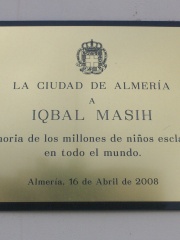
Iqbal Masih
1983 - 1995
HPI: 52.48
Helyezés: 6

Mukhtar Mai
1972 - napjainkig
HPI: 50.47
Helyezés: 7
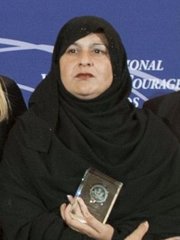
Tabassum Adnan
HPI: 41.11
Helyezés: 8

Jalila Haider
1988 - napjainkig
HPI: 38.74
Helyezés: 9

Ziauddin Yousafzai
1969 - napjainkig
HPI: 37.66
Helyezés: 10

Abia Akram
1985 - napjainkig
HPI: 37.28
Helyezés: 11
Laila Haidari
HPI: 33.97
Helyezés: 12
Begum Jan
2000 - napjainkig
HPI: 32.70
Helyezés: 13

Mahrang Baloch
1993 - napjainkig
HPI: 30.42
Helyezés: 14

Gulalai Ismail
1986 - napjainkig
HPI: 27.11
Helyezés: 15




