Boxeur
Kim Song-guk
1984 - aujourd'hui
PAGES VUES SUR FR.WIKIPEDIA (PV)

 Kim Song-guk
Sa biographie est disponible en 14 langues sur Wikipédia. Kim Song-guk est le 569th boxeur le plus populaire, la 174th biographie la plus populaire du Corée du Nord, ainsi que le boxeur du Corée du Nord le plus populaire.
Indicateurs de mémorabilité
2.3k
Pages vues
12 derniers mois
35.42
HPI
Indice de popularité historique
Faits marquants
14
La biographie de Kim Song-guk couvre 14 éditions linguistiques de Wikipédia et obtient un Indice de Popularité Historique de 35.42.
Pages vues de Kim Song-guk par langue
Parmi les Boxeur
Parmi les Boxeur, Kim Song-guk occupe le rang 569 sur 727. Avant lui viennent Serik Yeleuov, Egidijus Kavaliauskas, Ali Raymi, Chris Eubank Jr, Hovhannes Bachkov, et Yuberjen Martínez. Après lui viennent Jeff Horn, Orlando Cruz, Yudel Johnson, David Price, Daniel Geale, et Esra Yıldız.
Boxeur les plus populaires sur Wikipédia
Voir tous les classements

Serik Yeleuov
1980 - présent
HPI : 35.67
Rang : 563

Egidijus Kavaliauskas
1988 - présent
HPI : 35.67
Rang : 564

Ali Raymi
1973 - 2015
HPI : 35.65
Rang : 565

Chris Eubank Jr
1989 - présent
HPI : 35.58
Rang : 566
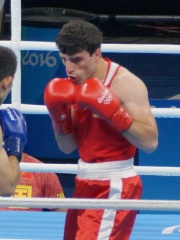
Hovhannes Bachkov
1992 - présent
HPI : 35.54
Rang : 567
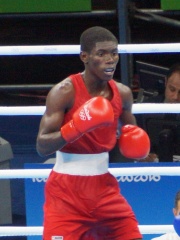
Yuberjen Martínez
1991 - présent
HPI : 35.45
Rang : 568
Kim Song-guk
1984 - présent
HPI : 35.42
Rang : 569

Jeff Horn
1988 - présent
HPI : 35.39
Rang : 570

Orlando Cruz
1981 - présent
HPI : 35.37
Rang : 571

Yudel Johnson
1981 - présent
HPI : 35.35
Rang : 572

David Price
1983 - présent
HPI : 35.33
Rang : 573

Daniel Geale
1981 - présent
HPI : 35.27
Rang : 574

Esra Yıldız
1997 - présent
HPI : 35.18
Rang : 575

Contemporains
Parmi les personnes nées en 1984, Kim Song-guk occupe le rang 1,584. Avant lui viennent Sébastien Turgot, Takanori Nakajima, Tarence Kinsey, Takahito Chiba, Václav Procházka, et Nikki Glaser. Après lui viennent Yuji Yabu, Eva Marcille, Jonas Gustavsson, Nikolaos Karabelas, Moritz Fürste, et Abby Martin.
Autres personnes nées en 1984
Voir tous les classements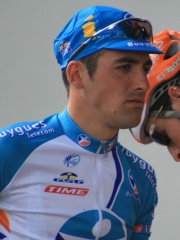
Sébastien Turgot
CYCLIST
1984 - présent
HPI : 35.50
Rang : 1,578

Takanori Nakajima
SOCCER PLAYER
1984 - présent
HPI : 35.50
Rang : 1,579

Tarence Kinsey
BASKETBALL PLAYER
1984 - présent
HPI : 35.45
Rang : 1,580

Takahito Chiba
SOCCER PLAYER
1984 - présent
HPI : 35.44
Rang : 1,581

Václav Procházka
SOCCER PLAYER
1984 - présent
HPI : 35.42
Rang : 1,582

Nikki Glaser
ACTOR
1984 - présent
HPI : 35.42
Rang : 1,583
Kim Song-guk
BOXER
1984 - présent
HPI : 35.42
Rang : 1,584

Yuji Yabu
SOCCER PLAYER
1984 - présent
HPI : 35.42
Rang : 1,585

Eva Marcille
MODEL
1984 - présent
HPI : 35.41
Rang : 1,586

Jonas Gustavsson
HOCKEY PLAYER
1984 - présent
HPI : 35.39
Rang : 1,587

Nikolaos Karabelas
SOCCER PLAYER
1984 - présent
HPI : 35.38
Rang : 1,588

Moritz Fürste
ATHLETE
1984 - présent
HPI : 35.38
Rang : 1,589

Abby Martin
PRESENTER
1984 - présent
HPI : 35.36
Rang : 1,590
En Corée du Nord
Parmi les personnes nées en Corée du Nord, Kim Song-guk occupe le rang 174 sur 180. Avant lui viennent Ri Song-hui (1978), Pak Hyon-suk (1985), Pae Gil-su (1972), Kim Song-i (1994), O Jong-ae (1984), et Ri Kwang-il (1988). Après lui viennent Yang Kyong-il (1989), Jang Kuk-chol (1994), Ri Se-ung (1998), Choe Hyo-gyong (2000), Kim Mi-rae (2001), et Pak Nam-chol (1988).
Autres personnes nées en Corée du Nord
Voir tous les classements
Ri Song-hui
ATHLETE
1978 - présent
HPI : 38.46
Rang : 168
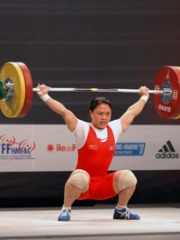
Pak Hyon-suk
ATHLETE
1985 - présent
HPI : 38.43
Rang : 169

Pae Gil-su
GYMNAST
1972 - présent
HPI : 38.23
Rang : 170
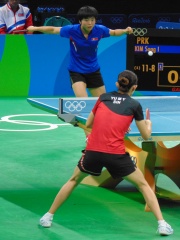
Kim Song-i
TABLE TENNIS PLAYER
1994 - présent
HPI : 37.91
Rang : 171

O Jong-ae
ATHLETE
1984 - présent
HPI : 36.65
Rang : 172
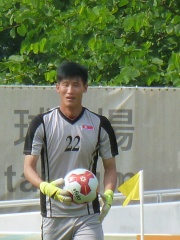
Ri Kwang-il
SOCCER PLAYER
1988 - présent
HPI : 35.93
Rang : 173
Kim Song-guk
BOXER
1984 - présent
HPI : 35.42
Rang : 174

Yang Kyong-il
WRESTLER
1989 - présent
HPI : 32.97
Rang : 175

Jang Kuk-chol
SOCCER PLAYER
1994 - présent
HPI : 32.78
Rang : 176

Ri Se-ung
WRESTLER
1998 - présent
HPI : 32.69
Rang : 177

Choe Hyo-gyong
WRESTLER
2000 - présent
HPI : 30.57
Rang : 178

Kim Mi-rae
ATHLETE
2001 - présent
HPI : 28.74
Rang : 179
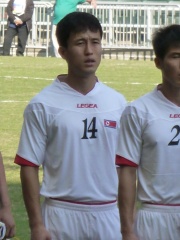
Pak Nam-chol
SOCCER PLAYER
1988 - présent
HPI : 9.50
Rang : 180
Parmi les Boxeur en Corée du Nord
Parmi les Boxeur nés en Corée du Nord, Kim Song-guk occupe le rang 1.




