画家
Ilka Gedő
1921 - 1985
 Ilka Gedő
Memorability Metrics
3.8k
Page Views
Past 12 months
55.74
HPI
Historical Popularity Index
Page views of Ilka Gedő by language
Among 画家
Among 画家, Ilka Gedő ranks 1,765 out of 2,023. Before her are Charley Toorop, Frederic Remington, Yehuda Pen, Arpenik Nalbandyan, Jamini Roy, and Edmund Dulac. After her are Carmen Herrera, Juan Manuel Blanes, Thérèse Schwartze, Yannis Tsarouchis, Washington Allston, and Sascha Schneider.
Most Popular 画家 in Wikipedia
Go to all Rankings
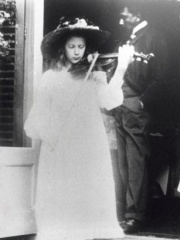
Charley Toorop
1891 - 1955
HPI: 55.81
Rank: 1,759
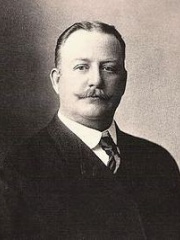
Frederic Remington
1861 - 1909
HPI: 55.80
Rank: 1,760
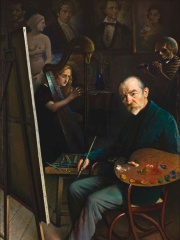
Yehuda Pen
1854 - 1937
HPI: 55.79
Rank: 1,761
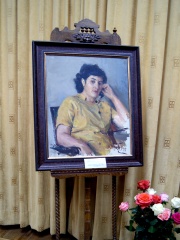
Arpenik Nalbandyan
1916 - 1964
HPI: 55.79
Rank: 1,762
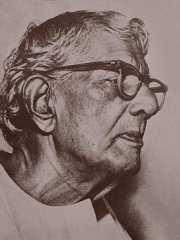
Jamini Roy
1887 - 1972
HPI: 55.77
Rank: 1,763
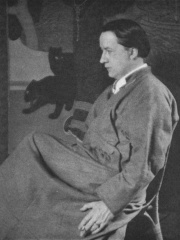
Edmund Dulac
1882 - 1953
HPI: 55.75
Rank: 1,764
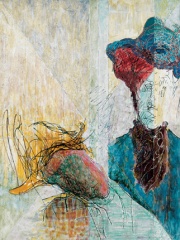
Ilka Gedő
1921 - 1985
HPI: 55.74
Rank: 1,765

Carmen Herrera
1915 - 2022
HPI: 55.72
Rank: 1,766
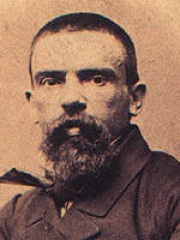
Juan Manuel Blanes
1830 - 1901
HPI: 55.71
Rank: 1,767
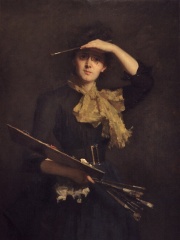
Thérèse Schwartze
1851 - 1918
HPI: 55.70
Rank: 1,768
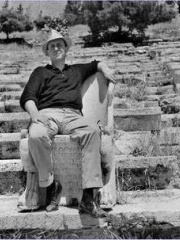
Yannis Tsarouchis
1910 - 1989
HPI: 55.69
Rank: 1,769
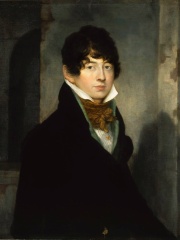
Washington Allston
1779 - 1843
HPI: 55.68
Rank: 1,770
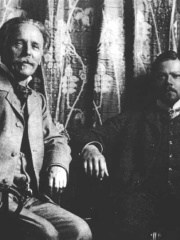
Sascha Schneider
1870 - 1927
HPI: 55.68
Rank: 1,771

Contemporaries
Among people born in 1921, Ilka Gedő ranks 332. Before her are Fernando Roldán, Isabella Bashmakova, Karl Aage Hansen, Dennis Brain, Alan Freed, and Francis Blanche. After her are Roger Bocquet, Čestmír Vycpálek, Giorgio Scarlatti, Carol Channing, Stanisław Nagy, and Tony Scott. Among people deceased in 1985, Ilka Gedő ranks 196. Before her are Myrtle Cook, Harald Cramér, Hua Luogeng, Ruth Orkin, Wolfgang Kieling, and George Raynor. After her are Georges Verriest, Efrem Zimbalist, Harry Hopman, Jack Medica, Josef Smistik, and Paul Peter Ewald.
Others Born in 1921
Go to all Rankings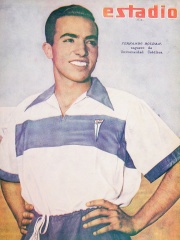
Fernando Roldán
SOCCER PLAYER
1921 - 2019
HPI: 55.82
Rank: 326
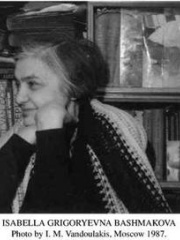
Isabella Bashmakova
HISTORIAN
1921 - 2005
HPI: 55.81
Rank: 327
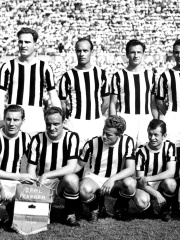
Karl Aage Hansen
SOCCER PLAYER
1921 - 1990
HPI: 55.78
Rank: 328
Dennis Brain
MUSICIAN
1921 - 1957
HPI: 55.76
Rank: 329
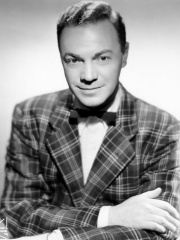
Alan Freed
DESIGNER
1921 - 1965
HPI: 55.74
Rank: 330
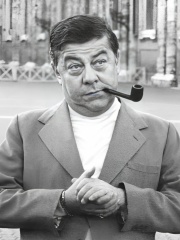
Francis Blanche
ACTOR
1921 - 1974
HPI: 55.74
Rank: 331
Ilka Gedő
PAINTER
1921 - 1985
HPI: 55.74
Rank: 332
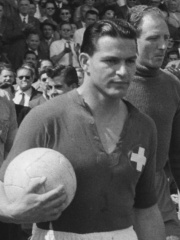
Roger Bocquet
SOCCER PLAYER
1921 - 1994
HPI: 55.71
Rank: 333
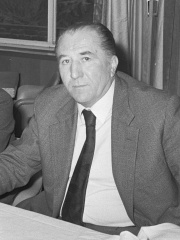
Čestmír Vycpálek
SOCCER PLAYER
1921 - 2002
HPI: 55.70
Rank: 334
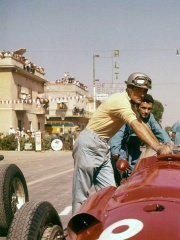
Giorgio Scarlatti
RACING DRIVER
1921 - 1990
HPI: 55.67
Rank: 335
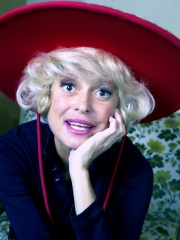
Carol Channing
ACTOR
1921 - 2019
HPI: 55.55
Rank: 336
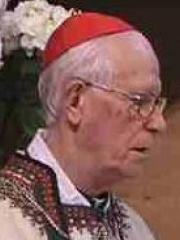
Stanisław Nagy
RELIGIOUS FIGURE
1921 - 2013
HPI: 55.55
Rank: 337
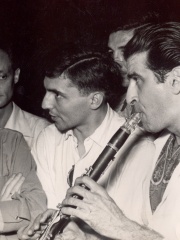
Tony Scott
MUSICIAN
1921 - 2007
HPI: 55.45
Rank: 338
Others Deceased in 1985
Go to all Rankings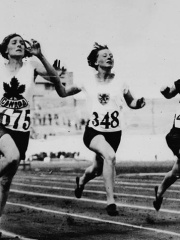
Myrtle Cook
POLITICIAN
1902 - 1985
HPI: 55.96
Rank: 190
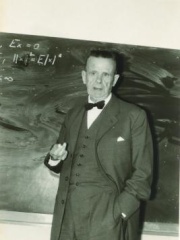
Harald Cramér
MATHEMATICIAN
1893 - 1985
HPI: 55.95
Rank: 191
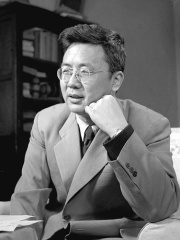
Hua Luogeng
MATHEMATICIAN
1910 - 1985
HPI: 55.93
Rank: 192

Ruth Orkin
FILM DIRECTOR
1921 - 1985
HPI: 55.87
Rank: 193
Wolfgang Kieling
ACTOR
1924 - 1985
HPI: 55.84
Rank: 194
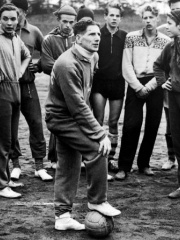
George Raynor
COACH
1907 - 1985
HPI: 55.75
Rank: 195
Ilka Gedő
PAINTER
1921 - 1985
HPI: 55.74
Rank: 196
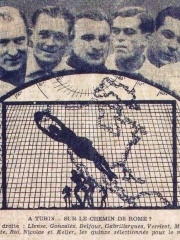
Georges Verriest
SOCCER PLAYER
1909 - 1985
HPI: 55.72
Rank: 197
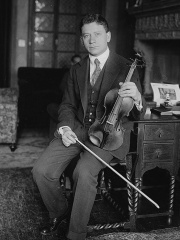
Efrem Zimbalist
MUSICIAN
1889 - 1985
HPI: 55.60
Rank: 198
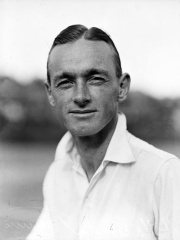
Harry Hopman
TENNIS PLAYER
1906 - 1985
HPI: 55.59
Rank: 199
Jack Medica
SWIMMER
1914 - 1985
HPI: 55.46
Rank: 200

Josef Smistik
SOCCER PLAYER
1905 - 1985
HPI: 55.44
Rank: 201
Paul Peter Ewald
PHYSICIST
1888 - 1985
HPI: 55.38
Rank: 202
In 匈牙利
Among people born in 匈牙利, Ilka Gedő ranks 589 out of NaN. Before her are Tibor Csernai (1938), Sigmund Romberg (1887), Imre Varga (1923), Menyhért Lónyay (1822), Ferenc Szojka (1931), and Imre Gedővári (1951). After her are Vilma Hugonnai (1847), Ödön Zombori (1906), Károly Kárpáti (1906), Gyula Polgár (1912), Antal Szalay (1912), and László Szollás (1907).
Others born in 匈牙利
Go to all Rankings
Tibor Csernai
SOCCER PLAYER
1938 - 2012
HPI: 55.85
Rank: 583
Sigmund Romberg
COMPOSER
1887 - 1951
HPI: 55.85
Rank: 584
Imre Varga
SCULPTOR
1923 - 2019
HPI: 55.85
Rank: 585
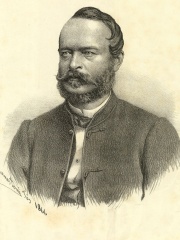
Menyhért Lónyay
POLITICIAN
1822 - 1884
HPI: 55.85
Rank: 586

Ferenc Szojka
SOCCER PLAYER
1931 - 2011
HPI: 55.79
Rank: 587

Imre Gedővári
FENCER
1951 - 2014
HPI: 55.79
Rank: 588
Ilka Gedő
PAINTER
1921 - 1985
HPI: 55.74
Rank: 589
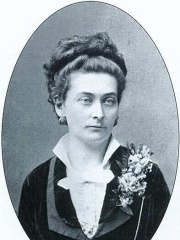
Vilma Hugonnai
PHYSICIAN
1847 - 1922
HPI: 55.72
Rank: 590
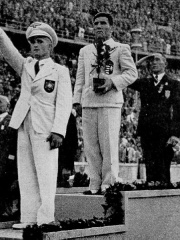
Ödön Zombori
WRESTLER
1906 - 1989
HPI: 55.72
Rank: 591
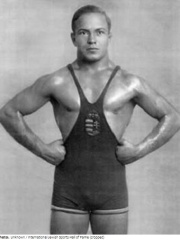
Károly Kárpáti
POLITICIAN
1906 - 1996
HPI: 55.69
Rank: 592

Gyula Polgár
SOCCER PLAYER
1912 - 1992
HPI: 55.68
Rank: 593
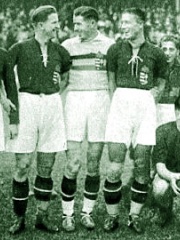
Antal Szalay
SOCCER PLAYER
1912 - 1960
HPI: 55.68
Rank: 594
László Szollás
ATHLETE
1907 - 1980
HPI: 55.68
Rank: 595
Among 画家 In 匈牙利
Among 画家 born in 匈牙利, Ilka Gedő ranks 14. Before her are Vilmos Aba-Novák (1894), József Rippl-Rónai (1861), Igor Grabar (1871), Dóra Maurer (1937), Lajos Tihanyi (1885), and Katarina Ivanović (1811).
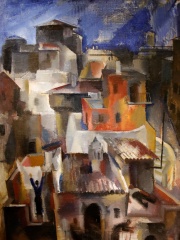
Vilmos Aba-Novák
1894 - 1941
HPI: 60.02
Rank: 8
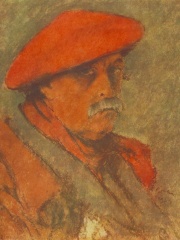
József Rippl-Rónai
1861 - 1927
HPI: 59.53
Rank: 9
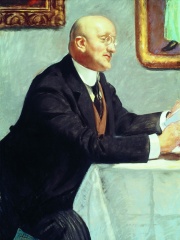
Igor Grabar
1871 - 1960
HPI: 58.35
Rank: 10

Dóra Maurer
1937 - 2026
HPI: 57.96
Rank: 11
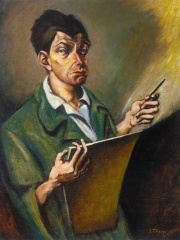
Lajos Tihanyi
1885 - 1938
HPI: 57.26
Rank: 12
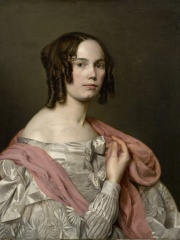
Katarina Ivanović
1811 - 1882
HPI: 56.42
Rank: 13
Ilka Gedő
1921 - 1985
HPI: 55.74
Rank: 14




