Voetballer
Alessandro Lucarelli
1977 - heden
NL.WIKIPEDIA-PAGINAWEERGAVEN (PV)
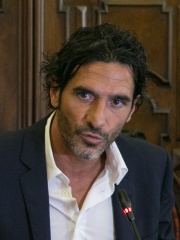
 Alessandro Lucarelli
Zijn biografie is beschikbaar in 19 verschillende talen op Wikipedia (afgenomen van 20 in 2024). Alessandro Lucarelli staat op plaats 6.643 onder de meest populaire voetballer (gedaald van plaats 5.182 in 2024), plaats 4.383 onder de meest populaire biografieën uit Italië (gedaald van plaats 4.125 in 2019) en op plaats 351 onder de populairste voetballer uit Italië.
Bekendheidsstatistieken
59k
Paginaweergaven
Afgelopen 12 maanden
49.86
HPI
Historische populariteitsindex
Paginaweergaven van Alessandro Lucarelli per taal
Onder Voetballer
Onder Voetballer staat Alessandro Lucarelli op plaats 6,637 van 21,273. Vóór hem staan Derlei, Steven Pienaar, Lobilo Boba, Dejan Damjanović, Eric Van Meir, en Eduardo Coudet. Na hem komen Jackie Henderson, Oliver Reck, Youri Mulder, Nayef Aguerd, Koo Ja-cheol, en Angeliño.
Populairste Voetballer op Wikipedia
Naar alle ranglijsten
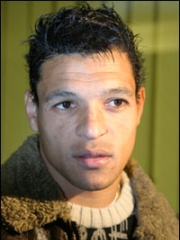
Derlei
1975 - heden
HPI: 49.87
Plaats: 6,637

Steven Pienaar
1982 - heden
HPI: 49.87
Plaats: 6,638

Lobilo Boba
1950 - heden
HPI: 49.87
Plaats: 6,639

Dejan Damjanović
1981 - heden
HPI: 49.87
Plaats: 6,640
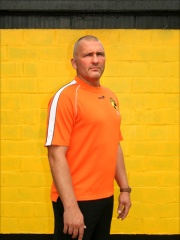
Eric Van Meir
1968 - heden
HPI: 49.87
Plaats: 6,641

Eduardo Coudet
1974 - heden
HPI: 49.86
Plaats: 6,642
Alessandro Lucarelli
1977 - heden
HPI: 49.86
Plaats: 6,643

Jackie Henderson
1932 - 2005
HPI: 49.86
Plaats: 6,644
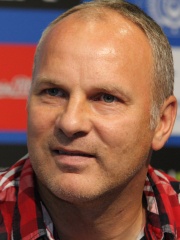
Oliver Reck
1965 - heden
HPI: 49.86
Plaats: 6,645

Youri Mulder
1969 - heden
HPI: 49.86
Plaats: 6,646

Nayef Aguerd
1996 - heden
HPI: 49.86
Plaats: 6,647

Koo Ja-cheol
1989 - heden
HPI: 49.85
Plaats: 6,648

Angeliño
1997 - heden
HPI: 49.85
Plaats: 6,649

Tijdgenoten
Onder de mensen geboren in 1977 staat Alessandro Lucarelli op plaats 319. Vóór hem staan Konstantin Zyryanov, Diego Placente, Javier Botet, Justo Villar, Danijel Šarić, en Atsushi Yanagisawa. Na hem komen Felix van Groeningen, Mirza Džomba, Oksana Baiul, Martin Laursen, Erjon Bogdani, en Didier Dinart.
Anderen geboren in 1977
Naar alle ranglijsten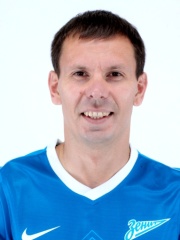
Konstantin Zyryanov
SOCCER PLAYER
1977 - heden
HPI: 50.00
Plaats: 313
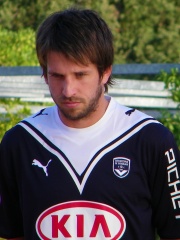
Diego Placente
SOCCER PLAYER
1977 - heden
HPI: 49.95
Plaats: 314

Javier Botet
ACTOR
1977 - heden
HPI: 49.92
Plaats: 315
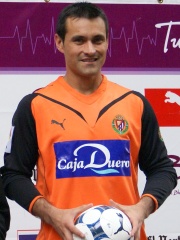
Justo Villar
SOCCER PLAYER
1977 - heden
HPI: 49.89
Plaats: 316
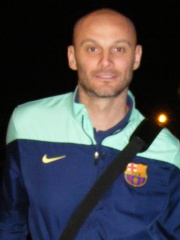
Danijel Šarić
HANDBALL PLAYER
1977 - heden
HPI: 49.88
Plaats: 317

Atsushi Yanagisawa
SOCCER PLAYER
1977 - heden
HPI: 49.88
Plaats: 318
Alessandro Lucarelli
SOCCER PLAYER
1977 - heden
HPI: 49.86
Plaats: 319

Felix van Groeningen
FILM DIRECTOR
1977 - heden
HPI: 49.85
Plaats: 320
Mirza Džomba
HANDBALL PLAYER
1977 - heden
HPI: 49.83
Plaats: 321

Oksana Baiul
SKATER
1977 - heden
HPI: 49.78
Plaats: 322

Martin Laursen
SOCCER PLAYER
1977 - heden
HPI: 49.75
Plaats: 323

Erjon Bogdani
SOCCER PLAYER
1977 - heden
HPI: 49.71
Plaats: 324

Didier Dinart
HANDBALL PLAYER
1977 - heden
HPI: 49.68
Plaats: 325
In Italië
Onder de mensen geboren in Italië staat Alessandro Lucarelli op plaats 4,383 van NaN. Vóór hem staan Giovanni Cesare Pagazzi (1965), Marco Masini (1964), Francesco Bagnaia (1997), Mattia Perin (1992), Sebastiano Nela (1961), en Vito Mannone (1988). Na hem komen Berel Lazar (1964), Federico Macheda (1991), Luisa Ranieri (1973), Federico Castelluccio (1964), Cristina D'Avena (1964), en Giorgio Pantano (1979).
Anderen geboren in Italië
Naar alle ranglijsten
Giovanni Cesare Pagazzi
RELIGIOUS FIGURE
1965 - heden
HPI: 49.95
Plaats: 4,377

Marco Masini
MUSICIAN
1964 - heden
HPI: 49.95
Plaats: 4,378
Francesco Bagnaia
RACING DRIVER
1997 - heden
HPI: 49.95
Plaats: 4,379
Mattia Perin
SOCCER PLAYER
1992 - heden
HPI: 49.94
Plaats: 4,380

Sebastiano Nela
SOCCER PLAYER
1961 - heden
HPI: 49.93
Plaats: 4,381
Vito Mannone
SOCCER PLAYER
1988 - heden
HPI: 49.90
Plaats: 4,382
Alessandro Lucarelli
SOCCER PLAYER
1977 - heden
HPI: 49.86
Plaats: 4,383

Berel Lazar
RELIGIOUS FIGURE
1964 - heden
HPI: 49.86
Plaats: 4,384
Federico Macheda
SOCCER PLAYER
1991 - heden
HPI: 49.82
Plaats: 4,385

Luisa Ranieri
ACTOR
1973 - heden
HPI: 49.79
Plaats: 4,386
Federico Castelluccio
ACTOR
1964 - heden
HPI: 49.78
Plaats: 4,387

Cristina D'Avena
SINGER
1964 - heden
HPI: 49.77
Plaats: 4,388
Giorgio Pantano
RACING DRIVER
1979 - heden
HPI: 49.77
Plaats: 4,389
Onder Voetballer in Italië
Onder Voetballer geboren in Italië staat Alessandro Lucarelli op plaats 351. Vóór hem staan Walter Novellino (1953), Marco Storari (1977), Simone Zaza (1991), Mattia Perin (1992), Sebastiano Nela (1961), en Vito Mannone (1988). Na hem komen Federico Macheda (1991), Domenico Criscito (1986), Nicolò Zaniolo (1999), Carolina Morace (1964), Benito Sarti (1936), en Sandro Tonali (2000).

Walter Novellino
1953 - heden
HPI: 50.13
Plaats: 345
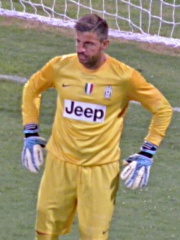
Marco Storari
1977 - heden
HPI: 50.10
Plaats: 346
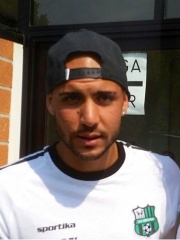
Simone Zaza
1991 - heden
HPI: 50.09
Plaats: 347
Mattia Perin
1992 - heden
HPI: 49.94
Plaats: 348
Sebastiano Nela
1961 - heden
HPI: 49.93
Plaats: 349
Vito Mannone
1988 - heden
HPI: 49.90
Plaats: 350
Alessandro Lucarelli
1977 - heden
HPI: 49.86
Plaats: 351
Federico Macheda
1991 - heden
HPI: 49.82
Plaats: 352

Domenico Criscito
1986 - heden
HPI: 49.70
Plaats: 353

Nicolò Zaniolo
1999 - heden
HPI: 49.68
Plaats: 354
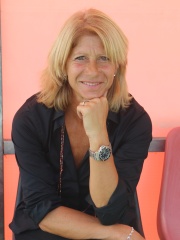
Carolina Morace
1964 - heden
HPI: 49.68
Plaats: 355
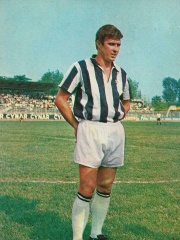
Benito Sarti
1936 - 2020
HPI: 49.63
Plaats: 356
Sandro Tonali
2000 - heden
HPI: 49.60
Plaats: 357




