Calciatore
Sebastián Eguren
1981 - presente
VISUALIZZAZIONI SU IT.WIKIPEDIA (PV)


 Sebastián Eguren
La sua biografia è disponibile in 32 lingue su Wikipedia (in aumento rispetto a 31 nel 2024). Sebastián Eguren è il 7101° calciatore più popolare (in aumento dal 7379° nel 2024), la 292ª biografia più popolare dell'Uruguay (in aumento dal 307ª nel 2019) e il 172° calciatore più popolare dell'Uruguay.
Metriche di memorabilità
16k
Visualizzazioni
Ultimi 12 mesi
49.11
HPI
Indice di popolarità storica
Dati in evidenza
32
La biografia di Sebastián Eguren compare in 32 edizioni linguistiche di Wikipedia — più del 82% di tutti i Calciatore.
8 gen
Sebastián Eguren condivide il compleanno (8 gennaio) con Stephen Hawking, Elvis Presley e Husayn ibn Ali.
Visualizzazioni della pagina di Sebastián Eguren per lingua
Tra Calciatore
Tra Calciatore, Sebastián Eguren occupa la posizione 7,095 su 21,273. Prima di lui ci sono Shigetoshi Hasebe, Federico Balzaretti, Gustavo Moscoso, Nico González, Juan Antonio Señor, e Andrzej Iwan. Dopo di lui ci sono Luis Alberto, Davide Frattesi, Jun Yanagisawa, Wolfgang Feiersinger, Flávio Amado, e Suk Hyun-jun.
Calciatore più popolari su Wikipedia
Vai a tutte le classifiche

Shigetoshi Hasebe
1971 - presente
HPI: 49.12
Posizione: 7,095

Federico Balzaretti
1981 - presente
HPI: 49.12
Posizione: 7,096

Gustavo Moscoso
1955 - presente
HPI: 49.12
Posizione: 7,097

Nico González
2002 - presente
HPI: 49.12
Posizione: 7,098
Juan Antonio Señor
1958 - presente
HPI: 49.11
Posizione: 7,099
Andrzej Iwan
1959 - 2022
HPI: 49.11
Posizione: 7,100
Sebastián Eguren
1981 - presente
HPI: 49.11
Posizione: 7,101
Luis Alberto
1992 - presente
HPI: 49.11
Posizione: 7,102
Davide Frattesi
1999 - presente
HPI: 49.11
Posizione: 7,103

Jun Yanagisawa
1987 - presente
HPI: 49.11
Posizione: 7,104

Wolfgang Feiersinger
1965 - presente
HPI: 49.11
Posizione: 7,105

Flávio Amado
1979 - presente
HPI: 49.10
Posizione: 7,106

Suk Hyun-jun
1991 - presente
HPI: 49.10
Posizione: 7,107

Contemporanei
Tra le persone nate nel 1981, Sebastián Eguren occupa la posizione 349. Prima di lui ci sono Damiano Cunego, Ben Moody, Alejandro Domínguez, Gummy, Reemma Sen, e Federico Balzaretti. Dopo di lui ci sono Taufik Hidayat, Marko Babić, Park Ye-jin, Danny Brown, Jan Frodeno, e Matti Hautamäki.
Altre persone nate nel 1981
Vai a tutte le classifiche
Damiano Cunego
CYCLIST
1981 - presente
HPI: 49.20
Posizione: 343

Ben Moody
SINGER
1981 - presente
HPI: 49.16
Posizione: 344

Alejandro Domínguez
SOCCER PLAYER
1981 - presente
HPI: 49.15
Posizione: 345

Gummy
SINGER
1981 - presente
HPI: 49.13
Posizione: 346

Reemma Sen
ACTOR
1981 - presente
HPI: 49.12
Posizione: 347
Federico Balzaretti
SOCCER PLAYER
1981 - presente
HPI: 49.12
Posizione: 348
Sebastián Eguren
SOCCER PLAYER
1981 - presente
HPI: 49.11
Posizione: 349

Taufik Hidayat
BADMINTON PLAYER
1981 - presente
HPI: 49.06
Posizione: 350

Marko Babić
SOCCER PLAYER
1981 - presente
HPI: 49.06
Posizione: 351

Park Ye-jin
ACTOR
1981 - presente
HPI: 49.06
Posizione: 352
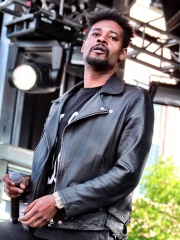
Danny Brown
SINGER
1981 - presente
HPI: 49.06
Posizione: 353

Jan Frodeno
ATHLETE
1981 - presente
HPI: 49.05
Posizione: 354

Matti Hautamäki
SKIER
1981 - presente
HPI: 49.01
Posizione: 355
In Uruguay
Tra le persone nate in Uruguay, Sebastián Eguren occupa la posizione 292 su 444. Prima di lui ci sono Fabián Carini (1979), Karina Pankievich (1950), Beatriz Argimón (1961), Walter Mantegazza (1952), Pablo Bengoechea (1965), e Jorge Da Silva (1961). Dopo di lui ci sono Abel Hernández (1990), José Zalazar (1963), Gonzalo García (1983), José Oscar Herrera (1965), Matías Vecino (1991), e Daniel Martínez (1957).
Altre persone nate in Uruguay
Vai a tutte le classifiche
Fabián Carini
SOCCER PLAYER
1979 - presente
HPI: 49.60
Posizione: 286

Karina Pankievich
SOCIAL ACTIVIST
1950 - presente
HPI: 49.57
Posizione: 287

Beatriz Argimón
POLITICIAN
1961 - presente
HPI: 49.52
Posizione: 288

Walter Mantegazza
SOCCER PLAYER
1952 - 2006
HPI: 49.40
Posizione: 289
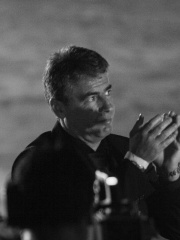
Pablo Bengoechea
SOCCER PLAYER
1965 - presente
HPI: 49.39
Posizione: 290

Jorge Da Silva
SOCCER PLAYER
1961 - presente
HPI: 49.36
Posizione: 291
Sebastián Eguren
SOCCER PLAYER
1981 - presente
HPI: 49.11
Posizione: 292

Abel Hernández
SOCCER PLAYER
1990 - presente
HPI: 49.06
Posizione: 293

José Zalazar
SOCCER PLAYER
1963 - presente
HPI: 49.01
Posizione: 294

Gonzalo García
SOCCER PLAYER
1983 - presente
HPI: 48.89
Posizione: 295

José Oscar Herrera
SOCCER PLAYER
1965 - presente
HPI: 48.72
Posizione: 296
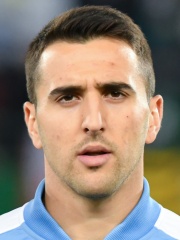
Matías Vecino
SOCCER PLAYER
1991 - presente
HPI: 48.68
Posizione: 297

Daniel Martínez
POLITICIAN
1957 - presente
HPI: 48.51
Posizione: 298
Tra Calciatore in Uruguay
Tra Calciatore nati in Uruguay, Sebastián Eguren occupa la posizione 172. Prima di lui ci sono Javier Chevantón (1980), Sebastián Coates (1990), Fabián Carini (1979), Walter Mantegazza (1952), Pablo Bengoechea (1965), e Jorge Da Silva (1961). Dopo di lui ci sono Abel Hernández (1990), José Zalazar (1963), Gonzalo García (1983), José Oscar Herrera (1965), Matías Vecino (1991), e Nicolás Lodeiro (1989).

Javier Chevantón
1980 - presente
HPI: 49.69
Posizione: 166

Sebastián Coates
1990 - presente
HPI: 49.66
Posizione: 167
Fabián Carini
1979 - presente
HPI: 49.60
Posizione: 168
Walter Mantegazza
1952 - 2006
HPI: 49.40
Posizione: 169
Pablo Bengoechea
1965 - presente
HPI: 49.39
Posizione: 170
Jorge Da Silva
1961 - presente
HPI: 49.36
Posizione: 171
Sebastián Eguren
1981 - presente
HPI: 49.11
Posizione: 172
Abel Hernández
1990 - presente
HPI: 49.06
Posizione: 173
José Zalazar
1963 - presente
HPI: 49.01
Posizione: 174
Gonzalo García
1983 - presente
HPI: 48.89
Posizione: 175
José Oscar Herrera
1965 - presente
HPI: 48.72
Posizione: 176
Matías Vecino
1991 - presente
HPI: 48.68
Posizione: 177

Nicolás Lodeiro
1989 - presente
HPI: 48.36
Posizione: 178




