Footballeur
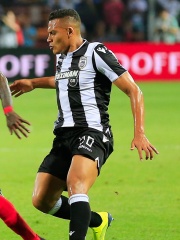
Rodrigo Maranhão
1992 - aujourd'hui


 Rodrigo Maranhão
Sa biographie est disponible en 16 langues sur Wikipédia. Rodrigo Maranhão est le 23,526th footballeur le plus populaire (en baisse du 20,649th en 2024), la 2,614th biographie la plus populaire du Brésil (en baisse du 2,302nd en 2019), ainsi que le 1,767th footballeur du Brésil le plus populaire.
Indicateurs de mémorabilité
2.6k
Pages vues
12 derniers mois
27.95
HPI
Indice de popularité historique
Pages vues de Rodrigo Maranhão par langue
Parmi les Footballeur
Parmi les Footballeur, Rodrigo Maranhão occupe le rang 23,506 sur 21,273. Avant lui viennent Hayato Nishinoue, Rhys Williams, Tommy Doyle, Liridon Latifi, Svetozar Marković, et Koki Oshima. Après lui viennent Greg Cunningham, Simon Ngapandouetnbu, Neil Mellor, Kenta Nishizawa, Takashi Soeda, et Rei Yonezawa.
Footballeur les plus populaires sur Wikipédia
Voir tous les classements

Hayato Nishinoue
1996 - présent
HPI : 27.98
Rang : 23,520

Rhys Williams
2001 - présent
HPI : 27.97
Rang : 23,521

Tommy Doyle
2001 - présent
HPI : 27.96
Rang : 23,522

Liridon Latifi
1994 - présent
HPI : 27.96
Rang : 23,523

Svetozar Marković
2000 - présent
HPI : 27.96
Rang : 23,524

Koki Oshima
1996 - présent
HPI : 27.95
Rang : 23,525
Rodrigo Maranhão
1992 - présent
HPI : 27.95
Rang : 23,526

Greg Cunningham
1991 - présent
HPI : 27.94
Rang : 23,527

Simon Ngapandouetnbu
2003 - présent
HPI : 27.94
Rang : 23,528

Neil Mellor
1982 - présent
HPI : 27.94
Rang : 23,529

Kenta Nishizawa
1996 - présent
HPI : 27.94
Rang : 23,530

Takashi Soeda
1993 - présent
HPI : 27.94
Rang : 23,531

Rei Yonezawa
1996 - présent
HPI : 27.93
Rang : 23,532

Contemporains
Parmi les personnes nées en 1992, Rodrigo Maranhão occupe le rang 1,814. Avant lui viennent Serhiy Frolov, Claudia Bobocea, Michael Hector, Kabange Mupopo, Rodrigo Cabeça, et James Chiengjiek. Après lui viennent Allen Crabbe, Melanie Amaro, Oussama Sahnoune, Perry Kitchen, Andrea Murez, et Naoki Sanda.
Autres personnes nées en 1992
Voir tous les classements
Serhiy Frolov
SWIMMER
1992 - présent
HPI : 28.08
Rang : 1,809

Claudia Bobocea
ATHLETE
1992 - présent
HPI : 28.08
Rang : 1,810

Michael Hector
SOCCER PLAYER
1992 - présent
HPI : 28.02
Rang : 1,811

Kabange Mupopo
SOCCER PLAYER
1992 - présent
HPI : 28.00
Rang : 1,812

Rodrigo Cabeça
SOCCER PLAYER
1992 - présent
HPI : 27.98
Rang : 1,813

James Chiengjiek
ATHLETE
1992 - présent
HPI : 27.97
Rang : 1,814
Rodrigo Maranhão
SOCCER PLAYER
1992 - présent
HPI : 27.95
Rang : 1,815

Allen Crabbe
BASKETBALL PLAYER
1992 - présent
HPI : 27.93
Rang : 1,816

Melanie Amaro
SINGER
1992 - présent
HPI : 27.93
Rang : 1,817

Oussama Sahnoune
SWIMMER
1992 - présent
HPI : 27.92
Rang : 1,818

Perry Kitchen
SOCCER PLAYER
1992 - présent
HPI : 27.92
Rang : 1,819

Andrea Murez
SWIMMER
1992 - présent
HPI : 27.87
Rang : 1,820

Naoki Sanda
SOCCER PLAYER
1992 - présent
HPI : 27.84
Rang : 1,821
En Brésil
Parmi les personnes nées en Brésil, Rodrigo Maranhão occupe le rang 2,614 sur NaN. Avant lui viennent Jerzy Kowalski (null), Janjaem Suwannapheng (null), Kayky (2003), Natália Araujo (1997), Rodrigo Cabeça (1992), et Vitória Cristina Rosa (1996). Après lui viennent Gabriel Morbeck (1997), Igor Gomes (1999), Holneiker Mendes Marreiros (1995), Luiz Altamir Melo (1996), Renan dos Santos Paixao (1996), et Luca Kumahara (1995).
Autres personnes nées en Brésil
Voir tous les classements
Jerzy Kowalski
ATHLETE
HPI : 28.47
Rang : 2,608

Janjaem Suwannapheng
BOXER
HPI : 28.31
Rang : 2,609

Kayky
SOCCER PLAYER
2003 - présent
HPI : 28.27
Rang : 2,610

Natália Araujo
ATHLETE
1997 - présent
HPI : 28.05
Rang : 2,611
Rodrigo Cabeça
SOCCER PLAYER
1992 - présent
HPI : 27.98
Rang : 2,612

Vitória Cristina Rosa
ATHLETE
1996 - présent
HPI : 27.96
Rang : 2,613
Rodrigo Maranhão
SOCCER PLAYER
1992 - présent
HPI : 27.95
Rang : 2,614

Gabriel Morbeck
SOCCER PLAYER
1997 - présent
HPI : 27.80
Rang : 2,615

Igor Gomes
SOCCER PLAYER
1999 - présent
HPI : 27.78
Rang : 2,616

Holneiker Mendes Marreiros
SOCCER PLAYER
1995 - présent
HPI : 27.74
Rang : 2,617

Luiz Altamir Melo
SWIMMER
1996 - présent
HPI : 27.71
Rang : 2,618

Renan dos Santos Paixao
SOCCER PLAYER
1996 - présent
HPI : 27.69
Rang : 2,619

Luca Kumahara
ATHLETE
1995 - présent
HPI : 27.65
Rang : 2,620
Parmi les Footballeur en Brésil
Parmi les Footballeur nés en Brésil, Rodrigo Maranhão occupe le rang 1,767. Avant lui viennent Guilherme Finkler (1985), Andressinha (1995), Diego Gonçalves (1994), William Pinheiro Rodrigues (1989), Kayky (2003), et Rodrigo Cabeça (1992). Après lui viennent Gabriel Morbeck (1997), Igor Gomes (1999), Holneiker Mendes Marreiros (1995), Renan dos Santos Paixao (1996), Jô (1995), et Léo Jabá (1998).

Guilherme Finkler
1985 - présent
HPI : 28.69
Rang : 1,761

Andressinha
1995 - présent
HPI : 28.68
Rang : 1,762

Diego Gonçalves
1994 - présent
HPI : 28.68
Rang : 1,763

William Pinheiro Rodrigues
1989 - 2018
HPI : 28.59
Rang : 1,764
Kayky
2003 - présent
HPI : 28.27
Rang : 1,765
Rodrigo Cabeça
1992 - présent
HPI : 27.98
Rang : 1,766
Rodrigo Maranhão
1992 - présent
HPI : 27.95
Rang : 1,767
Gabriel Morbeck
1997 - présent
HPI : 27.80
Rang : 1,768
Igor Gomes
1999 - présent
HPI : 27.78
Rang : 1,769
Holneiker Mendes Marreiros
1995 - présent
HPI : 27.74
Rang : 1,770
Renan dos Santos Paixao
1996 - présent
HPI : 27.69
Rang : 1,771

Jô
1995 - présent
HPI : 27.43
Rang : 1,772
Léo Jabá
1998 - présent
HPI : 26.71
Rang : 1,773




