Coach
Timo Schultz
German footballer and manager
1977 - today
EN.WIKIPEDIA PAGE VIEWS (PV)

 Timo Schultz
His biography is available in 14 different languages on Wikipedia. Timo Schultz is the 499th most popular coach, the 6,870th most popular biography from Germany and the 52nd most popular German Coach.
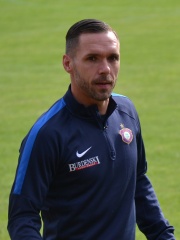
Timo Schultz, the German footballer born in 1977, is most famous for his career as a professional football player and his subsequent role as a football coach, notably managing FC St. Pauli in the 2. Bundesliga. He is recognized for his focus on developing young talent and implementing an attacking style of play.
Memorability Metrics
37k
Page Views
Past 12 months
41.65
HPI
Historical Popularity Index
Page views of Timo Schultz by language
Among Coaches
Among coaches, Timo Schultz ranks 499 out of 471. Before him are Yang Pu, Frank Gray, Marco Kurz, José Ramón Sandoval, Dave Brailsford, and Florian Kohfeldt. After him are Steve Holland, Alberto Valentim, Ian Holloway, Kazuaki Yoshinaga, Igor Angelovski, and Adam Svoboda.
Most Popular Coaches in Wikipedia
Go to all Rankings

Yang Pu
1978 - Present
HPI: 42.17
Rank: 493

Frank Gray
1954 - Present
HPI: 42.15
Rank: 494
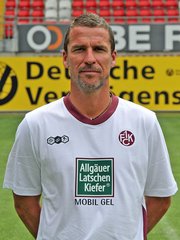
Marco Kurz
1969 - Present
HPI: 42.02
Rank: 495
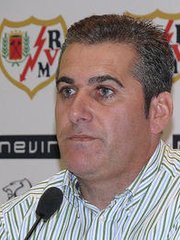
José Ramón Sandoval
1968 - Present
HPI: 41.84
Rank: 496

Dave Brailsford
1964 - Present
HPI: 41.80
Rank: 497

Florian Kohfeldt
1982 - Present
HPI: 41.73
Rank: 498
Timo Schultz
1977 - Present
HPI: 41.65
Rank: 499

Steve Holland
1970 - Present
HPI: 41.50
Rank: 500

Alberto Valentim
1975 - Present
HPI: 41.45
Rank: 501

Ian Holloway
1963 - Present
HPI: 41.45
Rank: 502

Kazuaki Yoshinaga
1968 - Present
HPI: 41.45
Rank: 503

Igor Angelovski
1976 - Present
HPI: 41.31
Rank: 504
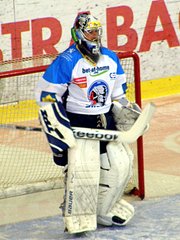
Adam Svoboda
1978 - 2019
HPI: 41.30
Rank: 505

Contemporaries
Among people born in 1977, Timo Schultz ranks 964. Before him are Oleg Velyky, Dejan Nemec, Mario Stecher, Mathias Seger, Adonis Stevenson, and Murad Umakhanov. After him are Gail Kim, Yukta Mookhey, Sylviane Félix, Tetsuharu Yamaguchi, John O'Brien, and Zhang Jun.
Others Born in 1977
Go to all Rankings
Oleg Velyky
HANDBALL PLAYER
1977 - 2010
HPI: 41.70
Rank: 958

Dejan Nemec
SOCCER PLAYER
1977 - Present
HPI: 41.70
Rank: 959

Mario Stecher
SKIER
1977 - Present
HPI: 41.70
Rank: 960
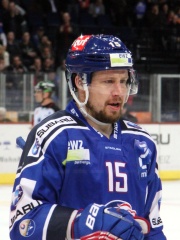
Mathias Seger
HOCKEY PLAYER
1977 - Present
HPI: 41.68
Rank: 961

Adonis Stevenson
BOXER
1977 - Present
HPI: 41.67
Rank: 962

Murad Umakhanov
WRESTLER
1977 - Present
HPI: 41.66
Rank: 963
Timo Schultz
COACH
1977 - Present
HPI: 41.65
Rank: 964

Gail Kim
WRESTLER
1977 - Present
HPI: 41.64
Rank: 965

Yukta Mookhey
ACTOR
1977 - Present
HPI: 41.64
Rank: 966

Sylviane Félix
ATHLETE
1977 - Present
HPI: 41.63
Rank: 967

Tetsuharu Yamaguchi
SOCCER PLAYER
1977 - Present
HPI: 41.62
Rank: 968

John O'Brien
SOCCER PLAYER
1977 - Present
HPI: 41.62
Rank: 969

Zhang Jun
BADMINTON PLAYER
1977 - Present
HPI: 41.62
Rank: 970
In Germany
Among people born in Germany, Timo Schultz ranks 6,870 out of NaN. Before him are Jens Boden (1978), Gil Ofarim (1982), Stefan Reinartz (1989), Nadine Müller (1985), Jasmin Gerat (1978), and Jonas Urbig (2003). After him are Markus Eisenbichler (1991), Fabian Busch (1975), Verena Sailer (1985), Mark Zabel (1973), Manuela Henkel (1974), and Daniel Stephan (1973).
Others born in Germany
Go to all Rankings
Jens Boden
ATHLETE
1978 - Present
HPI: 41.69
Rank: 6,864

Gil Ofarim
SINGER
1982 - Present
HPI: 41.68
Rank: 6,865
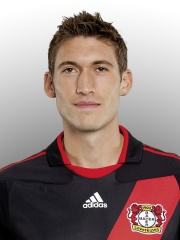
Stefan Reinartz
SOCCER PLAYER
1989 - Present
HPI: 41.68
Rank: 6,866
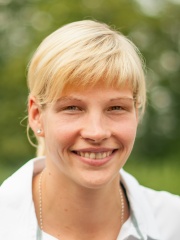
Nadine Müller
ATHLETE
1985 - Present
HPI: 41.68
Rank: 6,867

Jasmin Gerat
ACTOR
1978 - Present
HPI: 41.66
Rank: 6,868

Jonas Urbig
SOCCER PLAYER
2003 - Present
HPI: 41.65
Rank: 6,869
Timo Schultz
COACH
1977 - Present
HPI: 41.65
Rank: 6,870
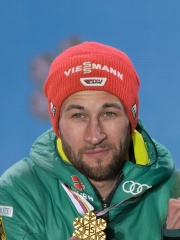
Markus Eisenbichler
SKIER
1991 - Present
HPI: 41.64
Rank: 6,871

Fabian Busch
ACTOR
1975 - Present
HPI: 41.64
Rank: 6,872
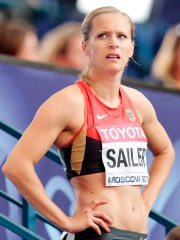
Verena Sailer
ATHLETE
1985 - Present
HPI: 41.63
Rank: 6,873

Mark Zabel
ATHLETE
1973 - Present
HPI: 41.60
Rank: 6,874
Manuela Henkel
SKIER
1974 - Present
HPI: 41.60
Rank: 6,875

Daniel Stephan
ATHLETE
1973 - Present
HPI: 41.57
Rank: 6,876
Among Coaches In Germany
Among coaches born in Germany, Timo Schultz ranks 52. Before him are Markus Weinzierl (1974), Sascha Lewandowski (1971), André Schubert (1971), Marie-Louise Eta (1991), Marco Kurz (1969), and Florian Kohfeldt (1982). After him are Markus Baur (1971), and Christian Tiffert (1982).

Markus Weinzierl
1974 - Present
HPI: 44.98
Rank: 46

Sascha Lewandowski
1971 - 2016
HPI: 44.96
Rank: 47
André Schubert
1971 - Present
HPI: 43.86
Rank: 48
Marie-Louise Eta
1991 - Present
HPI: 43.27
Rank: 49
Marco Kurz
1969 - Present
HPI: 42.02
Rank: 50
Florian Kohfeldt
1982 - Present
HPI: 41.73
Rank: 51
Timo Schultz
1977 - Present
HPI: 41.65
Rank: 52
Markus Baur
1971 - Present
HPI: 40.51
Rank: 53
Christian Tiffert
1982 - Present
HPI: 37.28
Rank: 54




