Politician
Ma Xingrui
Communist Party Secretary of Xinjiang
EN.WIKIPEDIA PAGE VIEWS (PV)
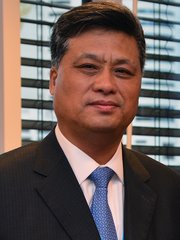
 Ma Xingrui
His biography is available in 16 different languages on Wikipedia. Ma Xingrui is the 16,171st most popular politician, the 980th most popular biography from China and the 467th most popular Chinese Politician.
Ma Xingrui is most famous for his pioneering contributions to China's aerospace engineering, including his leadership in the national space program, before transitioning to high-level politics. A surprising lesser-known fact is that he earned a PhD in mechanics from the Harbin Institute of Technology and later served as president of Beihang University, blending technical expertise with administrative roles. His lasting legacy includes advancing China's space capabilities and modernizing governance as a provincial leader, influencing the country's technological and economic development.
Memorability Metrics
590k
Page Views
Past 12 months
53.90
HPI
Historical Popularity Index
Page views of Ma Xingrui by language
Among Politicians
Among politicians, Ma Xingrui ranks 16,164 out of 19,576. Before him are Cécile Tormay, Habiba Sarābi, Giulio Terzi di Sant'Agata, Karel De Gucht, Robert Moray, and Julio Herrera y Obes. After him are Thomas Massie, Aleksandr Tkachyov, Sam Mostyn, Roger Kolo, Gouverneur Morris, and George Eden, 1st Earl of Auckland.
Most Popular Politicians in Wikipedia
Go to all Rankings

Cécile Tormay
1876 - 1937
HPI: 53.92
Rank: 16,165
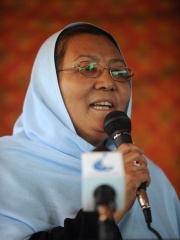
Habiba Sarābi
1956 - Present
HPI: 53.91
Rank: 16,166
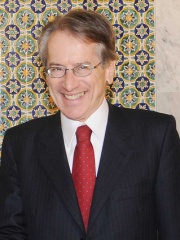
Giulio Terzi di Sant'Agata
1946 - Present
HPI: 53.91
Rank: 16,167

Karel De Gucht
1954 - Present
HPI: 53.91
Rank: 16,168

Robert Moray
1609 - 1673
HPI: 53.91
Rank: 16,169
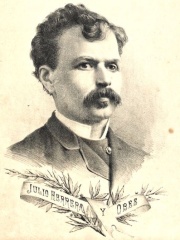
Julio Herrera y Obes
1841 - 1912
HPI: 53.91
Rank: 16,170
Ma Xingrui
HPI: 53.90
Rank: 16,171

Thomas Massie
1971 - Present
HPI: 53.90
Rank: 16,172

Aleksandr Tkachyov
1957 - Present
HPI: 53.89
Rank: 16,173

Sam Mostyn
1965 - Present
HPI: 53.89
Rank: 16,174
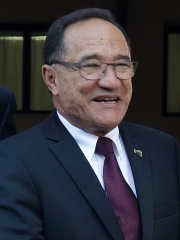
Roger Kolo
1943 - Present
HPI: 53.89
Rank: 16,175
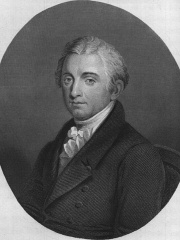
Gouverneur Morris
1752 - 1816
HPI: 53.89
Rank: 16,176
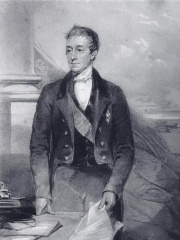
George Eden, 1st Earl of Auckland
1784 - 1849
HPI: 53.89
Rank: 16,177

In China
Among people born in China, Ma Xingrui ranks 980 out of NaN. Before him are Yao Lee (1922), Liu Chao-shiuan (1943), Li Han-hsiang (1926), Ilham Tohti (1969), Cai Chusheng (1906), and Feng Xiaogang (1958). After him are Huang Xiaoming (1977), Lin Dan (1983), Tashi Namgyal (1893), Ha Jin (1956), Hu Die (1908), and Cui Jian (1961).
Others born in China
Go to all Rankings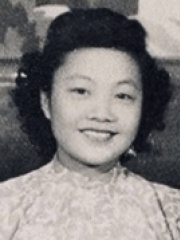
Yao Lee
SINGER
1922 - 2019
HPI: 54.03
Rank: 974
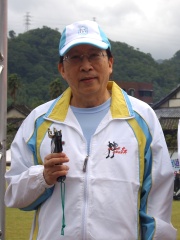
Liu Chao-shiuan
POLITICIAN
1943 - Present
HPI: 54.02
Rank: 975
Li Han-hsiang
FILM DIRECTOR
1926 - 1996
HPI: 54.01
Rank: 976
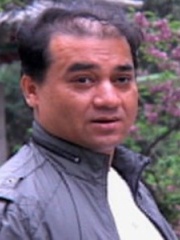
Ilham Tohti
ECONOMIST
1969 - Present
HPI: 53.98
Rank: 977
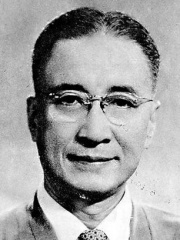
Cai Chusheng
FILM DIRECTOR
1906 - 1968
HPI: 53.94
Rank: 978
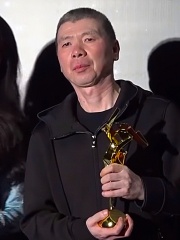
Feng Xiaogang
FILM DIRECTOR
1958 - Present
HPI: 53.94
Rank: 979
Ma Xingrui
POLITICIAN
HPI: 53.90
Rank: 980

Huang Xiaoming
ACTOR
1977 - Present
HPI: 53.86
Rank: 981
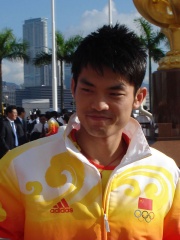
Lin Dan
BADMINTON PLAYER
1983 - Present
HPI: 53.82
Rank: 982
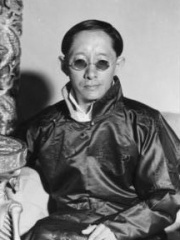
Tashi Namgyal
POLITICIAN
1893 - 1963
HPI: 53.72
Rank: 983
Ha Jin
WRITER
1956 - Present
HPI: 53.71
Rank: 984
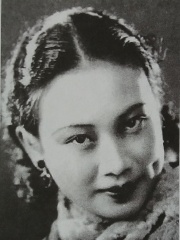
Hu Die
ACTOR
1908 - 1989
HPI: 53.62
Rank: 985

Cui Jian
MUSICIAN
1961 - Present
HPI: 53.45
Rank: 986
Among Politicians In China
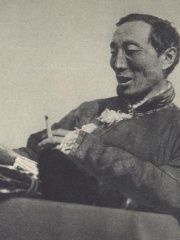
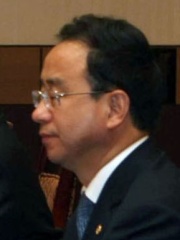
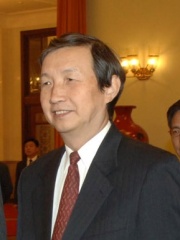
Among politicians born in China, Ma Xingrui ranks 467. Before him are Qin Gang (1966), Zhou Xiaochuan (1948), Chang Wanquan (1949), James Soong (1942), Chen Quanguo (1955), and Liu Chao-shiuan (1943). After him are Tashi Namgyal (1893), Li Xi (1956), K. C. Wu (1903), Donduk Kuular (1888), Ling Jihua (1956), and Ma Kai (1946).
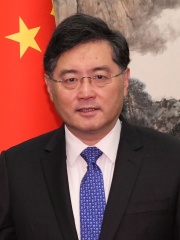
Qin Gang
1966 - Present
HPI: 54.40
Rank: 461
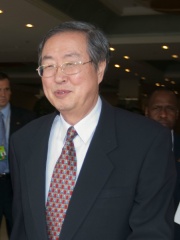
Zhou Xiaochuan
1948 - Present
HPI: 54.31
Rank: 462
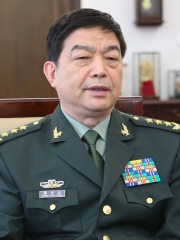
Chang Wanquan
1949 - Present
HPI: 54.21
Rank: 463
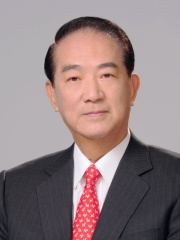
James Soong
1942 - Present
HPI: 54.16
Rank: 464
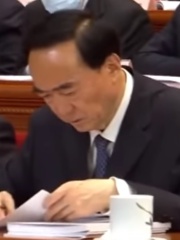
Chen Quanguo
1955 - Present
HPI: 54.03
Rank: 465
Liu Chao-shiuan
1943 - Present
HPI: 54.02
Rank: 466
Ma Xingrui
HPI: 53.90
Rank: 467
Tashi Namgyal
1893 - 1963
HPI: 53.72
Rank: 468
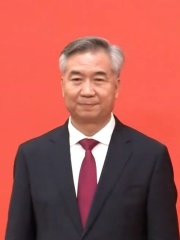
Li Xi
1956 - Present
HPI: 53.36
Rank: 469
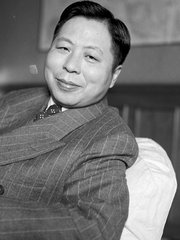
K. C. Wu
1903 - 1984
HPI: 53.32
Rank: 470
Donduk Kuular
1888 - 1932
HPI: 53.23
Rank: 471
Ling Jihua
1956 - Present
HPI: 52.71
Rank: 472
Ma Kai
1946 - Present
HPI: 51.82
Rank: 473




