Fußballspieler
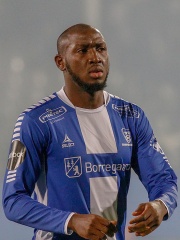
Nene Dorgeles
2002 - heute
DE.WIKIPEDIA-SEITENAUFRUFE (PV)
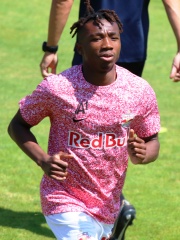
 Nene Dorgeles
Seine Biografie ist in 17 verschiedenen Sprachen auf Wikipedia verfügbar (gestiegen von 15 im Jahr 2024). Nene Dorgeles ist der 19,920th beliebteste Fußballspieler (gesunken vom 14,643rd im Jahr 2024), die 77th beliebteste Biografie aus Mali (gesunken vom 65th im Jahr 2019) und der 33rd beliebteste aus Mali Fußballspieler.
Bekanntheitsmetriken
210k
Seitenaufrufe
Letzte 12 Monate
34.72
HPI
Historischer Popularitätsindex
Daten-Einblicke
23. Dez.
Nene Dorgeles hat am selben Tag Geburtstag (23. Dezember) wie Joseph Smith, Akihito und Alexander I of Russia.
Seitenaufrufe von Nene Dorgeles nach Sprache
Unter Fußballspieler
Unter Fußballspieler belegt Nene Dorgeles Rang 19,900 von 21,273. Vor ihm stehen Alieu Fadera, Lars Lukas Mai, Riku Matsuda, Cedrick Mabwati, Radhouène Felhi, und Jemal Tabidze. Nach ihm folgen Liao Lisheng, Tomoyuki Arata, Kenny Saief, Richard Estigarribia, Bryan Acosta, und Simon Falette.
Die beliebtesten Fußballspieler auf Wikipedia
Zu allen Ranglisten
Alieu Fadera
2001 - heute
HPI: 34.72
Rang: 19,914

Lars Lukas Mai
2000 - heute
HPI: 34.72
Rang: 19,915

Riku Matsuda
1991 - heute
HPI: 34.72
Rang: 19,916
Cedrick Mabwati
1992 - heute
HPI: 34.72
Rang: 19,917
Radhouène Felhi
1984 - heute
HPI: 34.72
Rang: 19,918

Jemal Tabidze
1996 - heute
HPI: 34.72
Rang: 19,919
Nene Dorgeles
2002 - heute
HPI: 34.72
Rang: 19,920

Liao Lisheng
1993 - heute
HPI: 34.71
Rang: 19,921

Tomoyuki Arata
1985 - heute
HPI: 34.71
Rang: 19,922

Kenny Saief
1993 - heute
HPI: 34.71
Rang: 19,923

Richard Estigarribia
1982 - heute
HPI: 34.71
Rang: 19,924
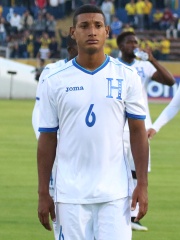
Bryan Acosta
1993 - heute
HPI: 34.71
Rang: 19,925

Simon Falette
1992 - heute
HPI: 34.71
Rang: 19,926

Zeitgenossen
Unter den im Jahr 2002 Geborenen belegt Nene Dorgeles Rang 278. Vor ihm stehen Bennedict Mathurin, Campbell Wright, Ethan Katzberg, Brandon Soppy, Tyler Morton, und Wagner Pina. Nach ihm folgen Mandela Keita, NLE Choppa, Sofie Dokter, Brighton Sharbino, David Møller Wolfe, und Rocco Reitz.
Weitere im Jahr 2002 Geborene
Zu allen Ranglisten
Bennedict Mathurin
BASKETBALL PLAYER
2002 - heute
HPI: 34.99
Rang: 272
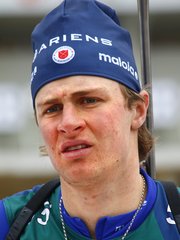
Campbell Wright
ATHLETE
2002 - heute
HPI: 34.88
Rang: 273

Ethan Katzberg
ATHLETE
2002 - heute
HPI: 34.84
Rang: 274

Brandon Soppy
SOCCER PLAYER
2002 - heute
HPI: 34.81
Rang: 275

Tyler Morton
SOCCER PLAYER
2002 - heute
HPI: 34.77
Rang: 276

Wagner Pina
SOCCER PLAYER
2002 - heute
HPI: 34.77
Rang: 277
Nene Dorgeles
SOCCER PLAYER
2002 - heute
HPI: 34.72
Rang: 278

Mandela Keita
SOCCER PLAYER
2002 - heute
HPI: 34.70
Rang: 279
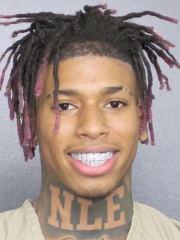
NLE Choppa
SINGER
2002 - heute
HPI: 34.67
Rang: 280

Sofie Dokter
ATHLETE
2002 - heute
HPI: 34.62
Rang: 281

Brighton Sharbino
ACTOR
2002 - heute
HPI: 34.59
Rang: 282

David Møller Wolfe
SOCCER PLAYER
2002 - heute
HPI: 34.58
Rang: 283

Rocco Reitz
SOCCER PLAYER
2002 - heute
HPI: 34.56
Rang: 284
In Mali
Unter den in Mali Geborenen belegt Nene Dorgeles Rang 77 von 72. Vor ihm stehen Kalilou Traoré (1987), Adama Traoré (1995), Falaye Sacko (1995), Aliou Dieng (1997), Mamadou Fofana (1998), und Charles Traoré (1992). Nach ihm folgen Sékou Koïta (1999), Youssouf Koné (1995), Boubacar Traoré (null), Kiki Kouyaté (1997), Ibrahima Koné (1999), und Daouda Guindo (2002).
Weitere in Mali geborene Personen
Zu allen Ranglisten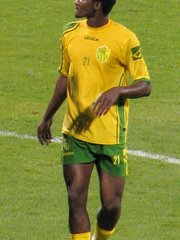
Kalilou Traoré
SOCCER PLAYER
1987 - heute
HPI: 36.91
Rang: 71
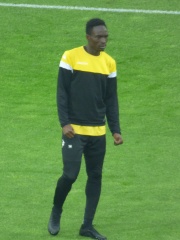
Adama Traoré
SOCCER PLAYER
1995 - heute
HPI: 36.77
Rang: 72
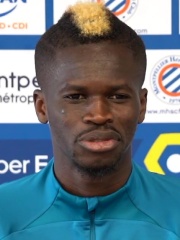
Falaye Sacko
SOCCER PLAYER
1995 - heute
HPI: 36.01
Rang: 73

Aliou Dieng
SOCCER PLAYER
1997 - heute
HPI: 35.95
Rang: 74
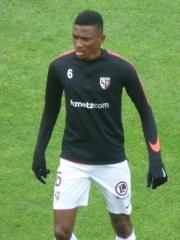
Mamadou Fofana
SOCCER PLAYER
1998 - heute
HPI: 35.72
Rang: 75

Charles Traoré
SOCCER PLAYER
1992 - heute
HPI: 35.11
Rang: 76
Nene Dorgeles
SOCCER PLAYER
2002 - heute
HPI: 34.72
Rang: 77
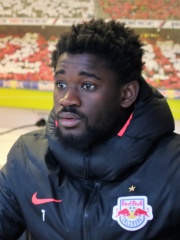
Sékou Koïta
SOCCER PLAYER
1999 - heute
HPI: 34.28
Rang: 78

Youssouf Koné
SOCCER PLAYER
1995 - heute
HPI: 34.21
Rang: 79

Boubacar Traoré
SOCCER PLAYER
HPI: 33.78
Rang: 80

Kiki Kouyaté
SOCCER PLAYER
1997 - heute
HPI: 33.34
Rang: 81
Ibrahima Koné
SOCCER PLAYER
1999 - heute
HPI: 32.81
Rang: 82

Daouda Guindo
SOCCER PLAYER
2002 - heute
HPI: 32.42
Rang: 83
Unter Fußballspieler in Mali
Unter den in Mali geborenen Fußballspieler belegt Nene Dorgeles Rang 33. Vor ihm stehen Kalilou Traoré (1987), Adama Traoré (1995), Falaye Sacko (1995), Aliou Dieng (1997), Mamadou Fofana (1998), und Charles Traoré (1992). Nach ihm folgen Sékou Koïta (1999), Youssouf Koné (1995), Boubacar Traoré (null), Kiki Kouyaté (1997), Ibrahima Koné (1999), und Daouda Guindo (2002).
Kalilou Traoré
1987 - heute
HPI: 36.91
Rang: 27
Adama Traoré
1995 - heute
HPI: 36.77
Rang: 28
Falaye Sacko
1995 - heute
HPI: 36.01
Rang: 29
Aliou Dieng
1997 - heute
HPI: 35.95
Rang: 30
Mamadou Fofana
1998 - heute
HPI: 35.72
Rang: 31
Charles Traoré
1992 - heute
HPI: 35.11
Rang: 32
Nene Dorgeles
2002 - heute
HPI: 34.72
Rang: 33
Sékou Koïta
1999 - heute
HPI: 34.28
Rang: 34
Youssouf Koné
1995 - heute
HPI: 34.21
Rang: 35
Boubacar Traoré
HPI: 33.78
Rang: 36
Kiki Kouyaté
1997 - heute
HPI: 33.34
Rang: 37
Ibrahima Koné
1999 - heute
HPI: 32.81
Rang: 38
Daouda Guindo
2002 - heute
HPI: 32.42
Rang: 39




